Lacrosse is one of the fastest, most dynamic sports in the world—a blend of speed, strategy, athleticism, and tradition. To the untrained eye, the game can look chaotic, with players sprinting, passing, and shooting in rapid succession. But beneath that high-energy surface is a deeply structured sport governed by clear rules, tactical roles, and a distinct flow of play. Understanding how lacrosse is played unlocks a new appreciation for the precision, teamwork, and decision-making that define every possession. Whether you’re watching your first game, considering picking up a stick, or simply looking to understand the sport at a deeper level, this guide breaks down lacrosse in a clear, engaging way—covering the fundamentals of gameplay, scoring, rules, and how a game unfolds from opening faceoff to final whistle.
A: Typically four quarters, with length varying by level.
A: Only the goalie may occupy the crease.
A: Play restarts with a faceoff.
A: Yes, within strict rules for safety.
A: A scoring advantage after a penalty.
A: Yes, substitutions are often done on the fly.
A: A quick scoring opportunity after a turnover.
A: More possessions mean more scoring chances.
A: Rules vary slightly by level and format.
A: The basics are simple, but mastery takes time.
The Objective of Lacrosse
At its core, lacrosse is a goal-scoring game. Two teams compete to score by shooting a small rubber ball into the opponent’s goal using a lacrosse stick. Each goal counts as one point, and the team with the most goals at the end of regulation wins.
What separates lacrosse from many other sports is that players must control, pass, and shoot the ball using only their stick. Hands may not touch the ball during play, and body positioning, footwork, and stick control are critical at all times. The objective is simple, but achieving it requires constant movement, spacing, communication, and tactical awareness.
The Field and Basic Setup
Lacrosse is typically played on a rectangular field with a goal at each end. The goals sit inside a circular area known as the crease, which only the goalie is allowed to occupy freely. Offensive players may not step into the crease, and goals scored while standing in it are disallowed.
Field markings divide the playing area into offensive and defensive zones, helping officials enforce offside rules. A midfield line splits the field in half, and restraining lines control where players line up for faceoffs.
Games are usually played with ten players per team on the field at once in men’s field lacrosse—three attackers, three midfielders, three defenders, and one goalie. Each position has specialized responsibilities, but fluid substitutions and fast transitions mean players are constantly shifting roles as the game evolves.
Starting the Game: The Faceoff
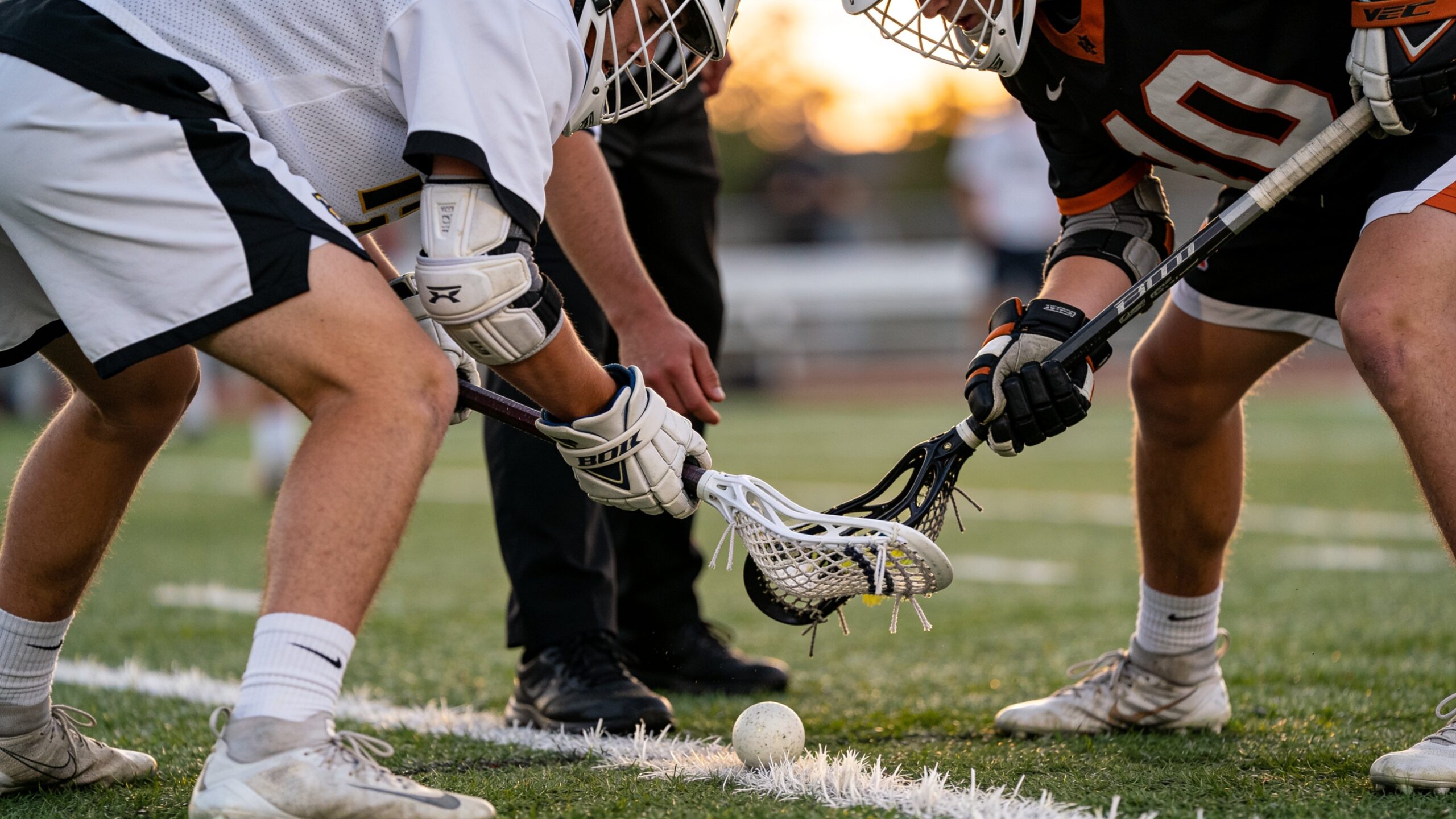
Every lacrosse game begins with a faceoff, and faceoffs also restart play after each goal. Two opposing players crouch at midfield, sticks placed parallel to the ball, waiting for the whistle. At the sound, both players attempt to gain possession by trapping, raking, or flicking the ball to themselves or a teammate.
Faceoffs are more than just restarts—they are momentum setters. A team that consistently wins faceoffs controls possession, dictates tempo, and limits the opponent’s opportunities. Once possession is gained, players immediately sprint into offensive or defensive formations, and the game transitions into open play within seconds.
Possession and Ball Movement
Once a team has possession, the primary goal is to maintain control while creating a high-quality scoring opportunity. Lacrosse emphasizes passing and off-ball movement, with players constantly cutting, dodging, and repositioning to stretch the defense.
There are strict rules governing possession. Offensive teams must advance the ball into the attacking area within a set amount of time, preventing excessive stalling. Once settled on offense, teams are expected to actively attempt to score rather than simply holding the ball.
Passing accuracy, stick protection, and field vision are essential. Players cradle the ball in their stick pocket to maintain control while running or dodging defenders. A single turnover can instantly flip the game from offense to defense, making decision-making under pressure one of lacrosse’s defining challenges.
Scoring in Lacrosse
Scoring in lacrosse occurs when the ball fully crosses the plane of the goal line inside the net. Shots can be taken from close range, on the run, or from distance, and goals are often the result of quick ball movement and precise timing.
There are several ways goals are created. Some come from individual dodges, where an attacker beats their defender one-on-one and shoots. Others are the result of team-based plays involving picks, cuts, and rapid passes that force defensive breakdowns. Fast breaks—quick attacks after a turnover or faceoff win—often lead to high-percentage scoring chances.
Goalies play a critical role in scoring outcomes. Using a larger stick and specialized padding, they attempt to block shots with their body or stick while directing rebounds away from danger. A strong goalie can dramatically influence a game by shutting down scoring runs and igniting transition play with quick outlet passes.
Defensive Play and Stopping Goals
Defense in lacrosse is as strategic as offense. Defenders use body positioning, footwork, and controlled stick checks to disrupt attackers without committing fouls. The goal is not simply to knock the ball free, but to force bad passes, low-angle shots, or turnovers.
Team defense relies heavily on communication. Defenders slide to help teammates who are beaten, recover to their own assignments, and protect the middle of the field where scoring chances are most dangerous. Successful defenses move as a unit, maintaining shape while reacting instantly to offensive movement.
Physical contact is allowed within the rules, particularly in men’s lacrosse, but it is regulated. Legal body checks must target the opponent’s torso and be delivered from the front or side. Illegal checks result in penalties and give the offense a numerical advantage.
Fouls, Penalties, and Man-Up Situations
Like all sports, lacrosse has rules designed to promote safety and fairness. Fouls fall into two main categories: technical fouls and personal fouls.
Technical fouls include actions such as pushing, holding, interference, or stepping into the crease illegally. These usually result in a change of possession or a short penalty if the fouling team is on defense.
Personal fouls are more serious and include slashing, tripping, cross-checking, or illegal body checks. These fouls result in time-based penalties, sending the offending player to the penalty box while their team plays short-handed.
When a team has a numerical advantage due to a penalty, the situation is known as “man-up” or a power play. The opposing team is “man-down” and focuses on tight rotations and shot blocking. Man-up opportunities are often pivotal moments, as they significantly increase scoring chances.
Game Flow and Transition Play
One of lacrosse’s defining features is its rapid game flow. There are few stoppages compared to many other sports, and transitions between offense and defense happen instantly. A save by the goalie, a ground ball pickup, or a turnover can trigger a fast break in seconds.
Midfielders are central to this flow. They play both offense and defense, sprinting end-to-end throughout the game. Substitutions often occur “on the fly,” with players sprinting off the field as teammates enter, ensuring fresh legs and constant intensity.
Because of this continuous motion, conditioning and awareness are crucial. Players must read the game in real time, recognizing when to push the pace and when to slow it down to protect a lead or reset the offense.
Time Structure and Quarters
Lacrosse games are divided into quarters, typically four periods of equal length. The clock generally stops for goals, penalties, and certain stoppages, especially at higher levels of play. At the end of regulation, the team with the most goals wins.
If the score is tied, games often proceed to overtime. Overtime rules vary, but commonly involve sudden victory, where the first team to score wins. These moments are among the most intense in the sport, as every possession carries enormous weight.
Managing the clock becomes a strategic element late in games. Teams with a lead may focus on ball control, while trailing teams increase pressure, double-team aggressively, and take calculated risks to force turnovers.
The Role of Officials
Officials play an essential role in maintaining the flow and fairness of the game. They enforce rules, signal goals, manage penalties, and ensure player safety. Lacrosse typically uses multiple officials positioned around the field to monitor off-ball action as well as the ball carrier.
Good officiating helps preserve the game’s rhythm. While penalties and whistles are sometimes necessary, the goal is to allow skilled play to continue while addressing dangerous or unfair actions promptly.
Variations of Lacrosse Play
While this article focuses primarily on field lacrosse, it’s worth noting that the sport has variations, including box lacrosse, which is played indoors with fewer players and different rules. These formats emphasize different skills, but the core principles—stick control, teamwork, and scoring—remain the same.
At the highest levels, lacrosse is governed internationally by organizations such as World Lacrosse, while in the United States, collegiate play is overseen by bodies like NCAA. Each level and format introduces slight rule adjustments, but the fundamental structure of the game is consistent.
Strategy, Skill, and the Beauty of the Game
What makes lacrosse truly special is the balance between structure and creativity. Set plays, formations, and defensive schemes provide order, but the sport still rewards improvisation, instinct, and flair. A perfectly timed cut, a no-look pass, or a last-second save can instantly change the narrative of a game.
Players must think several steps ahead, anticipating not only their own actions but those of teammates and opponents. This constant mental engagement, combined with physical intensity, is why lacrosse is often described as a game of flow—where momentum, confidence, and rhythm matter just as much as raw skill.
Why Understanding the Rules Enhances the Experience
For new fans, learning how lacrosse is played transforms the viewing experience. What once looked like frantic motion becomes a chess match at full speed. You begin to notice defensive slides, off-ball screens, and subtle stick work that separates elite players from the rest.
For players, understanding the rules and game flow builds confidence and decision-making. Knowing when to push the tempo, when to pull the ball out, and how to exploit advantages is what elevates individual talent into effective team play.
Final Thoughts
Lacrosse is a sport rooted in tradition yet constantly evolving, blending speed, physicality, and strategy into a uniquely thrilling experience. From the opening faceoff to the final whistle, every moment is shaped by rules that promote fairness, creativity, and continuous action. By understanding how lacrosse is played—how goals are scored, how possession is earned and protected, and how the game flows—you gain a deeper respect for the skill and intelligence required to succeed. Whether you’re watching from the sidelines or stepping onto the field yourself, lacrosse offers a powerful reminder that structure and freedom can coexist, creating a game that is as exciting as it is timeless.