Understanding the Spirit of High School Lacrosse
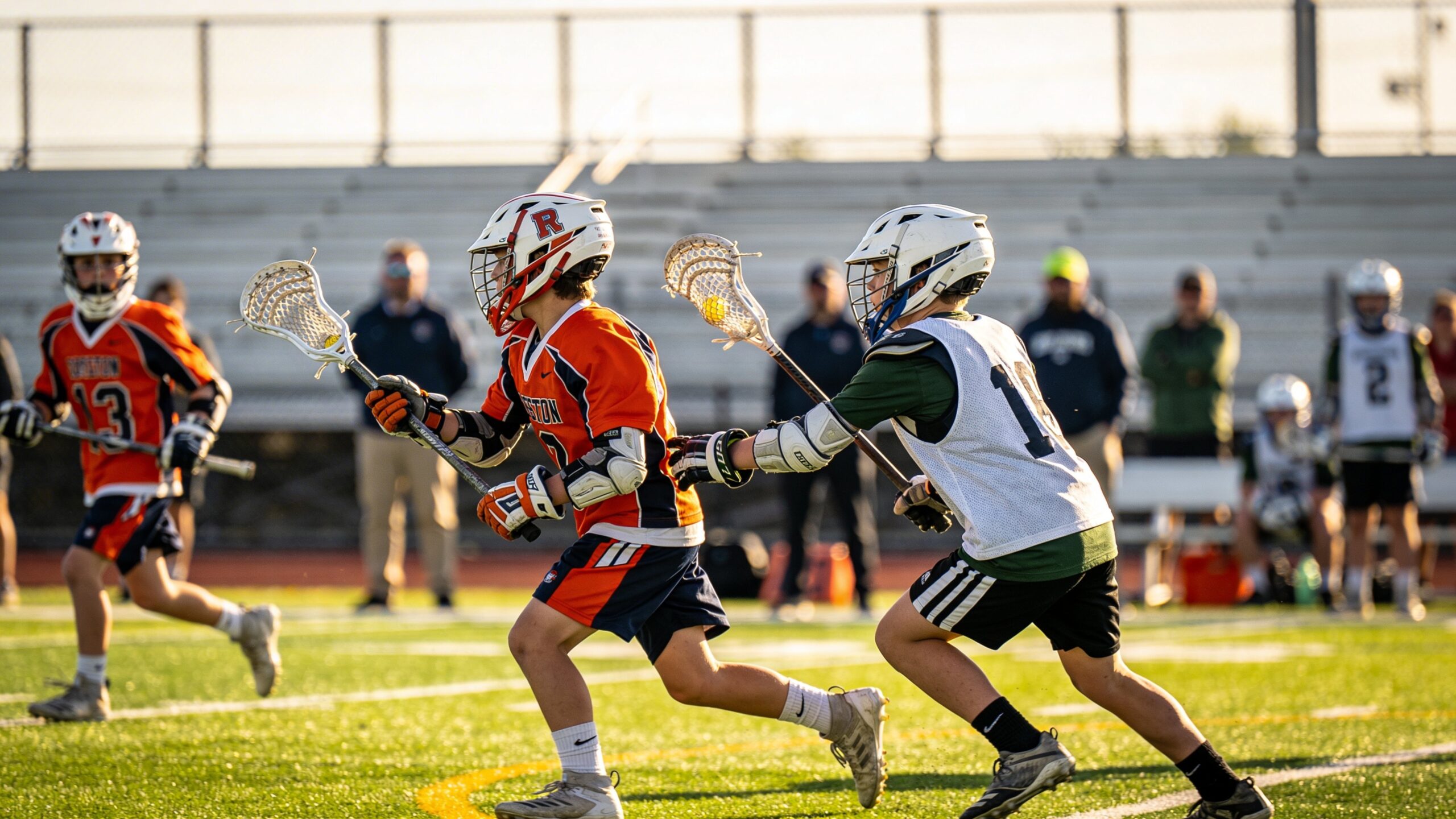
High school lacrosse is one of the fastest and most exciting sports played at the scholastic level. It combines the speed of soccer, the physicality of hockey, the spacing of basketball, and the precision of a passing game built around timing, vision, and courage. To a new spectator, the game can feel like organized chaos. Players sprint across the field with sticks in hand, the ball moves quickly through the air, defenders throw checks, goalies call out instructions, and officials stop play with sharp whistles that can seem mysterious at first. Once the rules become clear, the sport opens up. Every restart, substitution, faceoff, penalty, and possession call has a purpose. High school lacrosse rules are designed to keep the game competitive, safe, fair, and fast-moving. They reward skill, discipline, teamwork, and field awareness while limiting dangerous contact and unfair advantages. Whether you are a new player, a parent in the stands, a coach building fundamentals, or a fan trying to follow the action, understanding the rules turns lacrosse from a blur of motion into a tactical battle.
A: A goal counts when the ball legally crosses the goal line into the net.
A: Controlled legal contact is allowed, but dangerous hits, blindside checks, and head contact are penalties.
A: A slash is an illegal or uncontrolled stick check, often involving the body, helmet, or excessive force.
A: A team has too many or too few players on one half of the field.
A: The crease protects the goalie and creates rules for legal play around the net.
A: It happens when one team has an extra player because the opponent is serving a penalty.
A: A clear is the process of moving the ball from the defensive end to the offensive end.
A: Warding occurs when a ball carrier illegally uses a free hand or arm to push off a defender.
A: Yes, live substitutions are common, but players must enter and exit properly through the box.
A: Stick checks ensure pockets, heads, and lengths are legal and do not create unfair advantages.
The Basic Goal of the Game
The objective of high school lacrosse is simple: score more goals than the opponent by shooting the ball into the opposing team’s net. Players use lacrosse sticks to carry, pass, catch, scoop, and shoot the ball. The ball may move faster than any player can run, which makes passing and positioning essential. Teams try to create open shots by dodging, cutting, screening, rotating, and moving the defense out of shape. Although the objective is simple, the path to scoring is layered with rules. Players must stay onside, avoid illegal contact, use proper stick checks, follow substitution procedures, and respect crease boundaries around the goal. A team that understands the rules can play faster because players know when to attack, when to settle the ball, when to ride, when to clear, and when to avoid a costly penalty.
Teams, Positions, and Field Balance
In boys high school lacrosse, each team generally plays with ten players on the field: one goalie, three defensemen, three midfielders, and three attackmen. The goalie protects the net and directs the defense. Defensemen usually stay near their own goal, attackmen usually stay near the opponent’s goal, and midfielders cover the entire field. This structure creates balance between offense, defense, and transition.
One of the most important rules is the offsides rule. A team must keep enough players on each half of the field: generally at least four players, including the goalie, on its defensive half and at least three players on its offensive half. This prevents teams from flooding one side of the field with too many players and keeps the game balanced. Midfielders often manage this rule during substitutions and fast breaks, making communication critical.
Game Length and Clock Rules
High school lacrosse games are usually divided into four quarters. The exact quarter length can vary by state association or level, but varsity games commonly use timed quarters with a halftime break between the second and third quarters. The clock can stop for goals, penalties, timeouts, injuries, and certain official situations depending on the rules used by the governing body.
Late-game clock management is a major part of lacrosse strategy. A team protecting a lead may slow the pace, value possession, and force the opponent to pressure the ball. A team trailing late must play faster, double-team, and create turnovers. Because lacrosse can change quickly, a two- or three-goal lead is never entirely safe. One penalty, one faceoff win, and one quick shot can shift momentum in seconds.
The Field and Key Areas
A high school lacrosse field has clearly marked areas that shape how the game is played. The center line divides the field into offensive and defensive halves. The restraining lines help define offside responsibilities and control player positioning during faceoffs. The crease is the circular area around each goal, and it is one of the most important spaces on the field.
Only the goalie may stand inside the crease while defending the goal. Offensive players cannot step into the crease before the ball enters the goal. If an attacking player lands in the crease illegally or interferes with the goalie, the goal may be waved off and possession awarded to the defense. The crease rule protects goalies and forces offensive players to finish shots with control, timing, and body awareness.
Faceoffs and Possession Starts
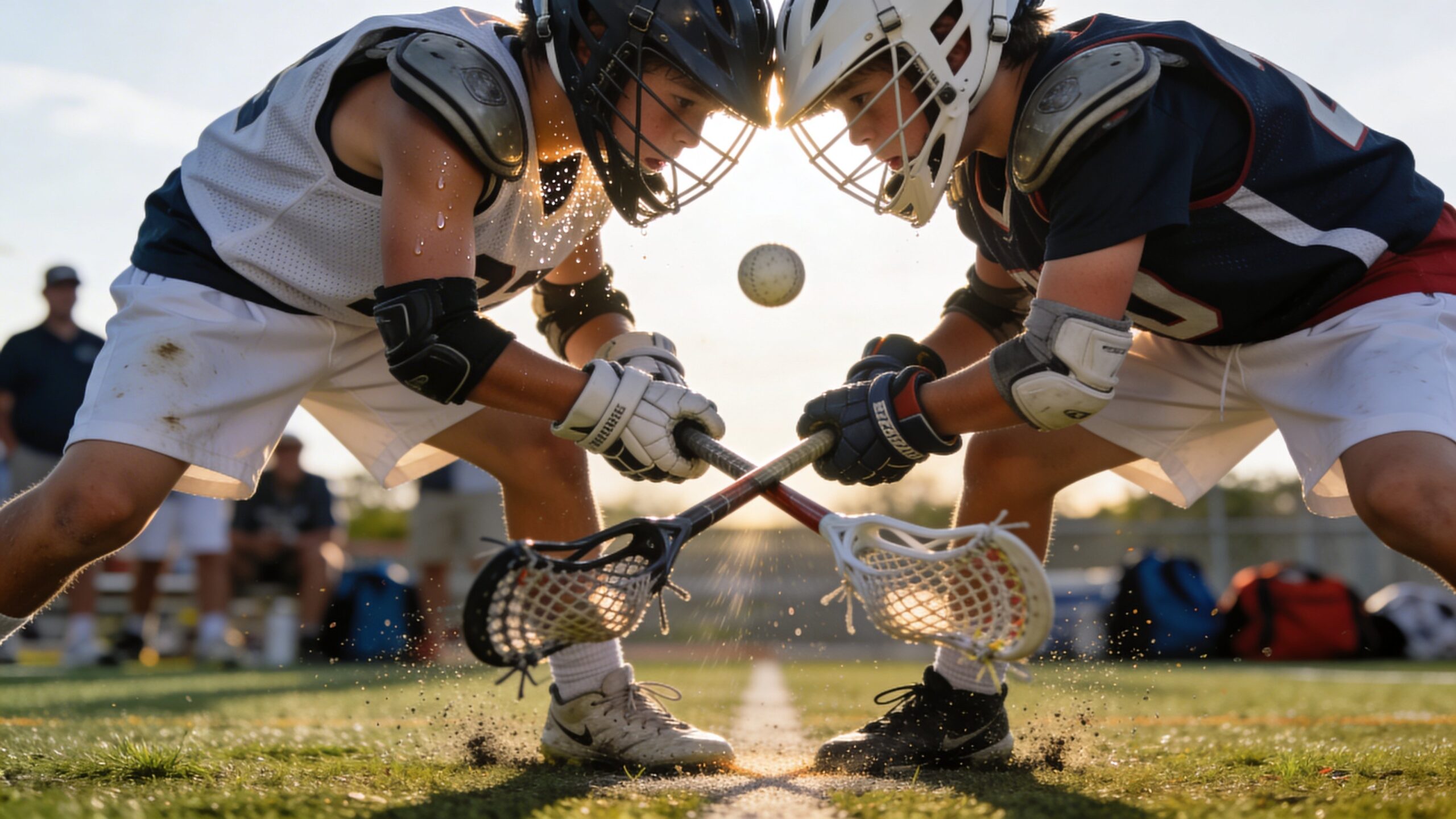
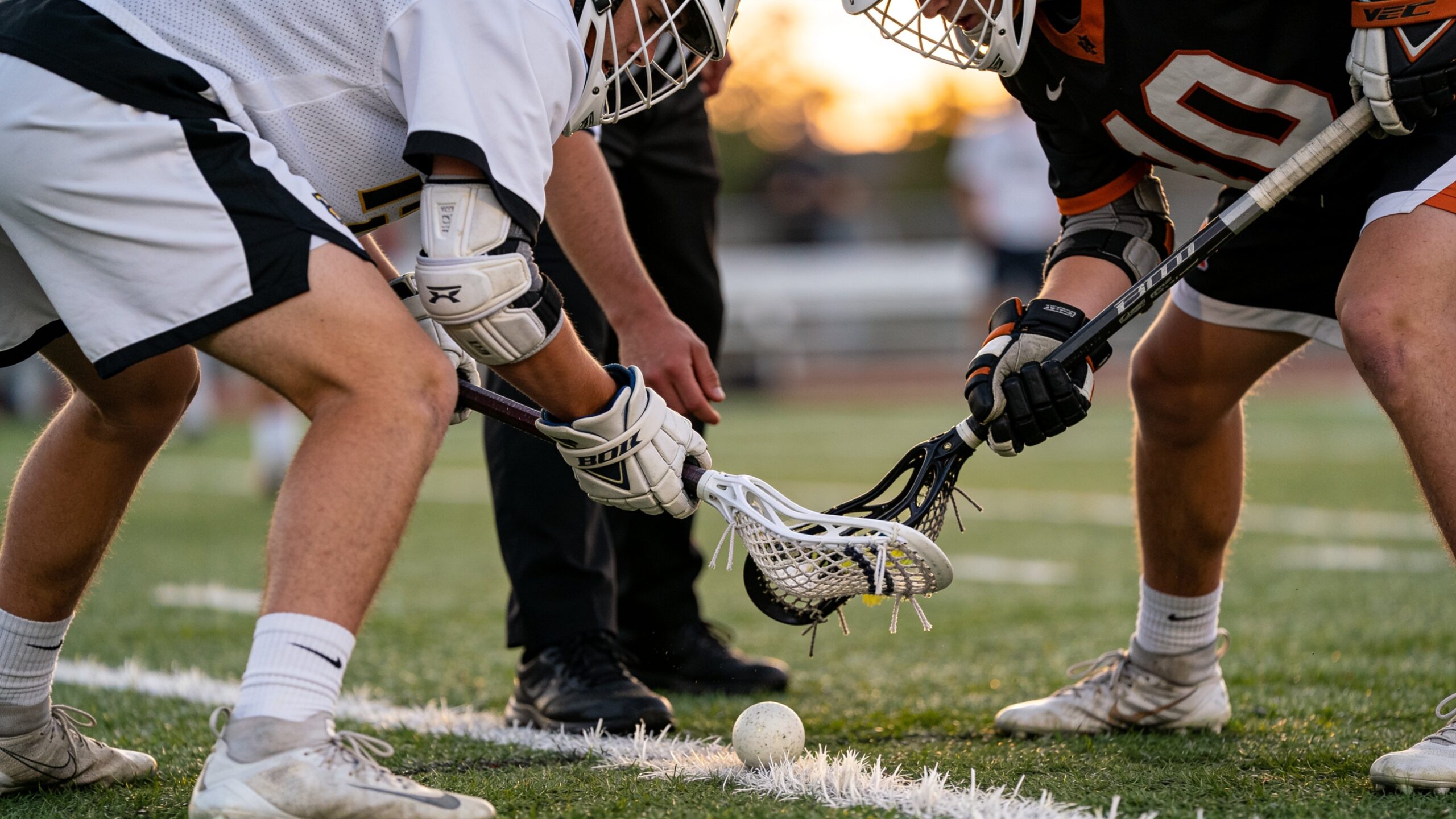
Many periods and goals are followed by a faceoff at midfield. During a faceoff, two players line up with their sticks near the ball and battle for possession when the whistle blows. Wing players wait near the sides and release when allowed, while other players remain in designated areas until possession is established. Faceoffs can be explosive moments that immediately create scoring chances. Faceoff specialists are valuable because possession is power in lacrosse. Winning the ball after a goal can allow a team to build momentum quickly. However, faceoff players must follow strict rules about positioning, movement, stick placement, and body contact. Violations can result in possession being awarded to the other team, making discipline as important as strength or quickness.
Passing, Catching, Scooping, and Carrying
Players may pass, catch, scoop, cradle, and run with the ball using their sticks. Cradling helps keep the ball in the pocket while a player moves through pressure. Ground balls are loose balls on the field, and scooping them cleanly is one of the most important skills in high school lacrosse. Coaches often say ground balls win games because every loose ball is a chance to gain possession.
Players may not use their hands to pick up the ball, except for the goalie under specific circumstances inside the crease. Field players must use their stick to scoop or control the ball. This rule keeps the game centered on stick skill and creates some of the most exciting battles on the field, where players fight for position, box out opponents, and scoop through traffic.
Contact and Legal Checking
High school lacrosse allows physical contact, but not unlimited contact. Legal body checks must be controlled, targeted properly, and delivered within the rules. Generally, contact must be made from the front or side, above the waist and below the neck, and against a player who has the ball or is within a playable distance of a loose ball. Dangerous hits, blindside contact, checks to the head or neck, and hits from behind are illegal.
Stick checking is also allowed when done properly. A defender may check an opponent’s stick or gloved hand on the stick to dislodge the ball. Slashes, uncontrolled swings, checks to the helmet, and wild contact can result in penalties. High school rules place strong emphasis on player safety, so officials are trained to penalize reckless or dangerous play even if a player appears to be making an aggressive defensive effort.
Personal Fouls
Personal fouls are more serious violations that usually result in penalty time. Common personal fouls include slashing, tripping, cross-checking, illegal body checking, unnecessary roughness, unsportsmanlike conduct, and targeting the head or neck. When a player commits a personal foul, he may serve time in the penalty box, leaving his team short-handed.
Penalty time creates a man-up opportunity for the opposing team. The offense gains an extra-player advantage and often runs a special formation designed to move the ball quickly and create high-percentage shots. The defense must rotate, communicate, and protect the middle of the field until the penalty expires. Because one personal foul can lead directly to a goal, discipline is one of the most important traits in high school lacrosse.
Technical Fouls
Technical fouls are less severe rule violations, but they still matter. Common technical fouls include holding, pushing, interference, illegal screening, warding, withholding the ball from play, offsides, and crease violations. If the team that commits the technical foul does not have possession, the other team is usually awarded the ball. If the offending team has possession, the player may serve a short penalty.
Technical fouls often happen during loose-ball scrambles, rides, clears, and offensive movement. A small push in the back, an illegal pick, or a player stepping offside can stop an attack before it develops. Great teams reduce technical fouls by playing with good footwork, strong communication, and awareness of field spacing.
Warding and Offensive Control
Warding is an important offensive rule. A player with the ball may not use his free hand or arm to push, hold, or control a defender’s stick or body. This prevents ball carriers from gaining an unfair advantage by shielding too aggressively. Players may protect their stick with body positioning, speed, and proper cradling, but they cannot create space by pushing defenders away with the off arm. Warding is sometimes difficult for new players to understand because lacrosse allows contact, but not every kind of contact. A dodger can lean, roll, split, and change direction, but once the free hand extends into a defender, officials may call a violation. Learning to dodge without warding is a major step in becoming a skilled high school attacker or midfielder.
Substitutions and the Box
High school lacrosse uses live substitutions, which means players can often substitute while play continues. Most substitutions happen through the designated substitution area, often called the box. A player coming off the field must leave properly before his replacement enters, or the team may be called for too many players on the field.
Substitutions are a major part of lacrosse strategy. Coaches use offensive midfielders, defensive midfielders, long-stick midfielders, and specialists depending on the situation. Quick, organized substitutions allow a team to match personnel to the moment. Poor substitutions can cause offsides, confusion, or open chances for the opponent.
Clearing and Riding
When a defense gains possession near its own goal, it must move the ball upfield into the offensive half. This process is called clearing. A successful clear requires spacing, passing, communication, and calm decision-making under pressure. The goalie often starts the clear by finding an open teammate or carrying the ball out of the crease.
The opposing team tries to prevent the clear through riding. A ride is defensive pressure applied after losing possession, often designed to force a turnover before the other team can settle into offense. Clearing and riding are where lacrosse becomes a chess match. Teams must understand timing, field balance, passing lanes, and when to take risks.
The Shot Clock and Stall Warnings
Some levels and rule sets use a shot clock or stall warning procedure to keep the offense from holding the ball too long without attacking. The purpose is to maintain pace and prevent a team from simply running out the clock. When officials believe a team is not making a legitimate effort to attack the goal, they may start a visible or verbal count depending on the rules in place.
This rule changes offensive strategy. A team must be patient but purposeful. Passing around the outside without threatening the goal may lead to pressure from officials and defenders. Smart offenses know how to manage possession while still creating scoring chances, attacking matchups, and forcing the defense to move.
Goalkeeper Rules and Protection
The goalie has special responsibilities and protections. Inside the crease, the goalie may use his stick and body to stop shots, direct clears, and control rebounds. Opposing players may not interfere with the goalie in the crease. Once the goalie gains possession in the crease, there is usually a limited time to move the ball out, encouraging quick decisions.
Goalies are the command center of the defense. They call out slides, cutters, ball position, and clearing options. Because shots can be extremely fast, rules protecting the goalie are essential. Crease violations, interference, and dangerous contact around the goal are taken seriously to keep play safe and fair.
Equipment Rules
High school lacrosse players must wear required protective equipment. This typically includes a helmet, gloves, shoulder pads, arm protection, mouthguard, athletic protective equipment, and a legal stick. Goalies wear additional protection designed for high-speed shots. Equipment rules are not cosmetic; they are safety rules.
Sticks must also meet legal specifications for length, pocket depth, and shape. If a pocket is too deep or a stick is altered illegally, it can provide an unfair advantage by making the ball harder to dislodge. Officials may conduct stick checks, and illegal equipment can lead to penalties. Players should regularly check their gear before games to avoid preventable violations.
Sportsmanship and Conduct
High school lacrosse places strong emphasis on sportsmanship. Players, coaches, and spectators are expected to respect officials, opponents, teammates, and the game itself. Unsportsmanlike conduct can include taunting, abusive language, arguing excessively, throwing equipment, or disrespecting officials. These actions can result in penalties and may affect team discipline beyond the game.
The emotional pace of lacrosse is intense. Goals happen quickly, contact is frequent, and momentum can swing in seconds. Good teams learn to stay composed. A player who retaliates after a hard check often hurts his own team more than the opponent. Controlled intensity is the ideal: play hard, compete fiercely, and stay within the rules.
Differences Between Boys and Girls High School Lacrosse
Boys and girls high school lacrosse share the same basic objective but have different rule structures, equipment requirements, and contact standards. Boys lacrosse generally allows more body contact and requires more protective equipment. Girls lacrosse traditionally emphasizes positioning, stick skill, and controlled checking with stricter limits on contact.
Because the rules differ significantly, players and parents should learn the rule set for the specific version they are watching or playing. A legal defensive play in one version may be illegal in another. Both games require speed, skill, teamwork, and toughness, but they express those qualities through different rule systems.
Why Rules Make the Game Better
Rules do not slow lacrosse down; they make the speed meaningful. Offsides rules create spacing. Crease rules protect goalies. Penalty rules discourage reckless contact. Substitution rules reward organization. Equipment rules support safety and fairness. Every part of the rulebook exists to balance freedom and structure.
When players understand the rules, they play with more confidence. Defenders know how to be physical without being reckless. Attackers know how to dodge without warding. Midfielders understand substitutions and field balance. Goalies communicate with authority. Fans follow the whistle and see the strategy behind the chaos.
Final Thoughts on High School Lacrosse Rules
High school lacrosse is thrilling because it moves at the edge of control. The ball flies, players collide, possessions change quickly, and every decision matters. The rules give shape to that excitement. They turn raw speed into sport, contact into competition, and individual skill into team strategy. For new fans, the best way to learn is to watch the flow of possession, notice where players are positioned, and listen for whistles around contact, crease play, offsides, and substitutions. For players, the key is to learn the rules before they become game-changing mistakes. Once the rulebook starts to make sense, high school lacrosse becomes even more exciting: a fast, disciplined, intelligent game where every whistle tells part of the story.