How To Win More Lacrosse Faceoffs
Winning lacrosse faceoffs is not only about strength or quick hands. A good faceoff player combines stance, timing, clamp mechanics, exits, ground-ball toughness, wing communication, and calm decisions after possession is nearly won. The goal is not just to touch the ball first; it is to help the team secure possession and start the next play.
A: A legal combination of stance, timing, clamp control, exit choice, and support wins possession.
A: No, quickness helps, but balance, counters, and exits matter too.
A: A clamp is the motion used to control the ball at the whistle.
A: The player should use a planned move that reaches space or teammate support.
A: They help secure loose balls and support the specialist’s exit.
A: No, beginners should build legal stance, clean clamps, and simple exits first.
A: They should learn the current rulebook and practice legal setup habits.
A: Track clean possessions, ground-ball support, and safe first passes.
A: Frequent short technical sessions are usually better than occasional long guessing sessions.
A: The team must secure the ball, make a safe decision, and enter offense or transition.
Winning Means Possession
Faceoff success should be measured by clean team possession, not only first contact. For players learning the position, the useful starting point is to connect the idea to a real possession rather than memorizing a phrase. Lacrosse strategy is not separate from the basic skills of catching, carrying, passing, shooting, defending, and communicating. It is the reason those skills happen in a certain order. When players understand the purpose behind a movement, they stop chasing the ball and begin reading the field.
The same idea also helps new fans watch the game with more confidence. Instead of trying to see every player at once, watch the first choice, the help that follows, and the next open space. Lacrosse faceoff technique becomes clearer when each possession is treated as a chain of small decisions. One pass, slide, cut, or ground ball can change the whole shape of the play before the shot ever happens.
Players can use this section as a practice lens, too. A coach may describe winning means possession with different terminology, but the field test is always whether the players make cleaner decisions. If the ball carrier has an outlet, if the nearest teammate understands their support job, and if the defense or offense reacts together, the concept is working. If everyone moves independently, the same idea becomes noise.
That is why lacrosse faceoff technique should be taught through examples instead of slogans. A single possession can show timing, risk, communication, and recovery more clearly than a long list of terms. The goal is not to make the game feel complicated. The goal is to give players and fans a simple way to explain why one choice opened the field while another choice closed it.
Stance And Setup
A repeatable legal setup gives the specialist a stable starting point. For players learning the position, the useful starting point is to connect the idea to a real possession rather than memorizing a phrase. Lacrosse strategy is not separate from the basic skills of catching, carrying, passing, shooting, defending, and communicating. It is the reason those skills happen in a certain order. When players understand the purpose behind a movement, they stop chasing the ball and begin reading the field.
The same idea also helps new fans watch the game with more confidence. Instead of trying to see every player at once, watch the first choice, the help that follows, and the next open space. Lacrosse faceoff technique becomes clearer when each possession is treated as a chain of small decisions. One pass, slide, cut, or ground ball can change the whole shape of the play before the shot ever happens.
Players can use this section as a practice lens, too. A coach may describe stance and setup with different terminology, but the field test is always whether the players make cleaner decisions. If the ball carrier has an outlet, if the nearest teammate understands their support job, and if the defense or offense reacts together, the concept is working. If everyone moves independently, the same idea becomes noise.
That is why lacrosse faceoff technique should be taught through examples instead of slogans. A single possession can show timing, risk, communication, and recovery more clearly than a long list of terms. The goal is not to make the game feel complicated. The goal is to give players and fans a simple way to explain why one choice opened the field while another choice closed it.
Clamp And Counter
The first move must be connected to control and adjustment. For players learning the position, the useful starting point is to connect the idea to a real possession rather than memorizing a phrase. Lacrosse strategy is not separate from the basic skills of catching, carrying, passing, shooting, defending, and communicating. It is the reason those skills happen in a certain order. When players understand the purpose behind a movement, they stop chasing the ball and begin reading the field.
The same idea also helps new fans watch the game with more confidence. Instead of trying to see every player at once, watch the first choice, the help that follows, and the next open space. Lacrosse faceoff technique becomes clearer when each possession is treated as a chain of small decisions. One pass, slide, cut, or ground ball can change the whole shape of the play before the shot ever happens.
Players can use this section as a practice lens, too. A coach may describe clamp and counter with different terminology, but the field test is always whether the players make cleaner decisions. If the ball carrier has an outlet, if the nearest teammate understands their support job, and if the defense or offense reacts together, the concept is working. If everyone moves independently, the same idea becomes noise.
That is why lacrosse faceoff technique should be taught through examples instead of slogans. A single possession can show timing, risk, communication, and recovery more clearly than a long list of terms. The goal is not to make the game feel complicated. The goal is to give players and fans a simple way to explain why one choice opened the field while another choice closed it.
Exits And Wings
The ball has to leave pressure with support from nearby teammates. For players learning the position, the useful starting point is to connect the idea to a real possession rather than memorizing a phrase. Lacrosse strategy is not separate from the basic skills of catching, carrying, passing, shooting, defending, and communicating. It is the reason those skills happen in a certain order. When players understand the purpose behind a movement, they stop chasing the ball and begin reading the field.
The same idea also helps new fans watch the game with more confidence. Instead of trying to see every player at once, watch the first choice, the help that follows, and the next open space. Lacrosse faceoff technique becomes clearer when each possession is treated as a chain of small decisions. One pass, slide, cut, or ground ball can change the whole shape of the play before the shot ever happens.
Players can use this section as a practice lens, too. A coach may describe exits and wings with different terminology, but the field test is always whether the players make cleaner decisions. If the ball carrier has an outlet, if the nearest teammate understands their support job, and if the defense or offense reacts together, the concept is working. If everyone moves independently, the same idea becomes noise.
That is why lacrosse faceoff technique should be taught through examples instead of slogans. A single possession can show timing, risk, communication, and recovery more clearly than a long list of terms. The goal is not to make the game feel complicated. The goal is to give players and fans a simple way to explain why one choice opened the field while another choice closed it.
Practice For Game Pressure
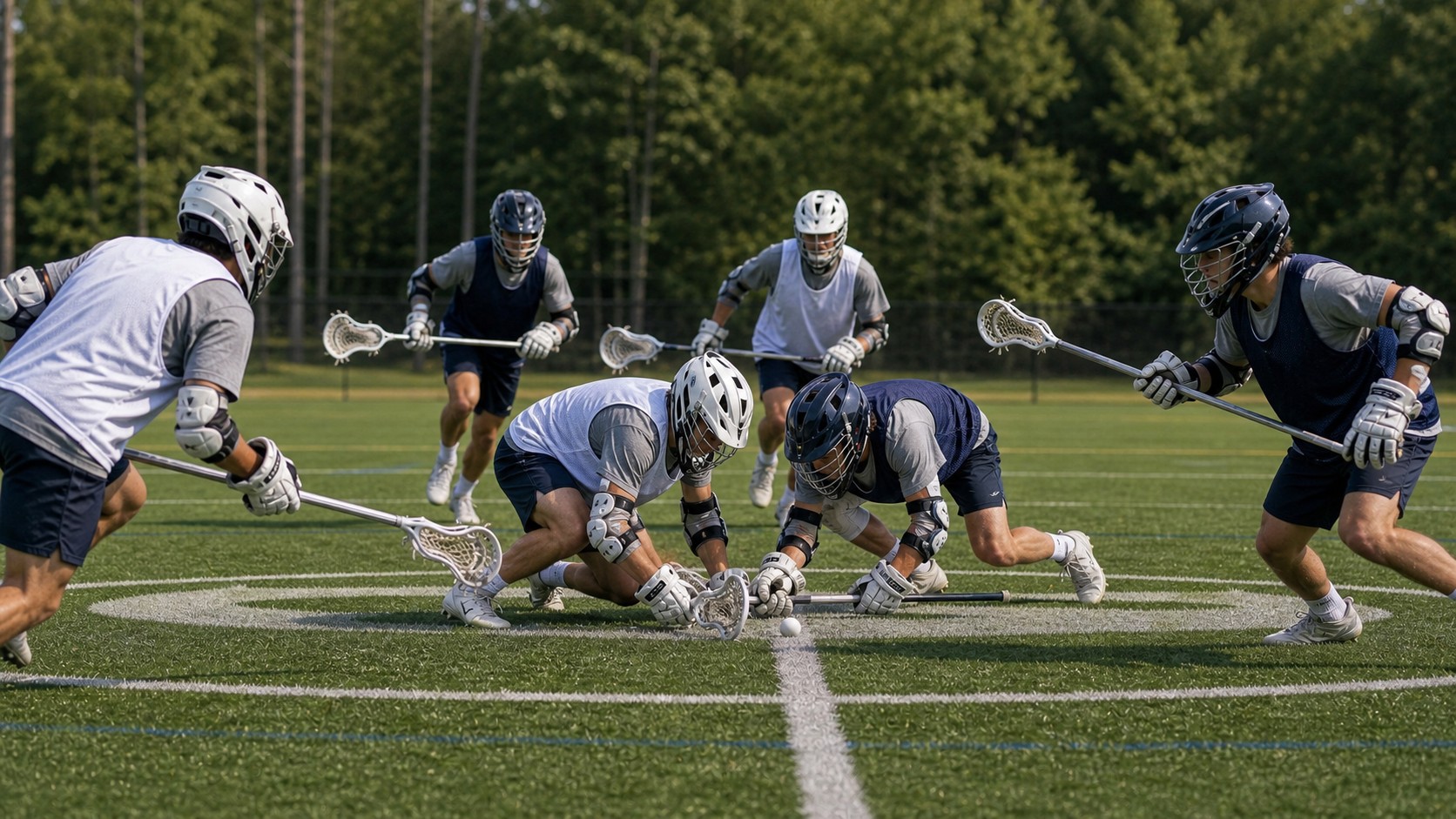
Faceoff practice should include resistance, fatigue, rules, and messy ground balls. For players learning the position, the useful starting point is to connect the idea to a real possession rather than memorizing a phrase. Lacrosse strategy is not separate from the basic skills of catching, carrying, passing, shooting, defending, and communicating. It is the reason those skills happen in a certain order. When players understand the purpose behind a movement, they stop chasing the ball and begin reading the field.
The same idea also helps new fans watch the game with more confidence. Instead of trying to see every player at once, watch the first choice, the help that follows, and the next open space. Lacrosse faceoff technique becomes clearer when each possession is treated as a chain of small decisions. One pass, slide, cut, or ground ball can change the whole shape of the play before the shot ever happens.
Players can use this section as a practice lens, too. A coach may describe practice for game pressure with different terminology, but the field test is always whether the players make cleaner decisions. If the ball carrier has an outlet, if the nearest teammate understands their support job, and if the defense or offense reacts together, the concept is working. If everyone moves independently, the same idea becomes noise.
That is why lacrosse faceoff technique should be taught through examples instead of slogans. A single possession can show timing, risk, communication, and recovery more clearly than a long list of terms. The goal is not to make the game feel complicated. The goal is to give players and fans a simple way to explain why one choice opened the field while another choice closed it.
A practical way to keep learning lacrosse faceoff technique is to watch one sequence twice. First, follow the ball. Then replay the same idea in your mind and watch the players away from the ball: who balanced the field, who became an outlet, who communicated, and who protected against the counterattack. This habit turns strategy from an abstract coaching word into something visible. It also shows why disciplined teams can look calm even when the game is fast.
The final layer is judgment. Lacrosse faceoff technique does not mean choosing the most aggressive option every time. Sometimes the right play is to push quickly, and sometimes it is to settle, substitute, or reset. Sometimes pressure should arrive immediately, and sometimes patience protects the team shape. The best players learn to read the score, clock, matchup, field position, and teammate support before deciding what the next action should be.
For beginners, that judgment grows slowly through repetition. The first step is recognizing the common pattern. The next step is seeing the exception. Over time, players begin to understand that lacrosse is not a choice between structure and creativity. Structure gives creativity a safer place to happen, because teammates know where the next option should appear.
Coaches can reinforce lacrosse faceoff technique by asking players to explain the why behind a choice. Why was that pass safe? Why did that defender help? Why did the team slow down after a loose ball? Those questions build awareness without overwhelming players with terminology. They also help parents and fans see improvement in decisions, not only in goals, saves, or highlight plays.
The most reliable teams are usually the ones that make the ordinary decisions well. They support the ball, communicate early, recover after pressure, and understand when a possession needs patience. That steadiness may not look dramatic from the sideline, but it is often what separates a rushed team from a composed one. The more those habits repeat, the more the larger strategy becomes visible.
A final useful habit is to connect lacrosse faceoff technique to the next practice rep. If a team struggles with spacing, the answer may be a drill that teaches outlets and movement after a pass. If the issue is transition, the answer may be a ground-ball drill that flows directly into numbers. Strategy becomes real when practice makes the next game decision easier.