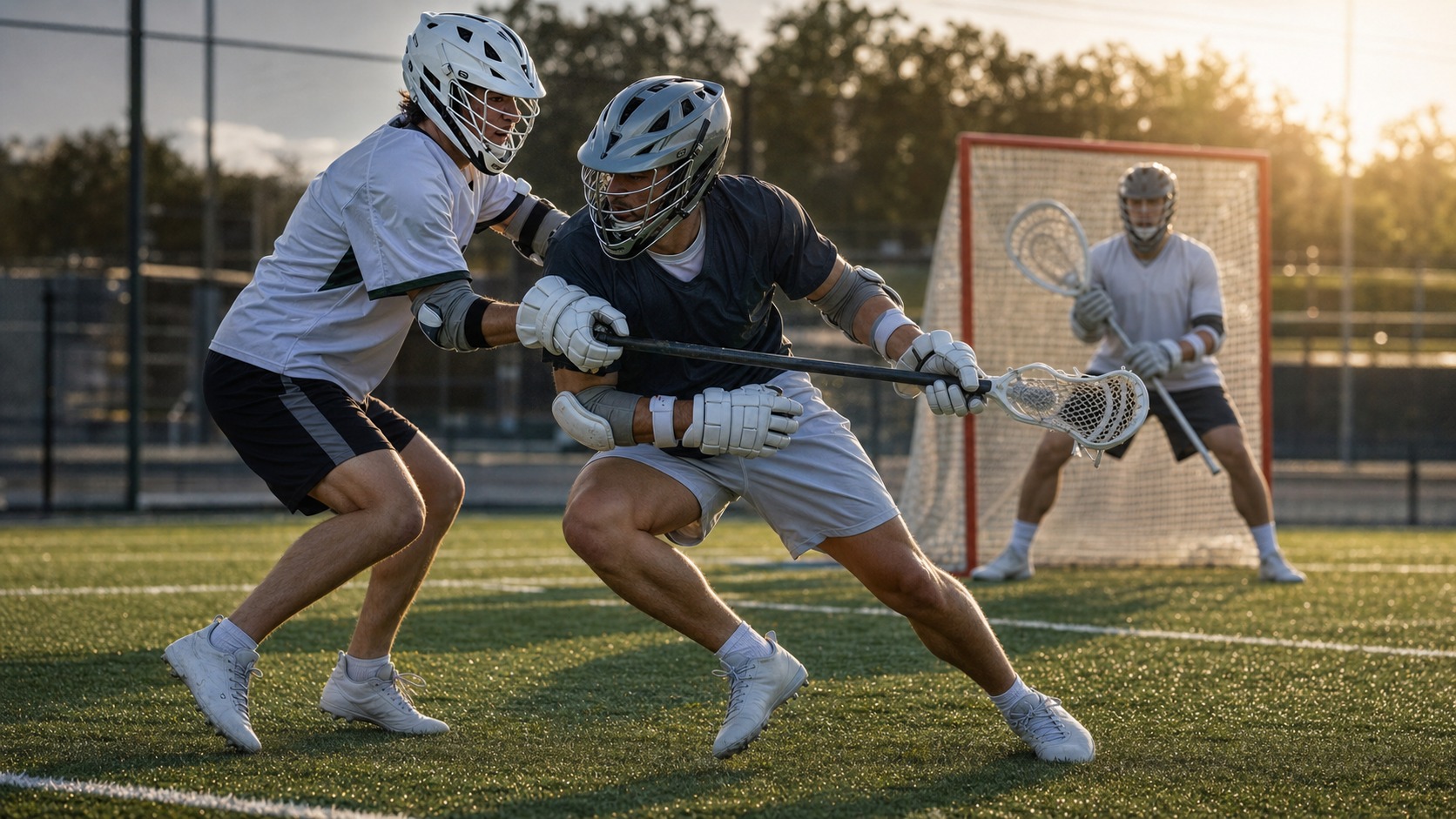
Great Drills Train the Decision Along With the Skill
Attackmen need precise stick work, quick feet, accurate finishing, vision under pressure, off-ball timing, and the competitiveness to ride after a turnover. A useful drill isolates one of those skills long enough to improve technique, then reconnects it to a realistic read. Shooting at an empty net can build mechanics, but scoring in a game requires recognizing the defender’s leverage, catching the feed cleanly, reading the goalie, and deciding whether the shot remains available. The same principle applies to dodging and feeding. Rehearsed moves become valuable only when a live opponent changes the answer. An effective attack practice therefore progresses from controlled repetitions to guided pressure and small-sided play. Quality matters more than an impressive repetition total. Players should work from both hands, finish from several angles, communicate between turns, and track whether the drill creates balanced, transferable habits rather than fatigue-driven shortcuts. Practice design also shapes mindset. If every repetition ends with a shot, players learn to force one; if the outlet, backup, and ride remain active, they learn to value possession. The best drills are demanding without becoming chaotic. They give the attacker enough information to make a choice and enough repetition to recognize the cue again.
A: Frequent quality practice is useful, but mechanics and decisions matter more than raw totals.
A: Yes, with difficulty matched to each hand’s current control.
A: After the basic movement is safe and repeatable, add guided then live pressure.
A: No; cones teach patterns, while defenders teach distance, timing, and reads.
A: Use moving wing and crease targets with a defender influencing the lane.
A: A preceding catch, footwork cue, defensive read, goalie movement, or decision.
A: Long enough for focused repetitions, but short enough to preserve quality and attention.
A: No; some should reward the outlet, reset, backup, or ride.
A: Track accuracy, turnover rate, decision quality, weak-hand success, and transfer to live play.
A: The one addressing the player’s current need while preserving game context.
Start With an Outcome, Not a Drill Name
Before setting cones, decide what should improve. “Shooting” is too broad. The need might be catching ready, placing the ball after a goalie moves, finishing through light contact, or rejecting a covered shot. A precise outcome determines the feed, footwork, pressure, and feedback.
Good drills are easy to explain because every part supports the goal. Extra lines, complicated routes, and unrelated conditioning reduce repetitions without improving transfer. Players should understand what success looks like before the first attempt. Define the standard in observable language: balanced catch, hands free before release, pass delivered ahead of the slide, or immediate ride after a save. Clear standards make feedback consistent among coaches.
Build From Technique to Live Choice
A three-stage progression works for many attack skills. Begin unopposed or with guided pressure so the player can feel the mechanics. Add a defender who presents one or two readable reactions. Finish with live play where the attacker chooses among a shot, feed, or reset.
Skipping directly to live competition can hide poor technique because an athletic player finds temporary solutions. Remaining unopposed too long creates performers who look clean in lines but cannot adapt. The progression connects control to decision-making. It also gives coaches a way to diagnose failure. If technique works unopposed but disappears against guided pressure, the next step may be recognition, balance, or realistic distance rather than more isolated repetitions.
Coaches can return to an earlier stage for a targeted correction, then quickly restore the read. This keeps feedback specific without removing the game from practice.
Quick-Stick and Close-Finishing Series
Place feeders at X and both wings, then deliver changing passes to a crease finisher. The player presents the stick late, catches softly, and uses a compact release. Rotate feed height and angle so the receiver cannot memorize one motion.
Add a goalie or target zones only after the catch remains controlled. The finisher reads movement and places away from the recovery. Light pad pressure can follow the catch, provided technique, equipment, and supervision are appropriate.
The final progression includes a recovering defender. The attacker must decide whether to quick-stick, secure and finish, or pass out. Reward the correct rejection as strongly as the goal. Vary the defender’s arrival so the answer is not predetermined. Sometimes the shooting lane remains open; sometimes one extra pass creates a better chance on the backside.
Wing Dodging With an Exit Read
Begin on the wing with a defender giving realistic approach leverage. The attackman uses a split, rocker, hesitation, or direct acceleration to create an edge. A coach or teammate waits as the outlet while a second defender becomes the slide.
The repetition is successful when the attacker reaches useful space under control and reacts correctly. If no slide comes, finish. If help commits, deliver before the double closes. If leverage is restored, rollback or reset instead of forcing through traffic. Change the defender’s approach angle and stick side between turns. The attacker learns to read the matchup rather than select a move while waiting in line.
X Footwork and Feeding Progression
Start behind the goal and work both directions. Practice inside rolls, question-mark moves, rollbacks, and short carries around the cage. The player should arrive at goal-line extended balanced enough to shoot or feed.
Add a crease target and opposite wing. A guided defender influences the ball carrier while a slide player chooses one responsibility to leave. The X attackman scans before the dodge and releases when help actually commits.
Finish with two-on-two or three-on-three below goal-line extended. Picks, slips, and exchanges create additional decisions without requiring a full six-on-six setup. Keep score through quality outcomes: a clean turn at the pipe, a feed before help arrives, a legal screen, or a successful defensive recovery. Competition should reward the lesson rather than only the final goal.
Feeding Through Moving Windows
Stationary targets reward throwing to a location; games require delivering to moving hands around defensive sticks. Use cutters who change timing and direction, and place a defender in the lane with controlled stick movement.
The feeder carries a few steps to change the angle, holds help with eyes, and selects the appropriate release point. The receiver shows a target only when visible. A covered feed should become an immediate safe pass rather than a forced attempt. Rotate the passer’s hand and starting location. Feeds from X, a wing, and above the cage encounter different sticks, body positions, and receiver sightlines.
Off-Ball Read-and-React Games
Use three attackers and three defenders around the goal. Give the ball carrier a wing or X dodge, then let off-ball players respond. They may clear through, backdoor cut, hold width, or replace depending on defensive vision and slide location.
Do not prescribe the exact cut before every repetition. Pause occasionally and ask what cue each player saw. This develops shared language and reveals whether movement came from information or habit.
Award a point when off-ball action creates the advantage, even if another player scores. The scoring system directs attention toward teamwork that normal statistics miss.
Weak-Hand Development That Transfers
Begin with clean catches, short passes, ground balls, and protected carries in the developing hand. Accuracy and control come before maximum shooting speed. Frequent short sessions are more effective than rare exhausting ones.
Move into decision drills gradually. The player catches on the weaker side and may pass, carry, or finish based on pressure. Do not require a weak-hand shot when the correct game decision is an outlet. The objective is functional choice, not artificial obedience.
Track improvement separately by skill. A player may pass reliably before shooting with range. Specific progress prevents frustration and identifies the next useful challenge. Compare accuracy and decision quality under similar pressure instead of celebrating any weak-hand touch. Functional confidence grows when the player succeeds for a reason that can be repeated.
Small-Sided Games for Complete Attack Play
Two-on-two highlights picks and slips. Three-on-three emphasizes slide reads, crease movement, and recovery. Four-on-four adds backside spacing and skip passes. Fewer players create more touches and clearer cause-and-effect than full-field play.
Constraints should serve a purpose. A short shot clock can train urgency, while bonus points for assisted inside shots can reward ball movement. Remove the constraint after the lesson so players demonstrate that they choose the behavior naturally. Change teams and starting positions frequently enough that athletes cannot solve the game with one favorite matchup. Variety belongs in the read, not in decorative drill complexity.
Include Shot Backup, Rebounds, and Riding
Attack drills often stop when the goalie makes a save, teaching attackers to stop too. Continue every repetition through the next possession decision. A missed shot needs backup, a rebound needs pursuit, and a save begins a ride.
Assign clear riding responsibilities. The nearest attacker pressures with an angle, teammates take adjacent outlets, and the group communicates. If the defense clears, the repetition ends; if the attack wins it back, play continues to a new shot.
This extension improves conditioning naturally while connecting scoring to possession. Players learn that their job does not end with the release.
Feedback That Changes the Next Repetition
Feedback should be brief and observable. “Plant wider,” “scan the crease before receiving,” or “release before the second defender arrives” gives the player an action. Long speeches reduce repetitions and overload attention.
Ask athletes what they saw before providing the answer. Their explanation reveals whether the problem was recognition or execution. Video can confirm footwork, stick protection, and timing that are difficult to feel at speed. Limit each correction to the most influential detail, then let the athlete try again. Several simultaneous instructions make it hard to know which change produced improvement.
Designing a Balanced Attack Session
A complete session might move from dynamic stick work to finishing technique, position-specific footwork, guided reads, and small-sided competition. Short water and feedback breaks preserve quality. The order should prepare players for the next demand rather than exhaust them before decision work.
Vary the emphasis across the week. One day may prioritize close finishing and crease timing; another may focus on X feeding, wing dodges, and riding. Repeating core principles with different contexts prevents both boredom and shallow variety.
Record a small set of useful measures: shots on target, clean weak-hand completions, turnovers under pressure, successful outlets before a double, and off-ball actions that create quality chances. Numbers should guide coaching rather than replace observation.
Session design should also account for roster size and available goalkeepers. With one goalie, alternate live shooting blocks with passing, footwork, and off-ball stations so the goalie receives purposeful work instead of an unsafe stream of shots. With a large attack group, create several short stations and rotate quickly; standing in long lines teaches nothing. A small group can use repeated two-on-two starts from different locations, changing the initial advantage each time. In every format, attackers who are waiting should have an assignment such as feeding, tracking outcomes, providing controlled pressure, or identifying the defensive cue. Coaches can scale difficulty by narrowing space, adding a recovering defender, shortening decision time, or requiring the ball to move through a particular area. Increase only one variable when possible. That makes the source of success or failure visible and keeps the challenge demanding without turning the exercise into random congestion.
Elite scoring skills grow from thousands of attentive decisions, not a magical drill. When practice connects technique, pressure, and team context, attackmen become more than accurate shooters. They learn how to create the chance, recognize its quality, and preserve possession when the defense removes it. A well-designed session leaves players able to explain what they saw, not merely how tired they feel. Coaches should finish with live play that allows the day’s skills to appear naturally, then note which habits transferred and which collapsed under pressure. That evidence shapes the next practice. Over a season, this cycle of clear outcome, focused repetition, realistic decision, and honest review develops attackmen who can solve changing defenses instead of performing rehearsed routines.