
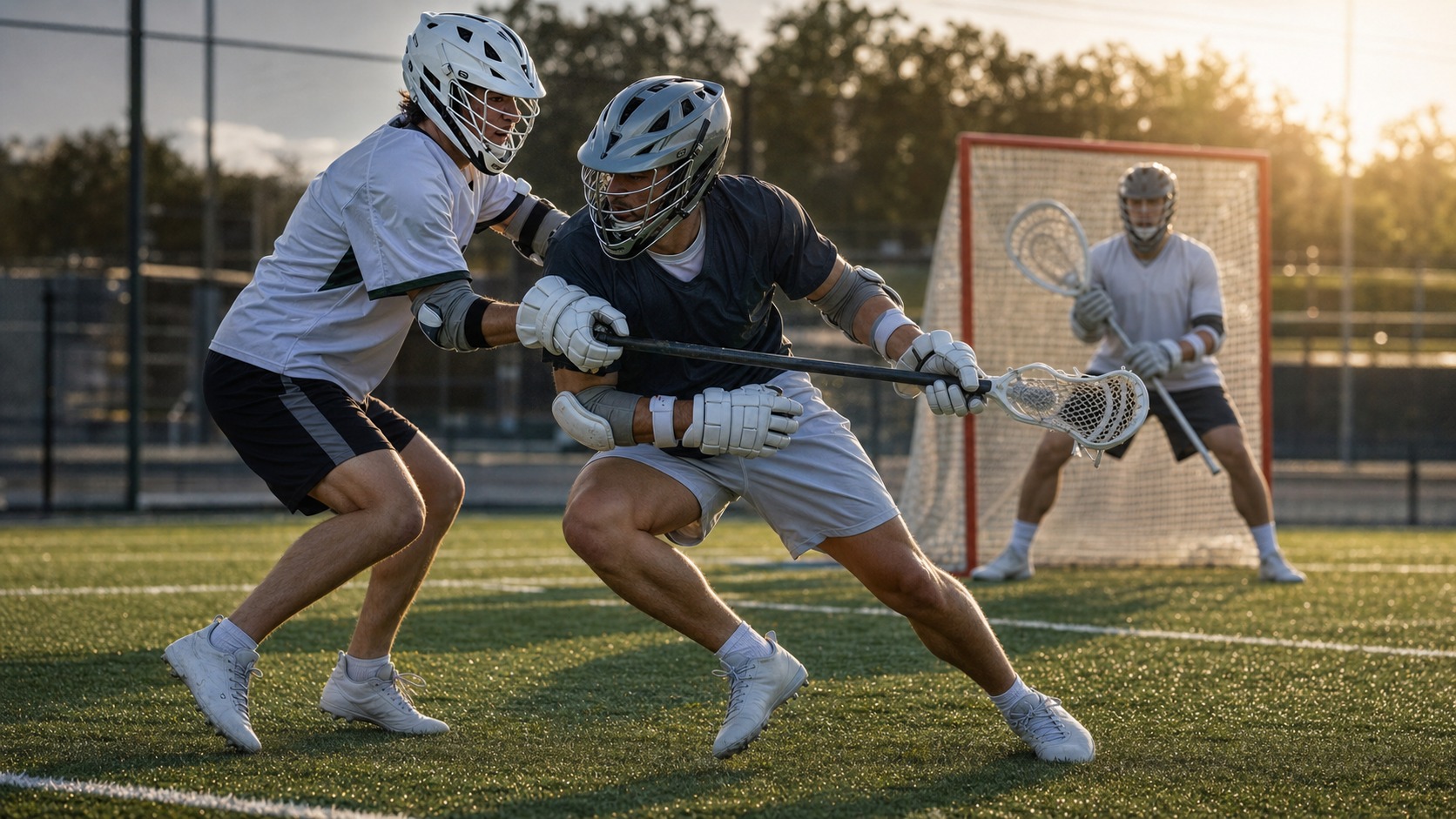
Two Styles, One Purpose: Create a Better Scoring Chance
Power and finesse attack describe how lacrosse players tend to create separation, not two rigid categories. A power attacker uses strength, balance, acceleration, and protected body position to keep moving through legal contact. A finesse attacker changes pace, manipulates a defender’s feet, disguises intention, and releases the ball before pressure settles. Both styles can force a slide, reach valuable shooting space, and create feeds for teammates. Neither succeeds through its headline trait alone. Strength without vision runs into double teams, while deception without direct threat gives defenders time to recover. The most difficult attackers borrow from both approaches. They can drive a matchup when leverage is available, hesitate when the defender braces for contact, and choose the finish that fits the goalie’s movement. Understanding the styles helps players identify natural strengths while building the missing tools that prevent a scouting report from making them predictable. Style also changes across a possession. A player may begin with a patient carry, attack forcefully when the defender opens, then use touch on the final feed. Fatigue, matchup changes, field position, and the slide plan all affect which tool is appropriate. The best identity is therefore not a fixed label but a reliable process for choosing how to create the next advantage.
A: A player who often wins with strength, leverage, balance, and direct acceleration.
A: A player who often wins with timing, deception, footwork, vision, and precise release.
A: No; technique, balance, and lower-body leverage matter greatly.
A: Not necessarily; finesse players still protect through contact and compete in traffic.
A: Production depends on decisions, matchups, teammates, and execution rather than the label.
A: Yes, and combining them makes defensive scouting more difficult.
A: As help commits or the direct route loses its advantage.
A: Defenders bracing for force can be vulnerable to hesitation and redirection.
A: Yes, through leverage, leg drive, balance, and protected positioning.
A: The ability to create team advantage through multiple appropriate solutions.
What Coaches Mean by Power and Finesse
Power attack usually refers to players who win direct confrontations. They protect the stick, get a shoulder or hip past the defender, and continue toward useful space despite contact. Finesse attack usually describes players who create the same advantage through timing, disguise, quick redirection, and precise ball movement.
The terms describe tendencies, not body types. A smaller athlete can play with excellent leverage and contact balance. A large athlete can possess soft hands, deceptive eyes, and subtle footwork. Labeling by appearance hides the skills that actually make the style work. Coaches should describe observable behaviors instead: whether the player changes pace, protects through contact, recognizes help, or creates a hands-free passing position. Specific language gives the athlete something trainable.
How Power Attack Creates Separation
Power begins with position. The attacker approaches under control, attacks the defender’s leverage, and places the body between the stick and pressure. Strong legs drive the movement, while the hands remain protected and available to pass. Extending an arm or charging without control can produce a foul or turnover instead of an advantage.
Acceleration matters because strength is easier to contain when it arrives at one constant speed. A sudden burst forces the defender to open the hips or retreat. Once the attacker gains an edge, balance allows the route to continue toward goal-line extended, the alley, or another high-value area.
The best power dodgers know when the direct route has ended. If a slide arrives squarely or the defender restores leverage, forcing forward can bury the stick in traffic. A rollback, early outlet, or reset preserves the advantage for the team. That decision is itself a form of strength. Maintaining possession after drawing two defenders creates more pressure than attempting a low-angle shot while falling away from the cage.
How Finesse Moves a Defender
Finesse attack manipulates expectation. A shoulder turn suggests one lane, a hesitation changes the defender’s rhythm, and a quick plant redirects before the matchup can transfer weight. The attacker wins by making the defender move first and then using the space that decision leaves.
Deception must remain connected to threat. A sequence of fakes that never approaches the cage lets the defense watch comfortably. Effective finesse players mix subtlety with direct acceleration. The defender must believe the first route is dangerous for the counter to work. Eyes and shoulders can influence help defenders as well as the primary matchup. A convincing look toward the crease may widen a wing lane before the ball ever changes direction.
Footwork Is the Foundation of Both Styles
Power players need efficient approach steps, a strong base, and the ability to turn a gained shoulder into forward movement. Finesse players need deceleration, single-leg balance, and precise change-of-direction angles. Both lose effectiveness when their feet cross, rise too tall, or move faster than the stick can remain protected.
Training should include starts, stops, lateral plants, rolls, and contact balance in both directions. Cone patterns can introduce mechanics, but a defender is necessary to teach distance and timing. The attacker must learn how real hips and sticks respond rather than memorize a route around equipment.
Good footwork also protects decision-making. A balanced player can pass when the slide arrives. An off-balance player is committed to the move even after the defense has solved it. Players should be able to stop under control on either foot, keep the stick protected during the stop, and restart without standing upright. Those quiet transitions separate usable game footwork from a fast drill time.
Reading Matchups Without Oversimplifying
A powerful attacker may target a lighter defender, but size does not guarantee leverage. A well-positioned defender can steer a stronger player away from the goal. A finesse attacker may challenge a physical defender’s feet, yet an experienced matchup may remain patient and refuse the first fake.
Early possessions provide information. How does the defender approach? Which hand receives stick pressure? Does the matchup open the hips early, chase checks, or recover well after a rollback? The attacker should test these details without forcing a low-value shot.
The team defense matters beyond the individual. A favorable dodge into an early slide may be less useful than attacking another area with weaker help. Complete attackmen read the matchup and the rotation behind it. They also notice how the defense changes after success. A defender may shade earlier, the crease may tighten, or a switch may bring a new stick. Repeating yesterday’s winning move without reading today’s adjustment is predictability.
Finishing Styles Near the Goal
Power finishers maintain their line through ordinary contact, keep the hands protected, and release from a balanced platform. They may finish around a defender’s body or shoot before the goalie can set after a forceful turn. Control is essential near the crease and goal mouth, where illegal contact or restricted-area violations can erase the play.
Finesse finishers change release point and timing. A quick stick, inside fake, low-angle placement, or delayed release can move the goalie without requiring maximum velocity. The best choice responds to the goalie rather than showcasing a favorite move. Power finishers need that same responsiveness, and finesse players still need enough stability to execute through a bump. The categories overlap most clearly at the moment of release.
Feeding and Team Offense
Both styles create value when they force help. A power dodge can draw a slide because the defender is losing position. A finesse move can turn the corner cleanly and produce the same reaction. The ball carrier should identify the outlet before attacking and release while balanced.
Power players sometimes hold too long because they believe every advantage must end at the cage. Finesse players can overhandle while searching for a perfect opening. In both cases, the extra pass may be the most damaging choice. Moving the ball makes the defense complete several difficult recoveries instead of surviving one dodge.
Off-ball teammates support the style. They clear direct routes for a power attackman, time cuts as defenders brace for contact, and hold width for skip passes. Around a finesse initiator, they preserve room for redirection and remain ready when deception shifts defensive eyes. Communication keeps those movements from becoming assumptions. The ball carrier can signal the intended side, while adjacent players confirm who clears, who replaces, and who backs up the likely shot.
Common Limits of a One-Style Player
A predictable power attacker may lower the head, expose the stick, and run into a planned double team. Defenders can concede harmless outside space while protecting the middle. The answer is not abandoning strength; it is adding vision, pace change, and an exit pass.
A predictable finesse attacker may dance without gaining ground. Patient defenders stay square, and teammates lose timing while waiting for the move to finish. Direct first steps, willingness to absorb normal contact, and simpler ball movement make deception credible again. The solution for both styles is often earlier recognition. When the player sees that the defense has kept leverage, moving the ball quickly allows a second matchup to attack a longer recovery.
Training Power Safely and Usefully
Strength work should support lacrosse positions: stable hips, strong legs, controlled trunk rotation, and durable shoulders. Technique and appropriate supervision matter more than chasing impressive numbers. On-field contact drills should use progressive resistance and legal body positioning.
Players can practice finishing through pads while maintaining head position, protected hands, and balance. The drill should include a read or outlet so the attacker does not learn to shoot through every collision. Recovery and mobility work preserve the movement needed to use strength effectively.
Riding offers another expression of power. Strong angles, sustained effort, and controlled pressure can force a clearing player toward help. Reckless hits or chasing from behind do not create the same team value.
Training Finesse With Real Decisions
Finesse grows from body control. Practice deceleration, reacceleration, split steps, rockers, rollbacks, and releases from multiple planes. Each move should finish with a shot, feed, or safe reset so deception remains connected to a result.
Small-sided games prevent rehearsed moves from becoming empty choreography. A live defender changes distance, stick position, and recovery. The attacker learns which cue justifies the counter and when the simple first route is already open. Add a slide defender or outlet to ensure the drill rewards vision, not just one-on-one victory. A move becomes an offensive skill only when it connects to the other five players.
Becoming Difficult to Scout
A complete attackman can present one style and finish with another. A strong dodger may hesitate as the defender braces, then accelerate into the space created. A finesse player may use deception to gain a shoulder and rely on balance through contact to complete the turn.
Film study should identify patterns. Does every right-handed dodge end in the same rollback? Does contact always trigger a pass? Does the player fake without changing the defender’s feet? Correcting one predictable pattern can expand the entire game.
Performance should be measured by advantages created: quality shots, slides drawn, accurate outlets, possessions retained, and rides completed. Goals matter, but they do not tell whether the style supports teammates.
Power and finesse are most useful as a development map. Players can value the traits that already make them effective while training the tools that force defenders to respect another answer. The result is not a player without identity. It is an attacker whose identity cannot be reduced to one move, one matchup, or one scouting instruction. Improvement should show up in choices: the power player who pauses instead of colliding with help, the finesse player who takes the direct lane before it closes, and both players who deliver the pass created by their advantage. Those decisions make style serve the offense. When strength, deception, balance, and vision work together, defenders cannot prepare for a single contest. They must solve a sequence of different problems while the attacker remains connected to teammates and possession.


