Beginner’s Guide To Men’s Lacrosse
Men’s lacrosse can feel fast and complicated the first time you watch it, but the game becomes much more approachable once the main pieces are organized. At its core, it is a team sport built around carrying, passing, catching, and shooting a ball with a stick while the defense uses positioning and legal contact to stop scoring chances. This guide explains the rules, positions, gameplay flow, equipment, and viewing cues that help new players, parents, and fans understand what is happening without getting buried in advanced terminology.
A: Yes, legal contact is part of the game, but safety rules limit how checks can happen.
A: Basic catching, throwing, scooping, cradling, spacing, and safe defense are the best starting points.
A: They score when the ball fully crosses the goal line inside the goal.
A: Officials or coaches may check stick legality depending on the level and situation.
A: It is an advantage created when the other team has a player serving penalty time.
A: It is the short-handed unit trying to defend until penalty time expires.
A: No, defenders may use longer sticks while most attackers and midfielders use shorter sticks.
A: Yes, but midfield requires conditioning because it covers both ends.
A: The goalie communicates, directs clears, and sees the field from behind the defense.
A: Watch possession, then look for clears, rides, slides, and substitutions.
What Men’s Lacrosse Is
Men’s lacrosse is a stick-and-ball team sport where speed and contact meet spacing and skill. Players carry the ball in the pocket of the stick, pass to teammates, scoop loose balls from the ground, and shoot on goal. The defense tries to stop those actions through footwork, legal checks, communication, and goalie play. The result is a game that can swing from patient passing to a fast break in only a few seconds.
The sport is physical, but it is not supposed to be reckless. Rules define where checks can land, when contact is legal, and what equipment players must wear. Beginners should understand that good lacrosse contact is controlled and purposeful. Wild swings and dangerous hits usually hurt the team through penalties.
The Main Positions
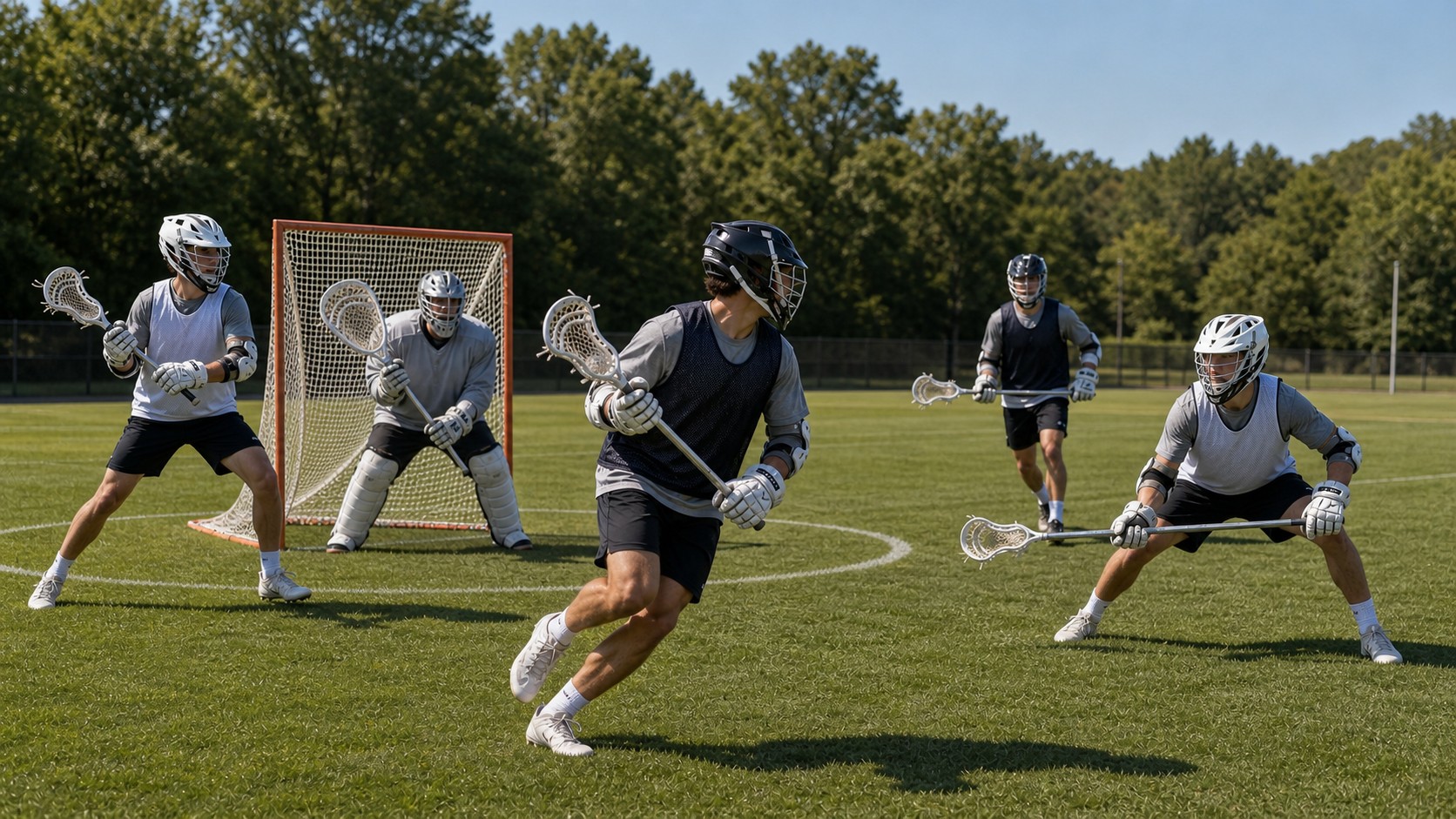
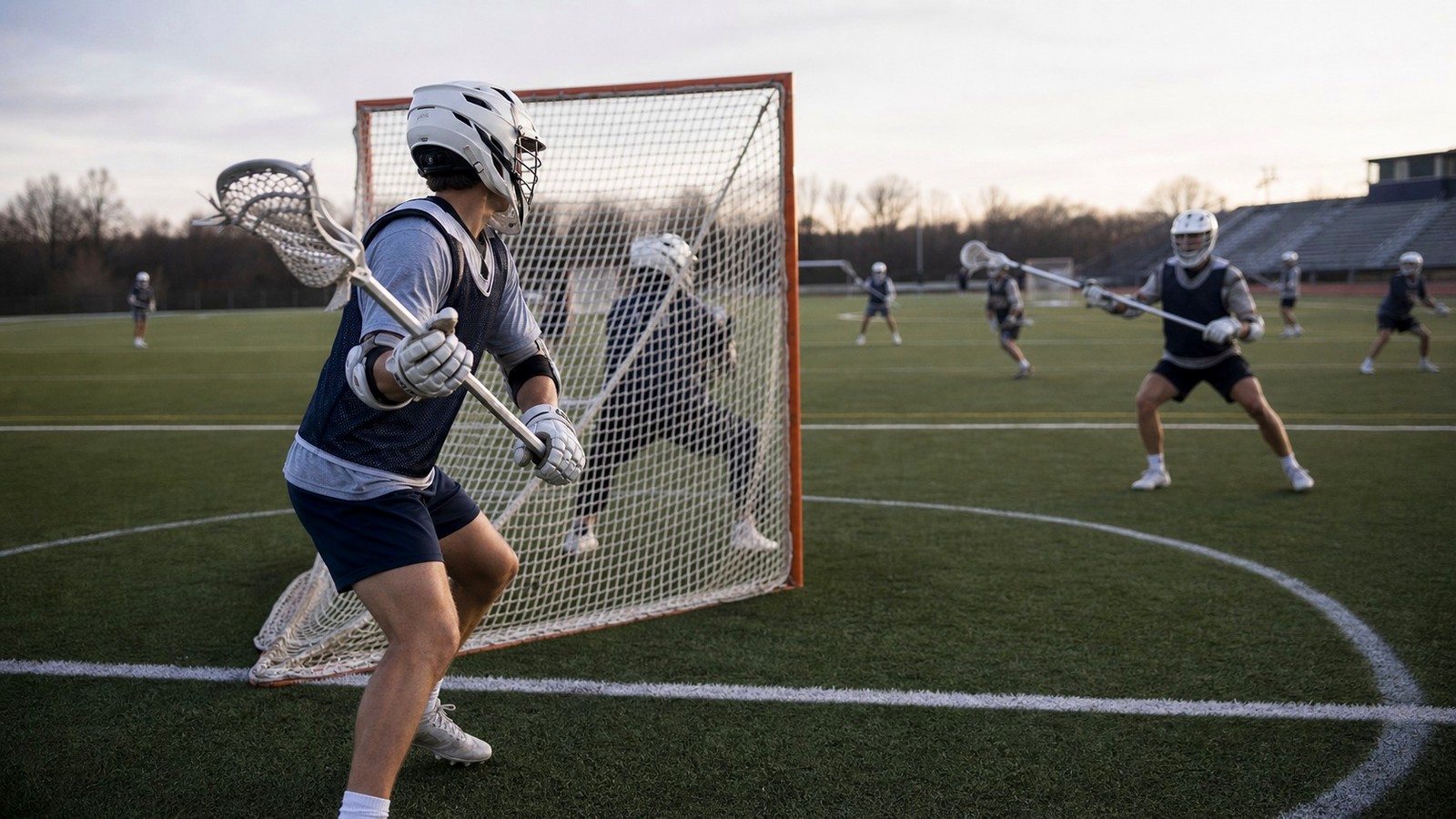
The four easiest groups to learn are attack, midfield, defense, and goalie. Attackers operate near the offensive goal and are often responsible for dodging, feeding, cutting, and finishing. Midfielders cover the most ground because they connect both ends of the field. Defensemen protect the goal area and match up with opposing attackers. The goalie stops shots, directs defenders, and begins many clearing plays.
Specialists make the game deeper. A faceoff player may focus on winning possession after restarts. A long-stick midfielder brings defensive reach into the middle of the field. Short-stick defensive midfielders take demanding matchups against dodgers. New fans do not need every label right away, but knowing that different jobs exist explains why substitutions happen so often.
Basic Rules And Common Whistles
A few rules unlock much of the viewing experience. Offside keeps teams from sending too many players into one half of the field. Crease rules protect the goalie and restrict how attackers enter the area around the goal. Out-of-bounds rules determine who gets possession after the ball leaves play. Penalties punish unsafe or illegal actions and can create temporary player advantages.
Many beginners are surprised by how often play continues through substitutions and loose balls. Lacrosse is not built around constant stoppages. Players change on the fly, fight for ground balls, and turn saves into clears. That continuous movement is part of what makes the sport exciting, but it also means new viewers should focus on one possession at a time.
How A Possession Works
A possession may begin with a faceoff, a save, a turnover, or a restart. If the ball starts in the defensive end, the team must clear it through pressure. The opponent may ride, using attackers and midfielders to disrupt passes and force mistakes. A clean clear is a win before the offense even takes a shot.
Once the offense settles, players use spacing to create better chances. A dodger attacks a matchup, a defender slides to help, and the ball moves to the next option. Good offense is not just one player beating everyone. It is a sequence that forces the defense to move, communicate, and recover.
Equipment And Safety
Men’s lacrosse equipment usually includes a helmet, gloves, shoulder protection, arm protection, mouthguard, cleats, and a legal stick. Goalies use specialized gear, and defenders may use longer sticks. Exact requirements vary by level, so families should check their league before buying a full setup.
Safety also depends on technique. Players should learn how to absorb contact, keep their head up, check legally, and respect opponents. Coaches who teach safe fundamentals early help beginners become more confident and more useful. The goal is not to remove physical play; it is to make physical play controlled and fair.
How To Start Watching Or Playing
If you are watching, follow the ball until it crosses midfield, then look for the team shape around the goal. Notice who dodges, who slides, and who becomes open after the defense moves. If you are playing, focus first on throwing, catching, scooping, cradling, footwork, and understanding where to stand. Those basics make every position easier.
Men’s lacrosse rewards curiosity. The first game may feel fast, but each repeated pattern makes the next game clearer. Learn the main positions, watch possession changes, and pay attention to ground balls. Before long, the sport starts to look less like chaos and more like a fast conversation between skill, space, and pressure.
The first practical goal for a new men’s lacrosse player is comfort with the stick. Throwing, catching, scooping, and cradling are not side skills; they are the language of the game. A player who can perform those basics under light pressure can participate in drills, understand spacing, and make better decisions during live play.
The second goal is learning where to be. Beginners often chase the ball because the ball is easy to see. Team lacrosse requires a wider view. An attacker without the ball may need to cut, clear space, or become a passing outlet. A midfielder may need to balance the field instead of joining an already crowded area. A defender may help most by staying disciplined.
Legal contact should be taught patiently. Men’s lacrosse allows physical play, but good contact is connected to footwork and position. A player who reaches, swings wildly, or hits out of frustration creates danger and penalties. A player who approaches under control can defend firmly without giving away an advantage.
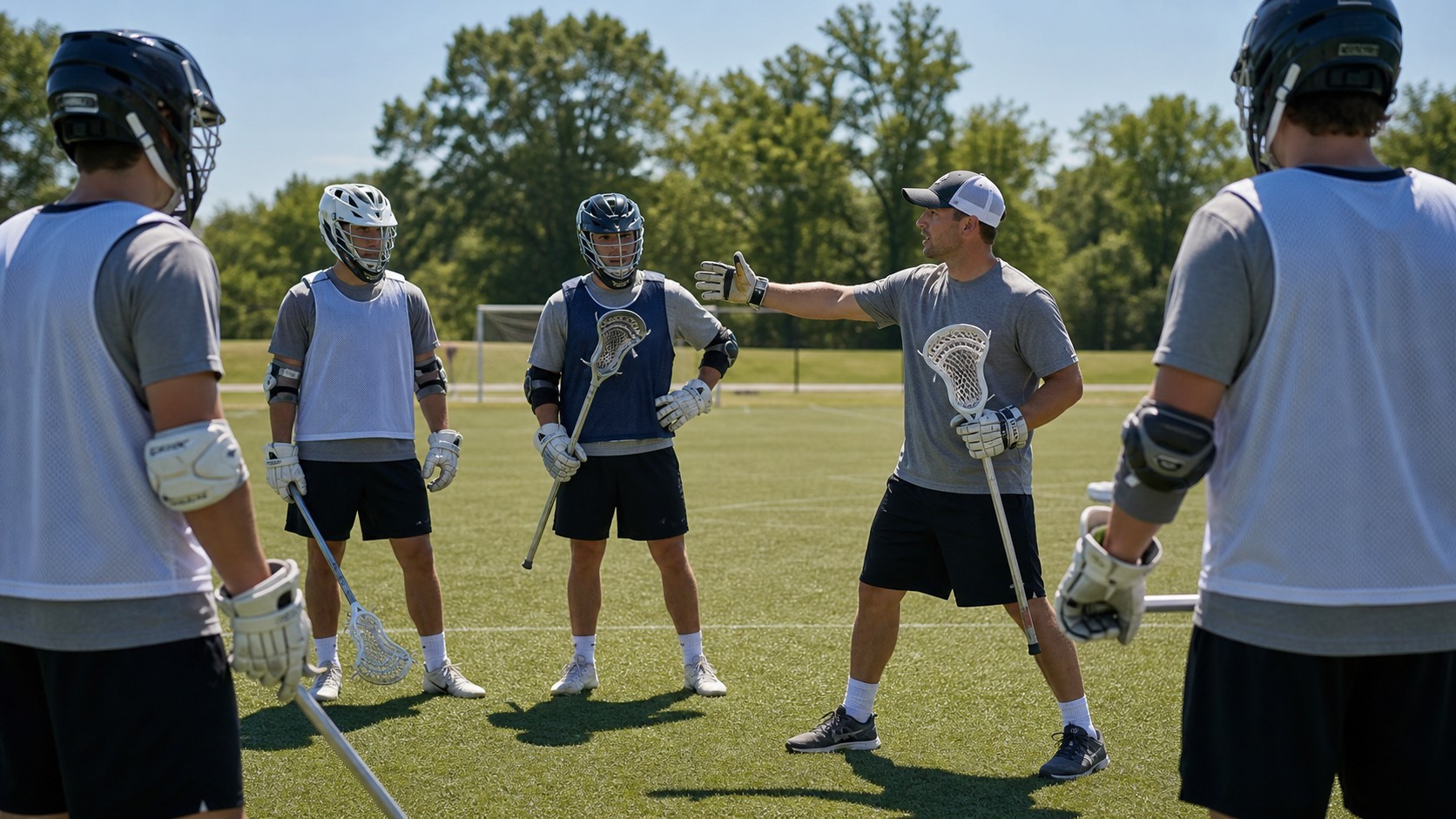
Parents should know that equipment is only one part of safety. Proper helmet fit, gloves, pads, mouthguards, and legal sticks matter, but so do coaching standards. Practices should teach heads-up play, controlled checking, ground-ball technique, and respect for officials. A safe culture helps players enjoy the physical side of the sport without treating recklessness as toughness.
Watching men’s lacrosse becomes easier when you identify possession phases. First, notice whether the ball is being cleared, ridden, or settled on offense. Then watch for the first dodge or pass that forces the defense to rotate. Finally, see whether the offense earns a high-quality shot or settles for a low-angle attempt.
Midfield play is often the hardest area for beginners to appreciate because it involves so many transitions. A midfielder may take a faceoff wing, defend a dodge, collect a ground ball, run the clear, substitute, and then return later as an offensive threat. That range is why conditioning and decision-making matter so much at the position.
A new player does not need to master every advanced system immediately. It is better to become reliable at simple jobs: scoop the ball cleanly, pass to the open teammate, communicate on defense, and know where to stand after the ball moves. Coaches can build advanced tactics on top of reliable habits.
The sport becomes more fun when beginners stop measuring progress only by goals. A good clear, a won ground ball, a smart defensive recovery, or a calm pass under pressure can be just as important to a team. Men’s lacrosse rewards visible highlights, but it is held together by hundreds of small disciplined plays.
For Beginner’s Guide to Men’s Lacrosse Rules, Positions, and Gameplay, the most helpful mindset is to treat each rule as a clue about player behavior. Rules are not separate from strategy. They decide where players can stand, how defenders can apply pressure, how quickly the offense must act, and which choices create risk. Once that connection is clear, the game becomes easier to learn and more interesting to watch.
Another useful habit is to study mistakes without assuming they are random. A rushed pass may come from poor spacing. A weak shot may come from a dodge that started too late. A defensive breakdown may come from one missed communication several passes earlier. Lacrosse moves quickly, but the reasons behind a play are usually visible if you rewind the sequence in your mind.
Players and families should also remember that level matters. Youth, high school, college, club, and professional environments may use different timing rules, field dimensions, contact standards, or equipment requirements. The concepts in this guide provide a strong foundation, but the local coach and rulebook should always settle season-specific details.
The best learning happens through repetition with attention. Watching one game, practicing one skill session, or reading one guide can help, but confidence comes from seeing the same patterns again and again. Each possession gives another example of spacing, pressure, support, and decision-making. Over time, those examples turn a fast sport into a readable one.
That is why Beginner’s Guide to Men’s Lacrosse Rules, Positions, and Gameplay should be understood as a practical guide rather than a list to memorize. A reader who can explain the main space, the main roles, and the main pressure points will already be ahead of most first-time viewers. The smaller rule details become easier once the basic shape of the game is familiar.
A helpful practice method is to pair one concept with one viewing habit. If the concept is spacing, watch the players who are not touching the ball. If the concept is defense, watch the first helper instead of the checker making contact. If the concept is transition, watch the players sprinting into support positions. This keeps learning active instead of passive.
Coaches often build progressions in the same order. They start with a skill in isolation, add a defender, add a teammate, then place the same skill inside a game-like sequence. That progression explains why beginners should not be embarrassed by simple drills. Simple drills create the control needed for faster, messier possessions.
For parents, the most useful questions are concrete. Ask what a player should practice at home, how contact is introduced, how playing time is handled, and what equipment is required for that exact league. Clear answers tell you more than broad promises. A strong program can explain how beginners become safer, smarter, and more confident over time.
For fans, the payoff comes when the game starts to slow down mentally. The ball still moves quickly, but you begin to anticipate the next pass, the likely slide, or the reason a player is cutting through. That anticipation is the moment lacrosse becomes more than a blur of sticks and running. It becomes a tactical sport with visible patterns.
Another sign of understanding is being able to describe the choice before judging the result. A missed shot is not automatically a bad shot, and a completed pass is not automatically the best pass. Context matters: time, score, pressure, angle, support, and risk all shape whether a decision was sound. Learning those clues makes every possession more meaningful.
The same approach helps players stay patient with development. Lacrosse can feel unforgiving when the ball pops out of a stick or a defender closes space faster than expected. Those moments are normal. A player who keeps learning the next read, the next footwork detail, and the next support position is building the habits that eventually make the sport feel natural.