Field Lacrosse Explained
Field lacrosse is the outdoor version of lacrosse most new fans recognize first: a fast team game played across a wide field with sticks, a small rubber ball, goals, specialized positions, and constant movement between offense and defense. It can look chaotic during the first few minutes, especially when players substitute on the fly or sprint through transition. Once you understand the basic field layout, player roles, and rhythm of possessions, the sport becomes much easier to follow and much more enjoyable to watch.
A: Men’s field lacrosse commonly uses ten per team, including the goalie, but leagues can vary.
A: A midfielder connects both ends of the field and often plays offense and defense.
A: Behind-the-goal space helps attackers change angles and feed cutters.
A: A clear is the effort to move the ball from the defensive end into offense.
A: A ride is pressure used to stop the other team from clearing easily.
A: On-the-fly changes manage energy, matchups, and special roles.
A: Offside occurs when a team has too many players on one half of the field.
A: No, contact is limited by safety rules, timing, location, and league standards.
A: Watch the ball first, then the nearest slide defender and off-ball cutter.
A: Yes, especially when players learn spacing and basic stick skills step by step.
The Shape Of The Game
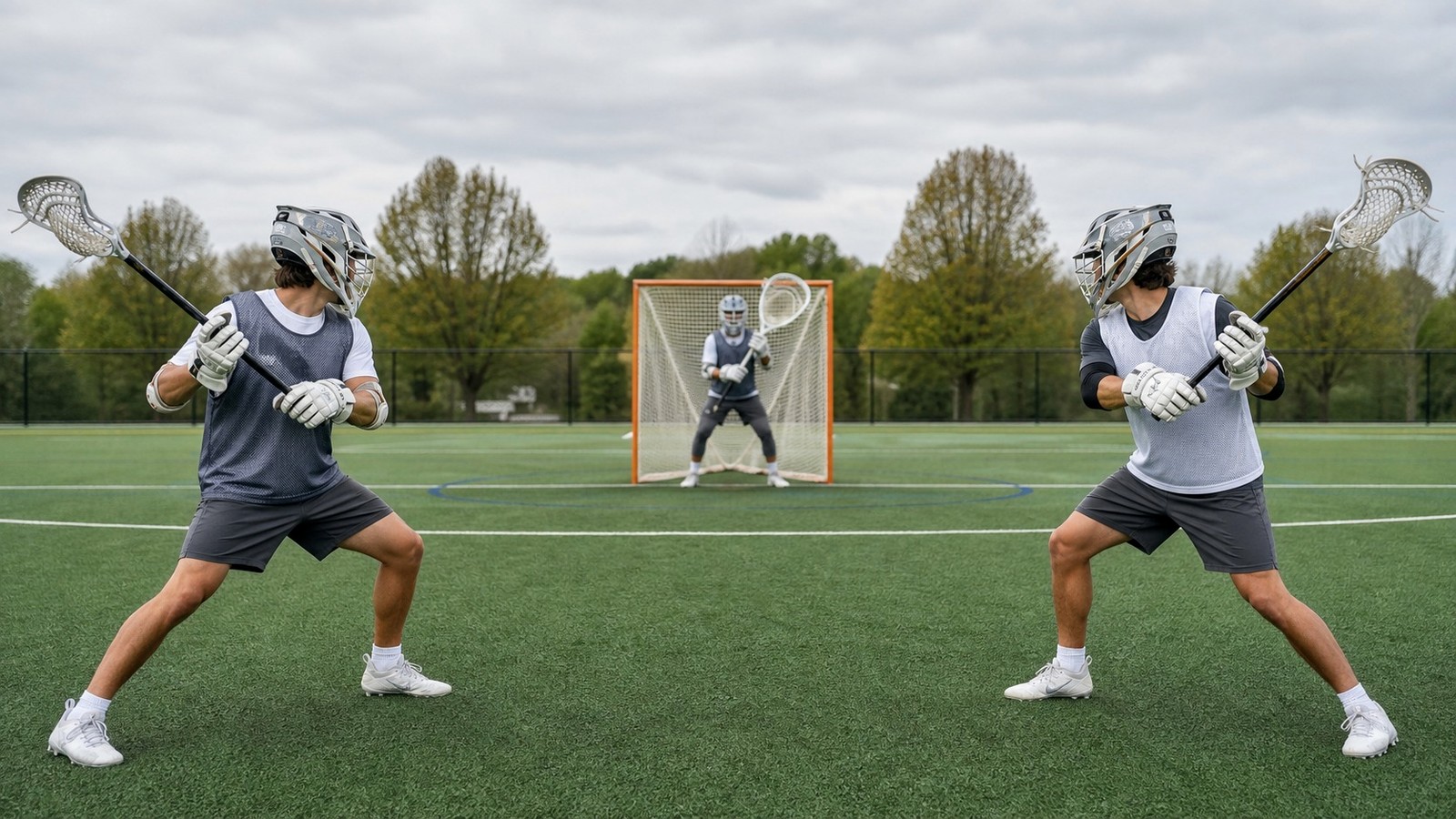
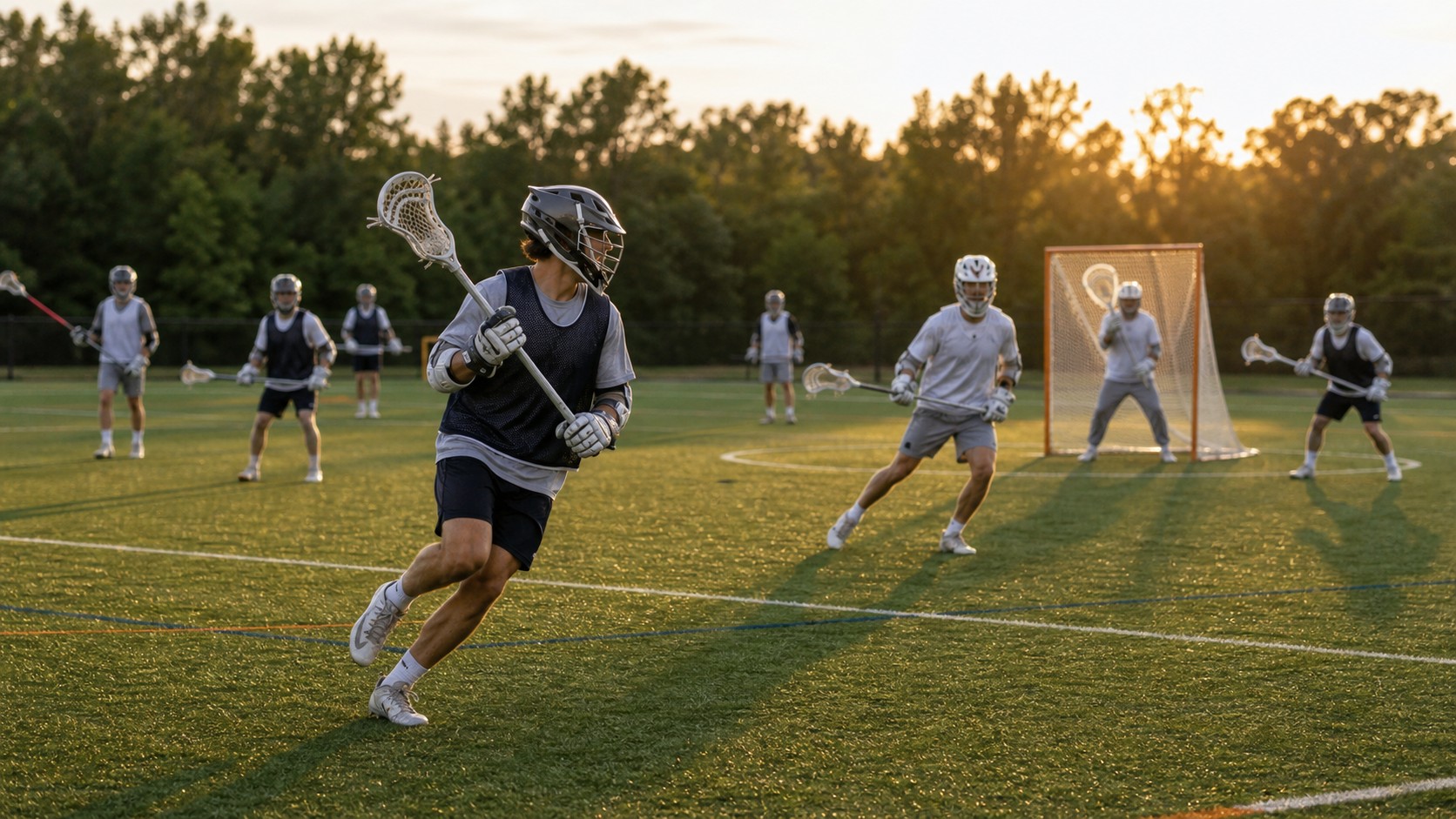
Field lacrosse is easiest to understand when you start with shape. The large playing surface allows teams to stretch defenders, run through midfield, and attack from different angles. Players are not simply chasing the ball. They are trying to maintain spacing so the ball carrier has options and the defense has difficult choices.
That shape changes constantly. A midfielder may carry across the line, pass to an attackman, cut through, and then leave the field for a substitute. A defender may slide to stop a dodge, while another defender rotates to cover the player left open. The sport is fast, but much of the intelligence is in how players move when they do not have the ball.
Positions And Responsibilities
Attackers usually stay near the offensive end and are responsible for creating goals through dodges, feeds, cuts, and shots. Midfielders cover more ground and often influence both transition and settled play. Defenders protect dangerous areas, communicate slides, and use footwork and stick positioning to limit scoring chances. The goalie anchors the defense, stops shots, and often starts the clear with an outlet pass.
Specialty roles add another layer. A faceoff specialist may be trained almost entirely for possession battles. A long-stick midfielder can defend in space and help in transition. A short-stick defensive midfielder may take difficult matchups against strong dodgers. New fans do not need to memorize every role immediately, but recognizing the four main groups makes the field much easier to read.
How Possessions Develop
Many possessions begin with a clear. After a save, turnover, or ground ball, the team must move from defense to offense while the opponent rides to create pressure. This part of the game can be just as important as the shot that eventually comes later. A failed clear gives the opponent a short-field chance, while a clean clear lets the offense substitute and organize.
Once settled, teams use dodges, picks, ball movement, and off-ball cuts to create better shots. The first dodge does not always need to score. Often it forces a slide, which forces a pass, which forces another rotation. The offense is trying to make the defense late. The defense is trying to recover before the ball reaches the best shooting area.
Rules Beginners Should Know First
The most helpful beginner rules are the ones that explain common whistles. Offside prevents teams from sending too many players into one half. Crease rules protect the goalie and restrict how attackers can finish around the goal. Contact rules limit where and how checks can happen. Out-of-bounds rules determine who receives the ball after it leaves the field.
Penalty situations are also important. When a player commits certain fouls, the team may play short-handed for a period of time. The other team then has a man-up opportunity, often using quick passing to stretch the defense. Understanding penalties helps new viewers see why spacing suddenly changes after a whistle.
Why Field Lacrosse Feels So Open
The wide surface creates a style that blends endurance, patience, and sudden speed. Teams may slow down to substitute or attack a matchup, then accelerate when a lane opens. Midfielders need conditioning because they cover long distances, but they also need judgment. Sprinting without purpose can pull a team out of shape.
Open space also changes defensive technique. A defender cannot lunge at every stick fake when the ball carrier has room to escape. Good defense starts with angle, footwork, and communication. The same is true for offense: a strong dodger still needs teammates who understand spacing and timing.
How To Watch Field Lacrosse
When watching a game, follow the possession rather than only the ball. Notice how the clearing team spreads out, how the riding team pressures, and how both sides react when the ball crosses midfield. In settled offense, look for the first defender who leaves their matchup to help. That slide often explains the pass that follows.
Field lacrosse becomes clearer when you see it as a game of connected roles. The player scoring the goal may finish the highlight, but the play might have been built by a clear, a substitution, a dodge, a slide, and an off-ball cut. That chain is the beauty of the outdoor game.
Field lacrosse rewards players who understand distance. A pass across the formation can shift the entire defense, but only if teammates are spaced well enough to make the defense travel. A dodge can be dangerous, but only if the ball carrier starts from a place that gives room to accelerate. The field is large, yet poor spacing can make it feel small.
Transition is one of the outdoor game’s signature features. A save, ground ball, or turnover can send players sprinting through midfield while both benches prepare substitutions. New fans should watch the players away from the ball during these moments. The best teams fill lanes, protect against a counterattack, and know when to slow down instead of forcing a low-quality chance.
Settled offense has a different kind of intelligence. The ball may move around the outside while players cut, screen, and test matchups. The first dodge may simply force the defense to reveal how it plans to slide. Once that help arrives, the offense can move the ball again and look for the defender who is late recovering.
Defensive teamwork is easier to appreciate when you watch the slide package. The on-ball defender tries to guide the dodger away from the most dangerous area. A nearby teammate prepares to help. Another defender rotates behind that help. When all of those pieces happen together, a good offense can be pushed into a difficult shot instead of a clean look.
Ground balls deserve special attention because they are the sport’s most democratic plays. A beginner who is not ready to dodge against a strong defender can still sprint, box out, scoop through the ball, and make a simple pass. Coaches love reliable ground-ball players because possession is the starting point for every strategy.
The goalie’s job extends beyond reacting to shots. A field goalie talks to defenders, reads the offense from a central viewpoint, and starts the clear after a save. A clean outlet can turn pressure into opportunity. A rushed outlet can give the ball right back. That decision-making role is why goalie play affects the entire team’s tempo.
Substitution patterns can confuse new viewers, but they are part of the outdoor game’s strategy. Teams use the box area to exchange tired players, bring on specialists, or create better matchups. A substitution is not a break from the action. It is often how a coach shapes the next possession while the ball is still moving.
The more you watch field lacrosse, the more the game looks connected. A goal may appear to come from one great shot, but the chance may have started with a ground ball, a calm clear, a smart substitution, a patient dodge, and an off-ball cut. Seeing that chain is the key to appreciating the outdoor style.
For Field Lacrosse Explained: Rules, Positions, and Style of Play, the most helpful mindset is to treat each rule as a clue about player behavior. Rules are not separate from strategy. They decide where players can stand, how defenders can apply pressure, how quickly the offense must act, and which choices create risk. Once that connection is clear, the game becomes easier to learn and more interesting to watch.
Another useful habit is to study mistakes without assuming they are random. A rushed pass may come from poor spacing. A weak shot may come from a dodge that started too late. A defensive breakdown may come from one missed communication several passes earlier. Lacrosse moves quickly, but the reasons behind a play are usually visible if you rewind the sequence in your mind.
Players and families should also remember that level matters. Youth, high school, college, club, and professional environments may use different timing rules, field dimensions, contact standards, or equipment requirements. The concepts in this guide provide a strong foundation, but the local coach and rulebook should always settle season-specific details.
The best learning happens through repetition with attention. Watching one game, practicing one skill session, or reading one guide can help, but confidence comes from seeing the same patterns again and again. Each possession gives another example of spacing, pressure, support, and decision-making. Over time, those examples turn a fast sport into a readable one.
That is why Field Lacrosse Explained: Rules, Positions, and Style of Play should be understood as a practical guide rather than a list to memorize. A reader who can explain the main space, the main roles, and the main pressure points will already be ahead of most first-time viewers. The smaller rule details become easier once the basic shape of the game is familiar.
A helpful practice method is to pair one concept with one viewing habit. If the concept is spacing, watch the players who are not touching the ball. If the concept is defense, watch the first helper instead of the checker making contact. If the concept is transition, watch the players sprinting into support positions. This keeps learning active instead of passive.
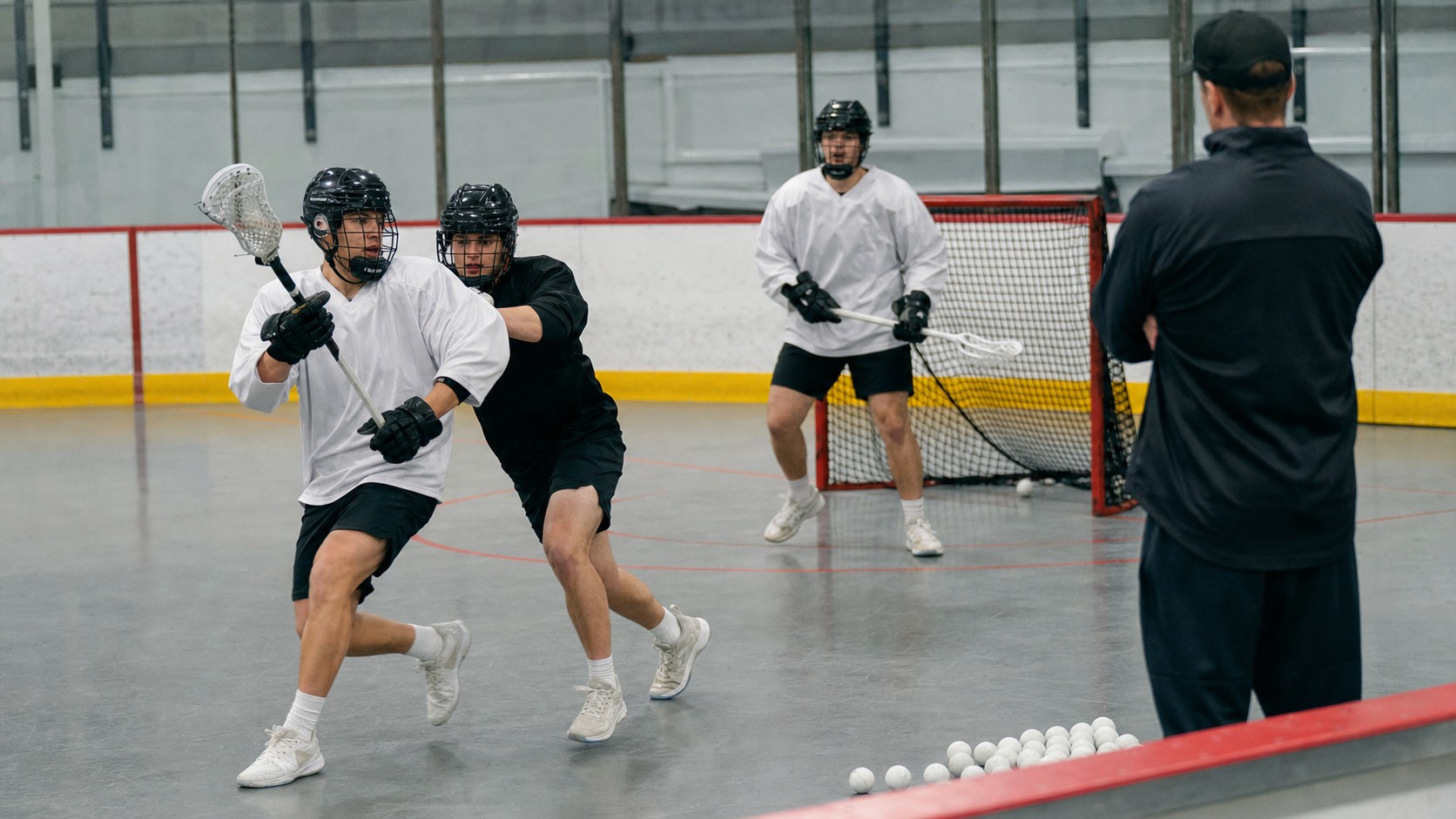
Coaches often build progressions in the same order. They start with a skill in isolation, add a defender, add a teammate, then place the same skill inside a game-like sequence. That progression explains why beginners should not be embarrassed by simple drills. Simple drills create the control needed for faster, messier possessions.
For parents, the most useful questions are concrete. Ask what a player should practice at home, how contact is introduced, how playing time is handled, and what equipment is required for that exact league. Clear answers tell you more than broad promises. A strong program can explain how beginners become safer, smarter, and more confident over time.
For fans, the payoff comes when the game starts to slow down mentally. The ball still moves quickly, but you begin to anticipate the next pass, the likely slide, or the reason a player is cutting through. That anticipation is the moment lacrosse becomes more than a blur of sticks and running. It becomes a tactical sport with visible patterns.
Another sign of understanding is being able to describe the choice before judging the result. A missed shot is not automatically a bad shot, and a completed pass is not automatically the best pass. Context matters: time, score, pressure, angle, support, and risk all shape whether a decision was sound. Learning those clues makes every possession more meaningful.
The same approach helps players stay patient with development. Lacrosse can feel unforgiving when the ball pops out of a stick or a defender closes space faster than expected. Those moments are normal. A player who keeps learning the next read, the next footwork detail, and the next support position is building the habits that eventually make the sport feel natural.