Women’s Lacrosse Field Dimensions Explained
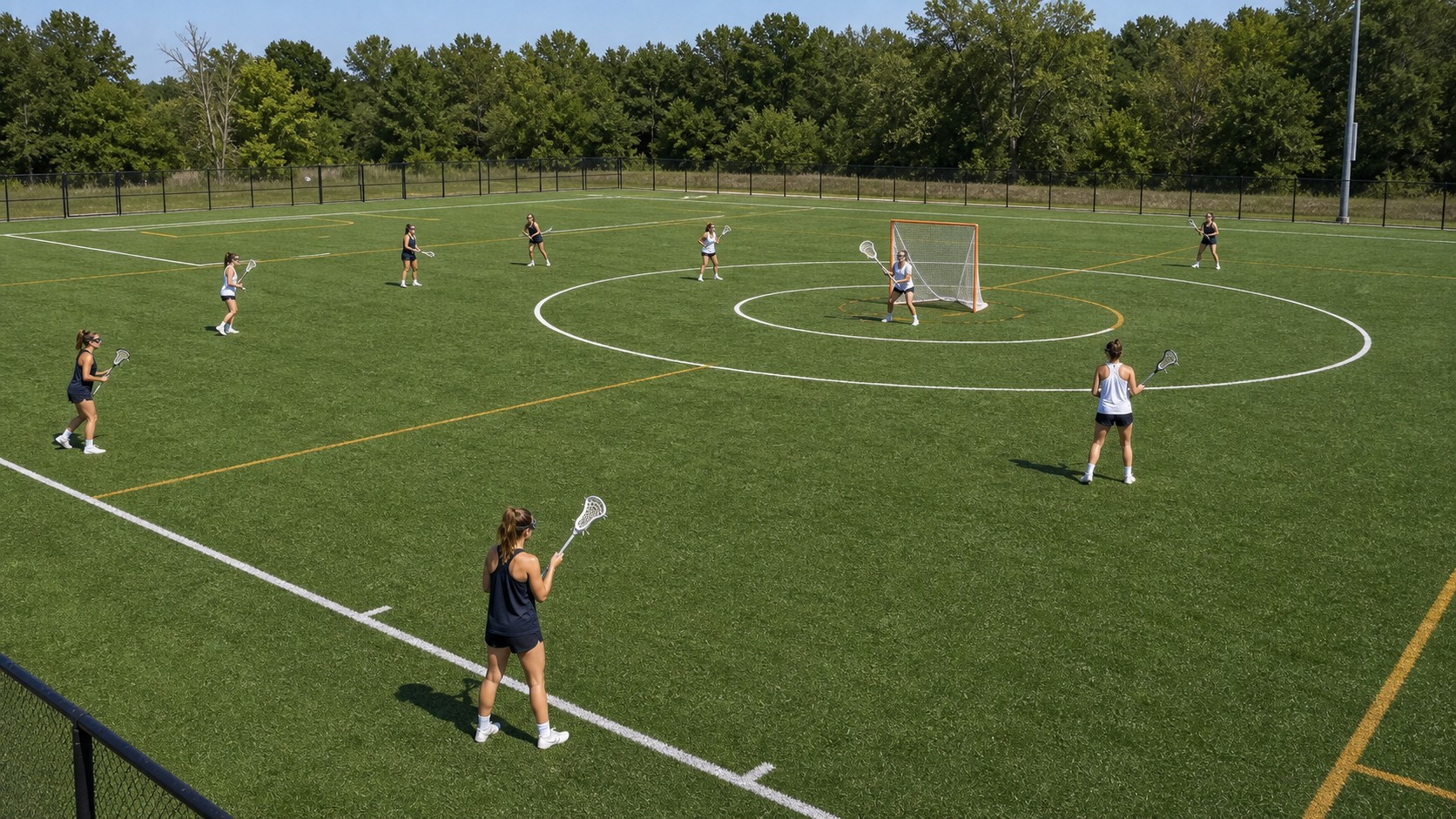
Women's lacrosse field dimensions are easiest to understand as a map for movement, safety, and scoring. The exact size can vary by rule set and level, but common full-field layouts use a long rectangular playing area with goal circles, arcs, restraining areas, sidelines, end lines, and a center area for draws. Players use those markings to know where to attack, defend, restart, substitute, and protect the goalie. Fans use them to understand why some spaces are dangerous, why officials stop play, and how teams create scoring chances.
A: No. Full-field dimensions and markings can vary by rule set, age group, and available facility.
A: Many women's field references use a long rectangular field around 90-100 yards or 91.4-100 meters, with width depending on the rule set.
A: It helps organize free-position chances, shooting-space decisions, and many calls near goal.
A: It gives teams and officials a wider attacking reference area around the goal.
A: The circle protects the goalkeeper and defines important limits for attackers and defenders.
A: Many youth formats use modified fields so players can learn safely with more touches.
A: Midfield views show team shape, while end-line views show cuts and crease decisions.
A: Lines define restarts, dangerous spaces, possession boundaries, and player responsibilities.
A: Coaches, officials, and field managers should use the current local rulebook or field diagram.
A: Start with sidelines, end lines, goal circle, 8-meter arc, 12-meter fan, and center draw area.
The Field Is A Teaching Tool
A women's lacrosse field is not just open grass with a goal at each end. The markings teach players where danger, protection, spacing, and restarts happen. The goal circle protects the goalkeeper. The arcs help manage safe scoring chances. The sidelines and end lines define possession. The center area organizes draws and early movement.
Beginners often learn faster when coaches connect field lines to real choices. Instead of saying stand over there, a coach can say use the fan for spacing, protect the middle inside the arc, or clear through after the pass. The line becomes a decision cue rather than a decoration.
Exact Dimensions Depend On Rule Set
Women's lacrosse dimensions can vary by level and governing body. International, college, high school, youth, and local recreational programs may not line fields in exactly the same way. Some references describe women's fields in meters, while many United States diagrams use yards. Facilities may also use unified fields that serve more than one version of lacrosse.
That is why players and parents should avoid treating one diagram as universal. A full-field layout commonly falls around the 90-to-100-yard or 91.4-to-100-meter length range, with width depending on the rule set. Youth fields may be smaller. The practical advice is simple: learn the landmarks, then confirm exact local markings with the current rulebook.
This caveat is not a weakness. It is how the sport adapts to age, facility, and competition level. A player who understands the landmarks can adjust when the numbers change slightly.
Sidelines And End Lines Define Possession
The sidelines and end lines create the outside boundary of play. When the ball or a player with the ball goes out of bounds, possession and restart rules decide what happens next. Fans can learn a lot by watching where the ball leaves the field and where the official places the restart.
The Goal Circle Protects The Goalie
The goal circle is one of the most important markings for safety and scoring. Goalies need protected space to make saves, control rebounds, communicate, and begin clears. Attackers need to finish with body control so they do not violate that protected area. Defenders need to protect the middle without forcing unsafe contact into the circle.
New attackers should practice where their feet land after a shot. A player may beat the defense and still lose the chance by entering protected space illegally. New defenders should practice holding position without pushing attackers into danger. The circle teaches everyone that scoring is not only about getting close; it is about arriving legally.
The 8-Meter Arc Shapes Scoring Chances
The 8-meter arc is central to women's lacrosse near goal. It helps organize free-position opportunities, dangerous shooting lanes, and defensive spacing. When a whistle creates a free-position chance, players often look immediately to the arc and hash marks to understand where the restart will happen.
For attackers, the arc is a place to read angle, body control, and defensive pressure. For defenders, it is a reminder that dangerous space must be managed legally. For goalies, it is a visual frame for organizing cutters, shooters, and help defenders.
Fans who watch the arc will understand many calls faster. If an official stops play near goal, the issue may involve shooting space, contact, body position, or restart location. The arc helps make that invisible logic visible.
The 12-Meter Fan Adds Wider Context
The 12-meter fan gives teams a broader attacking reference. Offenses use it to space players, time cuts, and move the defense before trying to enter more dangerous areas. Defenses use it to communicate pressure, help, and recovery before the ball reaches the heart of the arc.
The Center Area Organizes Draws
Draws begin many important possessions in women's lacrosse. The center area gives players a starting structure before the ball is put into play. Wings and nearby players must react quickly because the draw can create possession, a loose ball, or immediate transition.
A beginner should watch the first two seconds after the draw. Who tracks the ball? Who boxes out? Who becomes the first outlet? Who communicates? The field markings create the setup, but player reaction decides the possession.
Restraining Areas Create Team Balance
Restraining areas prevent every player from crowding the same space at the wrong time. They help keep the field balanced and preserve shape. For new fans, these markings explain why some players hold back during draws or certain restarts instead of simply chasing the ball.
For players, restraining rules are about awareness. A midfielder must know when to release, when to hold, and how team shape changes after possession is gained. A player who understands the restraining area can avoid unnecessary violations and support transition more cleanly.
The rule also teaches patience. Being useful does not always mean running directly toward the ball. Sometimes the useful play is staying in the correct zone so the team remains legal and organized.
Field Size Changes Conditioning Demands
A larger field asks players to run, recover, and communicate across more space. Midfielders feel this most because they connect draw controls, clears, settled offense, and defense. A smaller youth field can create more touches and shorter runs, which may fit developing players better.
Spacing Makes Dimensions Matter
The field's size only helps an offense if players use the space well. If attackers crowd the ball, they bring extra defenders into the same area and make passing lanes smaller. If they spread too far without purpose, the ball carrier may have no useful support. Good spacing turns dimensions into advantage.
Defenses think about spacing differently. They want to protect dangerous central lanes, communicate help, and force the offense toward less threatening areas. The same field line can mean opportunity for one team and responsibility for the other.
Fans Can Learn By Watching Landmarks
A new fan should not try to follow every player at once. Start with landmarks. Watch the center on draws, the arc on free-position chances, the goal circle on close shots, and the sidelines on boundary plays. Those four landmarks explain a large share of the game's movement.
Over time, the field stops looking like a confusing set of lines. It becomes a map of decisions. Players are not simply running; they are using or defending space that the field has already named.
This is why a good seat can change understanding. Midfield helps fans see shape, while an end-line view reveals cuts and goalie communication. Both views teach something different about the same dimensions.
Players Should Practice With Field Language
Practice becomes more useful when players use field language. Cut from the fan. Recover inside the arc. Respect the goal circle. Find the sideline outlet. Be ready at the hash. These phrases connect skill work to actual game geography.
Youth Fields May Be Modified
Youth lacrosse often modifies field size and rules to create safer, more teachable games. Smaller fields can increase touches, reduce long running demands, and make team shape easier to understand. That does not make the youth version less legitimate. It makes the environment fit the learners.
Parents should ask which field size their child's league uses. A player moving from a small-sided format to a full field may need time to adjust to longer spacing, wider passing lanes, and more transition running. That adjustment is part of development.
Use Current Diagrams Before Lining A Field
Anyone responsible for lining a field should use the current rulebook or official field diagram for that league. Guessing from memory can create incorrect arcs, misplaced hash marks, or confusing restraining areas. A small marking mistake can affect safety, restarts, and player understanding.
For most players and fans, the exact measuring tape matters less than the practical map. Learn the landmarks, understand what each one protects or organizes, and connect the lines to game decisions. Women's lacrosse dimensions make the sport easier to read once the field becomes a guide.
Players can help themselves by walking the field before practice. Stand near the goal circle, look out to the arc, notice the fan, and then glance toward the sideline and center area. That short tour makes the lines feel connected instead of isolated.
Why Angles Matter More Than Labels
A field landmark only becomes useful when a player understands the angle it creates. An attacker near the edge of the arc may have a very different shooting chance from an attacker centered in front of goal. A defender who protects the middle may give up a wide lane on purpose because the angle is less dangerous.
How Coaches Use Field Dimensions In Drills
Coaches can turn dimensions into habits by designing drills around landmarks. A cutting drill can start outside the fan and finish near the arc. A defensive drill can ask players to recover from the sideline into the middle. A goalie clearing drill can begin inside the circle and end with a safe outlet toward open width.
These drills work because they connect movement to memory. Players do not have to stop and think about every line during a game. They have already felt the distance in practice. That is especially helpful for beginners who may understand a diagram but lose orientation when the ball starts moving.
Common Field Mistakes For New Players
One common mistake is drifting into crowded space near the ball. Another is standing too close to the crease after a shot or pass. A third is forgetting how far away the next safe outlet should be. These mistakes are normal, but they show why field dimensions matter.
New players can improve by using simple reminders. Stay wide when a teammate needs room. Know where the goal circle is before cutting. Find a passing angle instead of hiding behind a defender. Use the sideline only when it helps, because it can also become a trap.
Fans can spot the same mistakes from the stands. When an offense looks crowded or a defense seems late, the issue is often spacing, not effort. The field gives teams enough room, but players have to organize that room together.
A Simple Field Walk Before Games
Before warmups, a player can take a quiet look from midfield toward each goal and name the landmarks in order. Center, sideline, end line, goal circle, arc, fan, and restraining area all become easier to remember when they are seen from the player's own viewpoint. That simple habit turns field dimensions into a practical mental map before the first whistle, and it helps nervous players feel oriented and ready. The field starts to feel like familiar territory instead of a collection of mysterious painted lines.