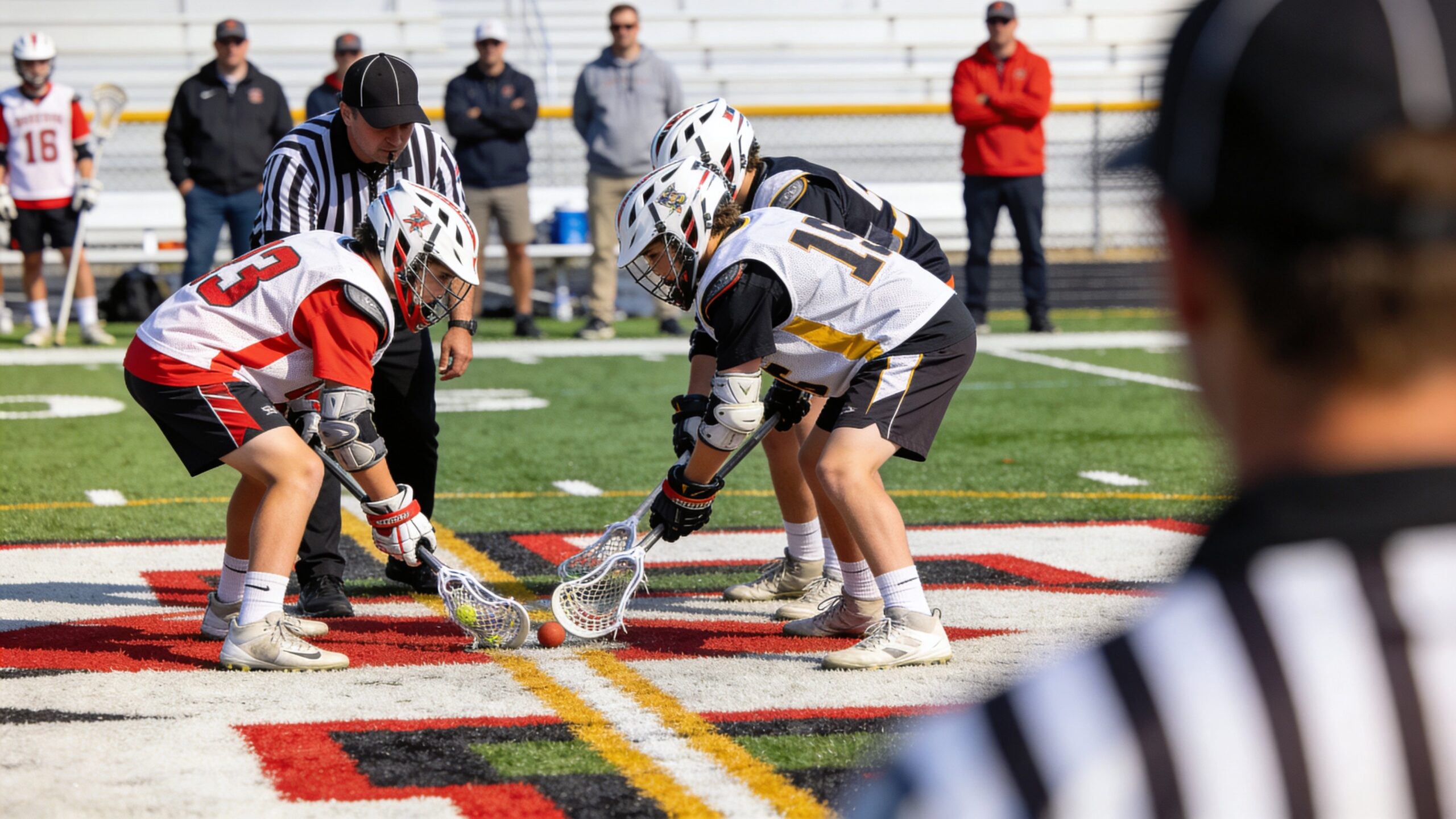
Youth lacrosse is fast, emotional, and full of momentum swings. For new parents, coaches, and players, the clock can sometimes feel as confusing as the game itself. One moment the ball is flying from end to end, the next the referee is stopping play, the scoreboard is running, or a mercy rule has changed how the game is managed. Understanding how playing time and mercy rules work helps everyone enjoy the game with more confidence. At its best, youth lacrosse balances competition with development. The goal is not only to win games, but to teach athletes how to move, think, compete, recover, communicate, and respect the flow of a team sport. Playing-time rules and mercy rules are designed to support that mission. They help games stay organized, protect young players from unnecessary pressure, and keep the experience positive even when one team is much stronger than the other.
A: It depends on the league, age level, coach philosophy, attendance, effort, and competitive setting.
A: Lacrosse is a high-speed sport, and short shifts help players stay fresh and effective.
A: It is a rule that changes game conditions when one team leads by a large margin.
A: Usually no; it often changes the clock or possession rules rather than ending the game outright.
A: Many youth games use running time to keep games on schedule and simplify clock management.
A: Yes; some versions give the trailing team more possessions or shorten the remaining game time.
A: Practice hard, listen well, hustle for ground balls, communicate, and understand team defense.
A: Goalie is a specialized position, and some teams have only one trained or confident goalie.
A: Yes, respectfully, with a focus on what the player can improve rather than only minutes played.
A: Often yes; tournaments may use shorter games, running clocks, or stricter mercy procedures.
Why Playing Time Matters in Youth Lacrosse
Playing time is one of the biggest topics in youth sports because it touches every part of the experience. Players want to feel trusted. Parents want to see their children participate. Coaches want to manage the game responsibly. Teams want to compete while still developing everyone on the roster. In youth lacrosse, where skills grow through live repetitions, time on the field matters. Unlike some sports where a player may stand in one position for long stretches, lacrosse demands constant movement. Players sprint, dodge, pass, cut, defend, scoop ground balls, and make decisions in traffic. A young athlete can practice stick skills in the backyard for hours, but game speed teaches lessons that drills cannot fully recreate. That is why many youth programs encourage meaningful participation for all players, especially at younger ages.
The Basics of Youth Lacrosse Game Length
Youth lacrosse games are usually divided into quarters or halves, depending on the age group, league, and local rules. Younger divisions often play shorter games because players are still building endurance, attention span, and field awareness. Older youth divisions may play longer games that look more like middle school or high school lacrosse.
A common youth format uses four quarters with each quarter lasting several minutes, often somewhere between eight and twelve minutes. Some leagues use running time, where the clock keeps moving except for specific stoppages. Others use stop time in certain situations, such as injuries, timeouts, or the final minutes of a close game. Because formats vary, coaches and parents should always check the rule sheet for their specific league or tournament before game day.
Running Time vs. Stop Time
One of the most important clock concepts in youth lacrosse is the difference between running time and stop time. Running time means the clock continues even when the ball goes out of bounds, after most whistles, or during routine restarts. This keeps games moving and helps tournaments stay on schedule. It also makes the game feel faster because every possession counts.
Stop time means the clock pauses during certain stoppages. This is usually more common in older or more competitive divisions, especially during the last part of a close game. Stop time can create a more dramatic finish because teams have more control over late-game strategy. However, it also makes games longer and requires more detailed clock management, which is why many youth leagues use running time for simplicity.
How Substitutions Affect Playing Time
Lacrosse is a substitution-heavy sport. Players often rotate on and off the field quickly, especially midfielders, who cover the most ground. Substitutions may happen during stoppages, after goals, or through the substitution box while play continues. This means playing time is not always measured in one long stretch. A player may enter for short bursts, sprint hard, come off, rest, and return.
For beginners, this can look chaotic, but it is part of the rhythm of lacrosse. Coaches often plan rotations by position. Attack players may stay on the field longer during offensive possessions. Defenders may play extended shifts when the ball stays in the defensive end. Midfielders may rotate frequently to keep speed and energy high. Good youth coaching usually means balancing these tactical decisions with the larger goal of giving players a fair chance to learn.
Equal Playing Time vs. Earned Playing Time
Many youth lacrosse programs begin with a philosophy of equal or near-equal playing time, especially at the youngest levels. The reason is simple: children cannot develop if they rarely play. Early youth lacrosse is about building confidence, teaching fundamentals, and helping players fall in love with the sport. Equal playing time encourages patience and gives late bloomers room to grow.
As players get older, playing time may become more influenced by attendance, effort, attitude, safety, skill, and game situation. This does not mean development disappears, but the balance shifts. Competitive teams may use earned playing time while still making sure every athlete has a role. The healthiest programs explain this clearly before the season so players and parents understand expectations.
What Coaches Consider When Managing Playing Time
A coach may consider many factors when deciding who plays and when. Skill level matters, but it is not the only factor. A player who listens, hustles, attends practice, supports teammates, and understands positioning may earn more trust even if they are not the flashiest athlete on the field. Lacrosse rewards decision-making as much as raw speed.
Safety also matters. A coach may limit a player’s time if that player is overwhelmed by the pace of play, does not understand defensive spacing, or is at risk of injury because of fatigue. This is especially important in youth lacrosse, where physical development can vary widely within the same age group. Responsible playing-time management protects the player and the team.
Playing Time for Goalies
Goalie playing time is unique because the position requires a different mindset and skill set. Some teams have one dedicated goalie, while others rotate multiple players through the position. At younger levels, rotating goalies can help athletes understand the game from a new perspective and prevent one child from carrying all the pressure. As teams become more competitive, goalies may specialize. A starting goalie may play most or all of a game, especially in close contests. Still, youth coaches should be careful with goalie development. Backup goalies need meaningful practice and occasional game experience so they are ready when needed. Confidence in the cage is built through repetition, encouragement, and trust.
Why Mercy Rules Exist
Mercy rules are designed to protect the spirit of the game when the score becomes lopsided. In youth lacrosse, a mercy rule usually activates when one team leads by a certain number of goals. Once triggered, the rules may change to help the trailing team, shorten the game, or reduce the chance of unnecessary embarrassment.
The purpose is not to punish the winning team. It is to keep the game respectful. Youth sports should challenge players without turning the scoreboard into a spectacle. Mercy rules remind everyone that lacrosse is about development, sportsmanship, and long-term growth, not just domination.
Common Types of Mercy Rules
Mercy rules can work in several ways. One common version changes the clock to running time once a team reaches a large lead. For example, if a team is ahead by a certain number of goals, the clock may continue running except for injuries, official timeouts, or other special situations. This helps the game move toward completion without dragging out a one-sided result.
Another common mercy rule affects faceoffs. In some youth leagues, when one team builds a large lead, the trailing team may be awarded possession instead of holding a normal faceoff after each goal. This gives the losing team more chances to handle the ball, run offense, and gain confidence. It also prevents the stronger team from winning repeated faceoffs and adding goals too quickly.
How Mercy Rules Change Coaching Strategy
When a mercy rule takes effect, good coaches adjust their approach. The leading team may slow the tempo, require extra passes before shooting, move players into new positions, or give less-experienced athletes more time on the field. These choices keep the game productive without humiliating the opponent.
The trailing team also has opportunities. Coaches may focus on small victories, such as clearing the ball successfully, winning ground balls, making strong defensive stops, or completing passes under pressure. In a difficult game, progress is not always measured by the final score. Sometimes it is measured by effort, resilience, and the ability to keep competing with composure.
Mercy Rules and Sportsmanship
Mercy rules only work well when adults support the right tone. Players take cues from coaches, parents, and officials. If adults treat a lopsided score as a chance to mock, complain, or blame, young athletes absorb that behavior. If adults treat it as part of learning, players are more likely to respond with maturity.
Sportsmanship in youth lacrosse means winning with humility and losing with courage. A team that is far ahead should not celebrate every late goal like a championship winner. A team that is far behind should not stop trying. Mercy rules create the structure, but character determines how the game feels.
What Parents Should Understand About Playing Time
Parents often notice playing time before they notice spacing, matchups, substitutions, or fatigue. That is understandable. They are watching their child and hoping the experience feels fair. Still, lacrosse rotations can be complex. A player may sit for several minutes because of position balance, penalty situations, special teams, injury concerns, or a coach’s plan to rotate groups. The best approach is to focus on the full season, not just one game. If a child is consistently confused about their role, a respectful conversation with the coach can help. The most productive questions are usually about development: “What should my player work on to earn more time?” or “How can they help the team more?” These questions lead to growth instead of conflict.
What Players Can Do to Earn More Time
Players have more control over playing time than they sometimes realize. Coaches notice effort in practice, attention during instruction, hustle during ground balls, and willingness to play team defense. A player who works hard without the ball can become extremely valuable, even before becoming a major scorer.
Young athletes should also learn the game away from the ball. In lacrosse, not every important play appears on the stat sheet. A smart cut can open space. A strong ride can force a turnover. A clean clear can shift momentum. A defender who communicates well may prevent a goal before a shot ever happens. Playing time often grows when players prove they understand these hidden parts of the game.
Tournament Rules and Local Differences
Youth lacrosse tournaments often have their own playing-time and mercy-rule formats. Tournament directors may shorten games, use running time, limit timeouts, or apply strict mercy rules to keep fields on schedule. A team might play under one set of rules during the regular season and another set during a weekend tournament.
This is why coaches should review rules before every event. Parents should also understand that tournament games may feel different. A game might end faster, the clock might not stop as expected, or a mercy rule might activate earlier than usual. These differences are usually about logistics, fairness, and player safety.
Balancing Development and Competition
The central challenge in youth lacrosse is balancing development with competition. Too much focus on winning can leave newer players behind. Too little focus on competition can prevent advanced players from being challenged. The best programs create a path for both. They teach beginners, stretch experienced players, and use games as classrooms.
Playing-time policies and mercy rules are tools in that balance. They help coaches manage not only the scoreboard, but also confidence, effort, fatigue, and respect. A well-run youth lacrosse game should leave players wanting to come back, even if the result was difficult.
The Emotional Side of the Clock
For a young player, the clock can feel personal. Sitting on the sideline may feel like rejection. Playing during a lopsided loss may feel overwhelming. Being on the field during a mercy-rule situation may feel confusing. Adults can help by explaining that every role is part of the team experience.
A player’s lacrosse journey is much longer than one quarter, one game, or one tournament. Some athletes develop early. Others grow later. Some begin as defenders and become midfielders. Some start timid and become leaders. Playing time should be viewed as feedback and opportunity, not as a permanent label.
How Officials Help Manage the Game
Officials play an important role in keeping youth lacrosse safe and organized. They enforce timing rules, restart play, manage penalties, and apply mercy-rule procedures when required. They also help control the tone of physical play, which is especially important when emotions rise during one-sided games.
In youth lacrosse, officials are often teaching as well as officiating. They may explain calls, guide players into proper restart positions, or remind athletes about safety. Respecting officials helps the game run smoothly and teaches players that structure matters.
Penalties, Man-Up Situations, and Playing Time
Penalties can affect playing time because they change team structure. When a player commits a penalty, that player may serve time in the penalty area, leaving the team short-handed. Coaches may use specific man-down defenders or man-up offensive players, which can temporarily change normal rotations.
For developing players, special teams can be a valuable learning opportunity. Man-up situations teach spacing, patience, and ball movement. Man-down defense teaches communication, positioning, and discipline. Coaches may gradually introduce players to these situations as they gain confidence.
Keeping Games Positive During Lopsided Scores
A lopsided score does not have to ruin the day. Coaches can turn it into a learning moment by setting new goals. The leading team might focus on passing, off-ball movement, weak-hand touches, or defensive discipline. The trailing team might focus on clears, ground balls, communication, and finishing strong.
Parents can help by cheering effort rather than only goals. Applaud a good ride, a brave save, a smart pass, or a player who keeps running hard in the fourth quarter. Youth lacrosse culture improves when everyone recognizes the small plays that build real athletes.
Final Thoughts on Playing Time and Mercy Rules
Playing time and mercy rules are more than technical details. They shape how young athletes experience lacrosse. They influence confidence, fairness, safety, sportsmanship, and development. When everyone understands how these rules work, games become less confusing and more meaningful. Youth lacrosse is at its best when competition and care work together. The scoreboard matters, but it is not the only measure of success. A player who learns to hustle, listen, recover from mistakes, respect opponents, and keep competing is gaining something bigger than minutes. They are learning the rhythm of the game and the character that comes with it.