
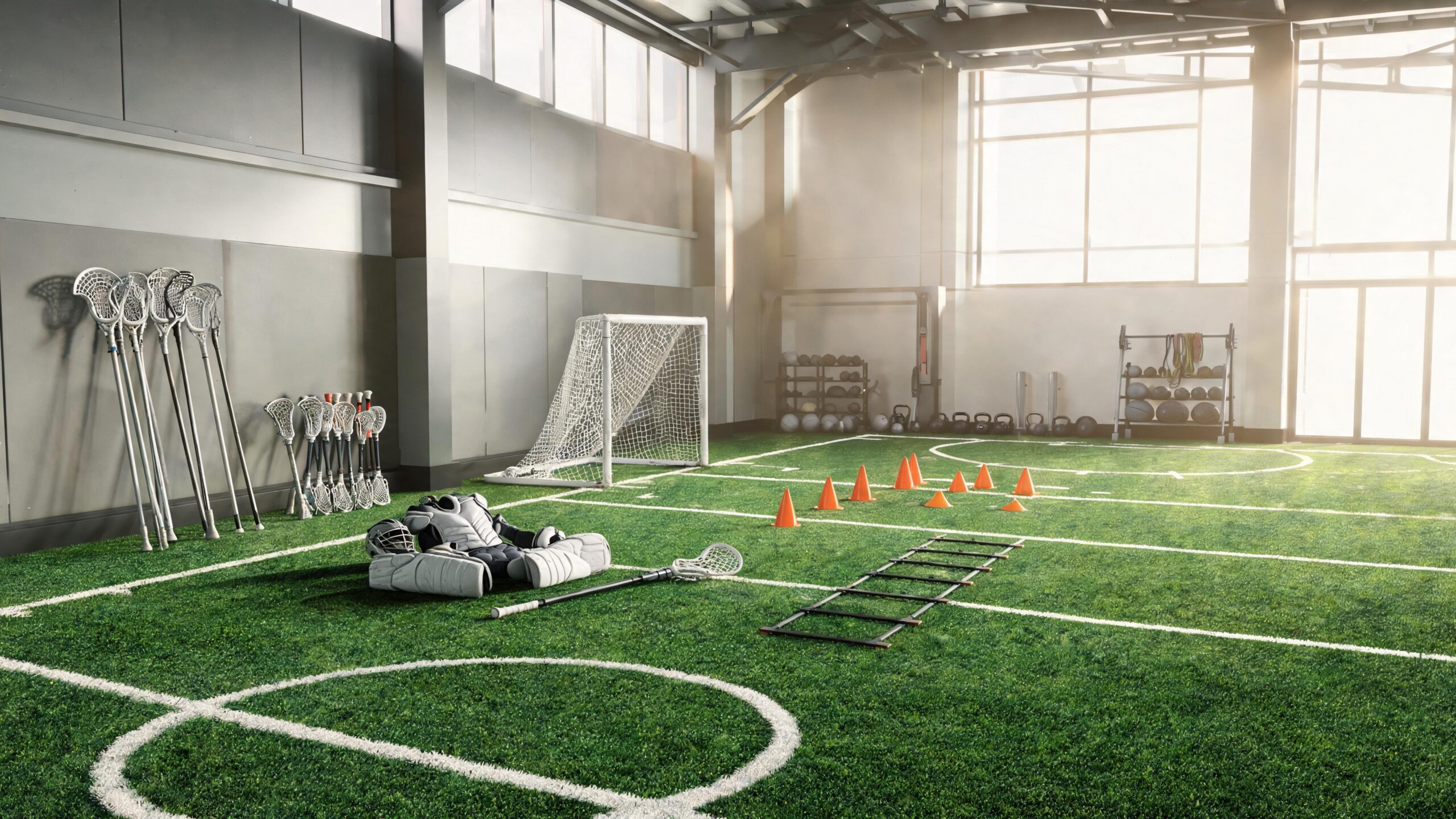
Finding Your Place on the Lacrosse Field
Choosing the right lacrosse position can feel like trying to solve a puzzle while the game is moving at full speed. The field is packed with different roles, each one demanding a unique blend of athletic ability, instincts, toughness, and timing. Some players are built to explode into open space and attack the goal. Others are wired to control chaos, defend with discipline, or command the game from the crease. Your body type can give you helpful clues about where you may naturally fit, but it should never box you in. Lacrosse is a fast, creative, constantly evolving sport, and great players often succeed because they learn how to use their body in smarter ways than everyone else. A smaller player can become a nightmare matchup with quick feet and elite stick skills. A taller player can dominate with reach, field vision, and leverage. A stronger player can control contact, while a lighter player can win with speed, angles, and endurance.
A: Attack, midfield, or faceoff can work well if the player has quickness, balance, stick skills, and confidence.
A: Defense, goalie, midfield, or attack can all fit, depending on footwork, coordination, and field awareness.
A: Often yes, but fast players can also shine at attack, LSM, or riding roles if they use speed intelligently.
A: No. Size helps, but footwork, patience, communication, and positioning are more important over time.
A: Goalies can be tall, compact, lean, or strong, but they need fast reactions, courage, and mental toughness.
A: Defense, midfield, crease attack, LSM, and faceoff can all reward strength when paired with skill.
A: Yes. Many players switch as they grow, improve, or discover where their instincts fit the game better.
A: Use body type as a guide, but choose based on the full mix of movement, skill, mindset, and team role.
A: Attack may fit if you like dodging, feeding, shooting, creating plays, and handling pressure near the goal.
A: Defense may fit if you enjoy physical matchups, communication, patience, ground balls, and stopping opponents.
Why Body Type Matters in Lacrosse
Body type matters in lacrosse because every position asks your body to solve different problems. Attackmen need sharp acceleration, balance, hand speed, and creativity in tight spaces. Midfielders need endurance, power, speed, and the ability to survive constant transitions. Defenders need reach, footwork, strength, patience, and the discipline to control opponents without overcommitting. Goalies need reaction time, courage, flexibility, communication, and mental resilience. That does not mean there is one perfect body type for each position. Instead, body type is one piece of the decision. The best position for you is usually where your build, movement style, confidence, skills, and competitive personality all work together. You want a role that allows your natural strengths to show up more often while giving you a clear path to improve the areas that are still developing.
Start With How You Move
Before thinking about height or weight, pay attention to how you move. Lacrosse rewards players who understand their own athletic rhythm. Are you explosive over the first five steps? Can you change direction quickly without losing balance? Do you cover long distances smoothly? Are you strong through contact? Can you stop, start, and re-accelerate better than other players?
A player with fast short-area quickness may be a strong fit for attack, especially around the crease or behind the goal, where tight dodges and sudden changes of direction matter. A player with long-stride speed and endurance may fit well at midfield, where transition running and repeated sprints are part of every shift. A player who moves well laterally and stays balanced under pressure may have the foundation to become an excellent defender.
Attack: Best for Quick, Creative, Agile Players
Attack is often a great position for players who are quick, coordinated, creative, and comfortable handling the ball in pressure situations. Attackmen usually spend much of the game near the offensive end, working around the crease, behind the cage, and along the wings. They need to dodge, pass, shoot, feed, cut, and finish while defenders are trying to disrupt every move. Smaller or medium-sized players can thrive at attack if they have quick hands, strong balance, and the ability to slip through tight spaces. A compact body type can be an advantage because it may allow a player to change direction quickly, protect the stick, and stay low through contact. These players often become dangerous dodgers because they can make defenders turn their hips, lose balance, or chase from behind. Taller attackmen can also be highly effective, especially if they use their reach and vision. A taller player may see passing lanes over defenders, shoot around screens, and finish from difficult angles. The key is learning to stay athletic and low, because height without balance can make a player easier to push off line. Tall attackmen who develop footwork and soft hands can become matchup problems.
Midfield: Best for Versatile, Athletic, High-Endurance Players
Midfield is the engine room of lacrosse. Midfielders play offense, defense, transition, ground balls, clears, rides, and everything in between. This position often fits players with a balanced body type, strong conditioning, and the willingness to run hard on both ends of the field. If you are athletic, competitive, and enjoy being involved in every phase of the game, midfield may be your natural home. A strong, muscular player can do well at midfield because the position includes contact, dodging, shooting on the run, and battling for ground balls. Strength helps when absorbing checks, driving down the alley, or defending physical opponents. But strength alone is not enough. Midfielders must repeatedly sprint, recover, and make smart decisions while tired.
Lean, fast players may also thrive at midfield because they can stretch the field and create transition opportunities. If you have long-range speed, endurance, and the ability to keep your stick protected while running, midfield gives you room to use those gifts. The best midfielders are not always the biggest or fastest players. They are the ones who can keep making plays when everyone else starts slowing down.
Defense: Best for Long, Strong, Patient, Disciplined Players
Defense is often a strong fit for players with size, reach, strength, and patience. Long arms and a tall frame can help defenders control space, disrupt passing lanes, and keep offensive players from getting comfortable. A defender with good reach can pressure the ball without lunging, poke check from safer distances, and make feeds more difficult. However, defense is not just for big players. A shorter defender with elite footwork, toughness, and balance can be incredibly effective. Defensive success depends heavily on positioning, angles, communication, and discipline. A defender who stays low, moves their feet, and understands leverage can shut down players who may look more impressive physically.
If you have a strong lower body, good lateral movement, and enjoy physical challenges, defense may suit your body and mindset. This position rewards players who are willing to do difficult work without always getting the spotlight. You have to enjoy stopping someone else’s best move, winning ground balls, and making smart decisions under pressure.
Long-Stick Midfield: Best for Fast, Tough, Defensive Athletes
Long-stick midfield, often called LSM, is one of the most demanding positions in lacrosse. It blends the defensive mindset of a close defender with the running demands of a midfielder. If you are fast, tough, aggressive, and comfortable covering large areas of the field, LSM may be a great fit.
Body type matters here because LSMs need enough size and reach to defend, but enough speed and stamina to run in transition. Tall, lean athletes often fit this role well because they can cover passing lanes, pressure ball carriers, and sprint into open field opportunities. Stronger players can also excel if they have the conditioning to handle repeated runs. This position is especially good for players who love chaos in a productive way. LSMs scoop ground balls, cause turnovers, start fast breaks, and swing momentum with high-energy plays. If you have a defensive build but do not want to stay locked near the crease all game, LSM can give you the best of both worlds.
Goalie: Best for Brave, Reactive, Mentally Tough Players
Goalie is the most unique position in lacrosse, and body type is only part of the equation. Goalies need quick reactions, strong hand-eye coordination, flexibility, communication skills, and uncommon confidence. They stand in front of hard shots, organize the defense, and reset mentally after every goal. A taller goalie may cover more of the cage and create a larger visual obstacle for shooters. Long arms and legs can help reach shots that are placed near corners. But being tall is not required. Many goalies succeed because they read shooters well, step to the ball, stay calm, and react quickly.
A compact, explosive goalie can move fast across the crease and react sharply to low shots. A stronger goalie may handle contact around the crease and make powerful outlet passes. More than anything, goalies need mental strength. If you are calm under pressure, willing to lead, and able to shake off mistakes quickly, your mindset may matter more than your measurements.
Faceoff Specialist: Best for Explosive, Strong, Technical Players
The faceoff specialist is a highly technical position that often favors players with explosive strength, quick hands, strong hips, and fast reaction time. Faceoffs happen in a small space, but they can change the entire rhythm of a game. Winning possession gives your team more chances to score and can drain pressure from the defense.
A compact, powerful body type can be an advantage because faceoffs require leverage. Players who can stay low, generate force through their legs and core, and react instantly to the whistle may have a natural edge. Wrist strength, grip strength, and hand speed are also major factors. This role is not only about power. Great faceoff players are technicians. They study clamps, exits, counters, ground ball angles, and opponent tendencies. If your body is built for explosive bursts and you enjoy perfecting small details, faceoff specialist could be a strong fit.
Match Your Personality to the Position
Body type helps, but personality may matter just as much. Attack requires creativity and confidence. Midfield requires work rate and adaptability. Defense requires discipline and toughness. Goalie requires courage and emotional control. LSM requires controlled aggression. Faceoff requires obsession with technique and repetition.
Ask yourself what part of the game excites you most. Do you love scoring? Do you love setting up teammates? Do you enjoy running the full field? Do you feel proud when you shut someone down? Do you like being the last line of defense? Do you enjoy physical battles for possession? The right position should feel challenging, but it should also feel like a place where your competitive instincts come alive.
Smaller Players: Where You Can Thrive
Smaller lacrosse players should not assume they are limited. In many cases, smaller players develop better footwork, faster hands, and sharper creativity because they learn early how to avoid unnecessary contact. Attack, midfield, and faceoff can all be strong options depending on the player’s movement style and skill set.
A smaller attackman can use quick changes of direction, low balance, and deceptive stick handling to beat defenders. A smaller midfielder can become valuable with speed, endurance, and relentless ground ball effort. A smaller faceoff player can win with leverage if they are explosive and technically sharp. The key is not playing like a bigger player. The key is using speed, angles, timing, and skill to make size less important.
Taller Players: How to Use Your Length
Taller players often have natural advantages in defense, goalie, midfield, and attack, but those advantages only matter if they are controlled. Height can create reach, vision, and shooting angles. It can help players intercept passes, finish over defenders, and cover more of the cage. But taller players must work hard on balance, foot speed, and body control.
A tall defender who bends their knees and moves their feet can become extremely difficult to beat. A tall attackman with soft hands can see feeds that others miss. A tall midfielder with endurance can dominate between the restraining lines. A tall goalie can take away space before the shot is even released. The goal is to make height an active weapon, not just a physical trait.
Stronger Players: Turning Power Into Control
If you have a stronger or more muscular body type, lacrosse gives you many ways to use that power. Defense, midfield, faceoff, and crease attack can all reward strength. Strong players can absorb checks, win physical ground balls, hold position, and create separation. The challenge is learning how to use strength without becoming predictable. A powerful midfielder still needs change-of-speed dodges. A strong defender still needs footwork. A physical attackman still needs touch and timing. Power becomes most dangerous when it is paired with skill. When opponents expect contact and you give them finesse, you become much harder to defend.
Lean, Fast Players: Turning Speed Into Impact
Lean, fast players often shine in midfield, LSM, riding attack, and transition-heavy roles. Speed changes the geometry of the field. It forces defenders to turn, creates unsettled situations, and gives teammates more space. If you are built for running, lacrosse can reward you again and again.
But speed must be controlled. Running fast in a straight line is helpful, but lacrosse requires cutting, stopping, changing direction, and making decisions while moving. A fast player who learns spacing, timing, and stick protection becomes far more valuable than a player who simply outruns people. Your goal is not just to be fast. Your goal is to arrive at the right place before anyone else understands why it matters.
Testing Different Positions
The best way to choose the right position is to test multiple roles. Practice can reveal things that body type alone cannot. You may think you are a midfielder until you realize you love defending. You may think you are too small for attack until your quickness creates scoring chances. You may try goalie once and discover you have the reaction time and confidence for it.
Coaches often notice patterns before players do. They may see that you naturally win ground balls, communicate well, dodge effectively, or defend with patience. Listen to feedback, but also pay attention to where you feel most engaged. The right position usually feels like a challenge you want to keep solving.
Skills That Matter at Every Position
No matter your body type, certain skills help everywhere. Stick skills are essential. Ground balls are essential. Communication is essential. Conditioning matters. Field awareness matters. The more complete you become, the more position options you have. A defender with good passing becomes better in clears. A midfielder with defensive discipline earns more trust. An attackman who rides hard creates extra possessions. A goalie who throws accurate outlets starts fast breaks. Body type may help you find your first position, but skill development determines how far you can go.
Avoid Choosing Based Only on Size
One of the biggest mistakes players make is choosing a position only because of height, weight, or appearance. A big player does not automatically belong on defense. A small player does not automatically belong at attack. A fast player does not automatically belong at midfield. The game is more layered than that.
A better question is: where do your physical traits create an advantage when combined with your skills and mindset? If your size helps you defend but you hate defensive responsibility, the position may not fit. If your speed helps at midfield but you struggle with endurance, you may need conditioning before committing. If your quickness helps at attack but your shooting is undeveloped, you may need reps before the role fully clicks.
How Coaches Think About Position Fit
Coaches usually look at more than body type. They think about team needs, game IQ, effort, communication, coachability, and how a player performs under pressure. A coach may place you in a position that feels surprising because they see a trait you have not noticed yet.
For example, a coach may move a strong midfielder to defense because they trust that player’s footwork and toughness. They may move a smaller player to attack because of quick decision-making. They may try a tall, calm athlete in goal because of presence and reaction ability. Be open to those experiments. Sometimes your best position is discovered by accident.
Choosing the Position That Helps You Grow
The right lacrosse position should not only match who you are now. It should also help you become a better athlete. If midfield pushes your endurance, it may be the right challenge. If defense improves your patience and footwork, it may unlock your game. If attack forces you to sharpen creativity, it may help you become more confident.
A good position fit should feel exciting, not limiting. It should give you a role on the team while still leaving room to develop. Over time, your body may change, your skills may improve, and your best position may shift. That is normal. Many great players grow into new roles as they become stronger, faster, smarter, and more experienced.
Final Thoughts on Finding Your Lacrosse Position
Choosing the right lacrosse position for your body type is about understanding your natural advantages and learning how to turn them into real impact. Your height, strength, speed, reach, balance, and endurance all matter, but they are only the beginning. The best position is where your body, skills, instincts, and mindset work together. Try different roles. Ask coaches for honest feedback. Watch where you naturally make plays. Notice what parts of the game make you feel confident and competitive. Whether you become an attackman, midfielder, defender, goalie, LSM, or faceoff specialist, the right position is the one that lets you contribute, improve, and play with purpose every time you step on the field.


