How To Teach Lacrosse Fundamentals To Young Players
Teaching lacrosse fundamentals to young players works best when the sport is broken into small, safe, repeatable pieces. Children need to learn how to hold the stick, catch, throw, cradle, scoop, move their feet, listen after whistles, and support teammates before they worry about advanced plays. The best coaches keep instructions short, make drills active, correct one habit at a time, and turn fundamentals into games whenever possible. A good first season should build confidence, coordination, curiosity, and a love of returning to practice.
A: Start with safe stick awareness, grip, catching, throwing, ground balls, cradling, and listening.
A: Short drills with frequent touches usually work better than long lines or extended lectures.
A: They should learn spacing and simple decisions before memorizing complex plays.
A: Give one clear action the player can try immediately.
A: They teach effort, body position, possession, and team value.
A: They can support short stick sessions, encouragement, and coach-aligned skill practice.
A: Only when the rule set allows it and players have safe footwork and control.
A: Many touches, clear safety habits, short explanations, movement, and a positive finish.
A: Use games, partners, visible progress, and clear praise for useful effort.
A: Build safe habits, basic coordination, confidence, and interest in learning more.
Teach The Smallest Useful Piece First
Young players do not need the entire game explained at once. They need one small useful piece they can try immediately. That might be how to hold the stick, how to present a target, how to scoop through a ball, or how to listen after a whistle. Small pieces create progress.
A coach who explains everything before the first rep usually loses attention. A coach who demonstrates, lets players try, and then corrects one habit gives children a path. Lacrosse is a skill sport, so understanding grows through movement.
Safety Comes Before Speed
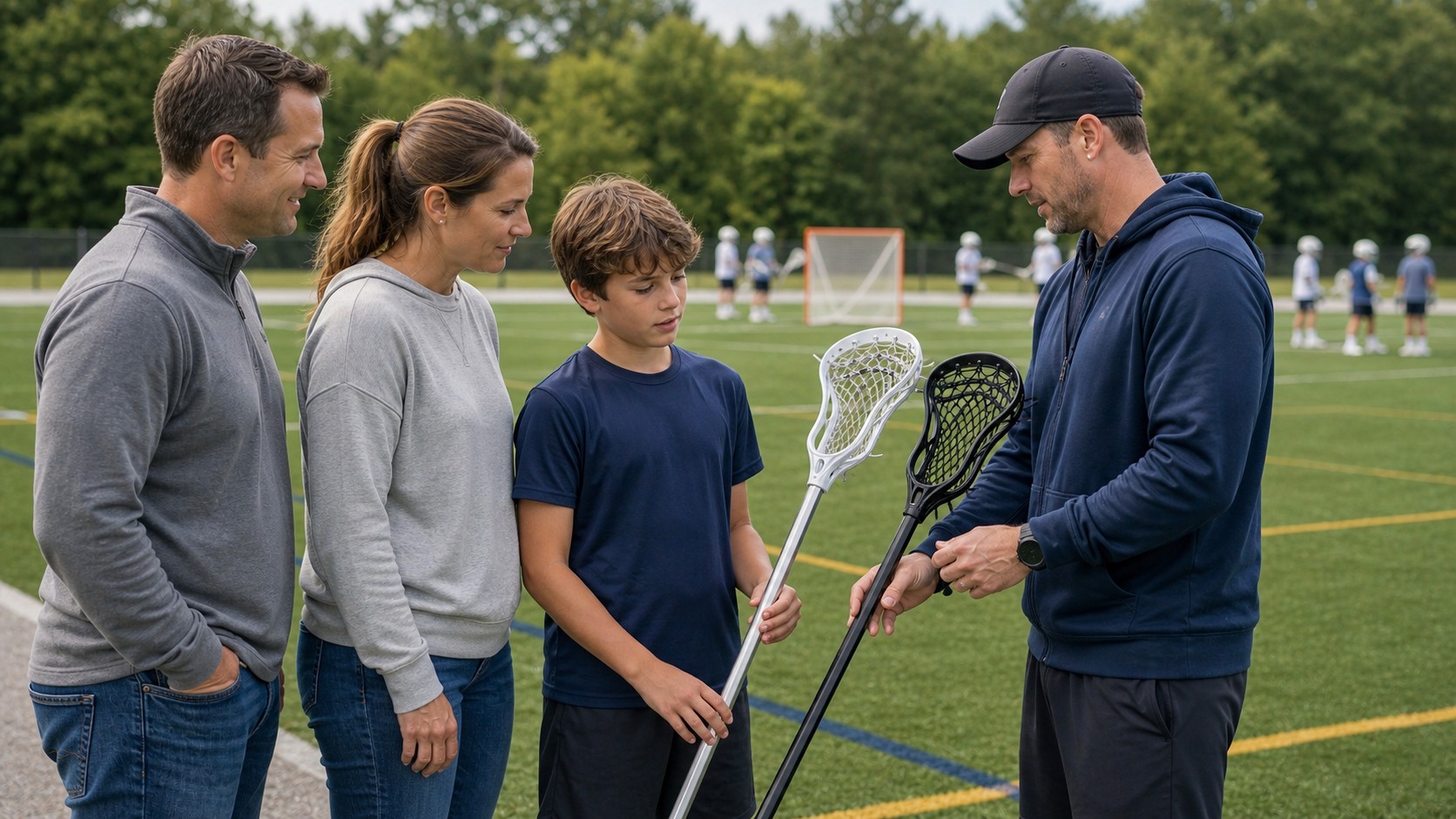
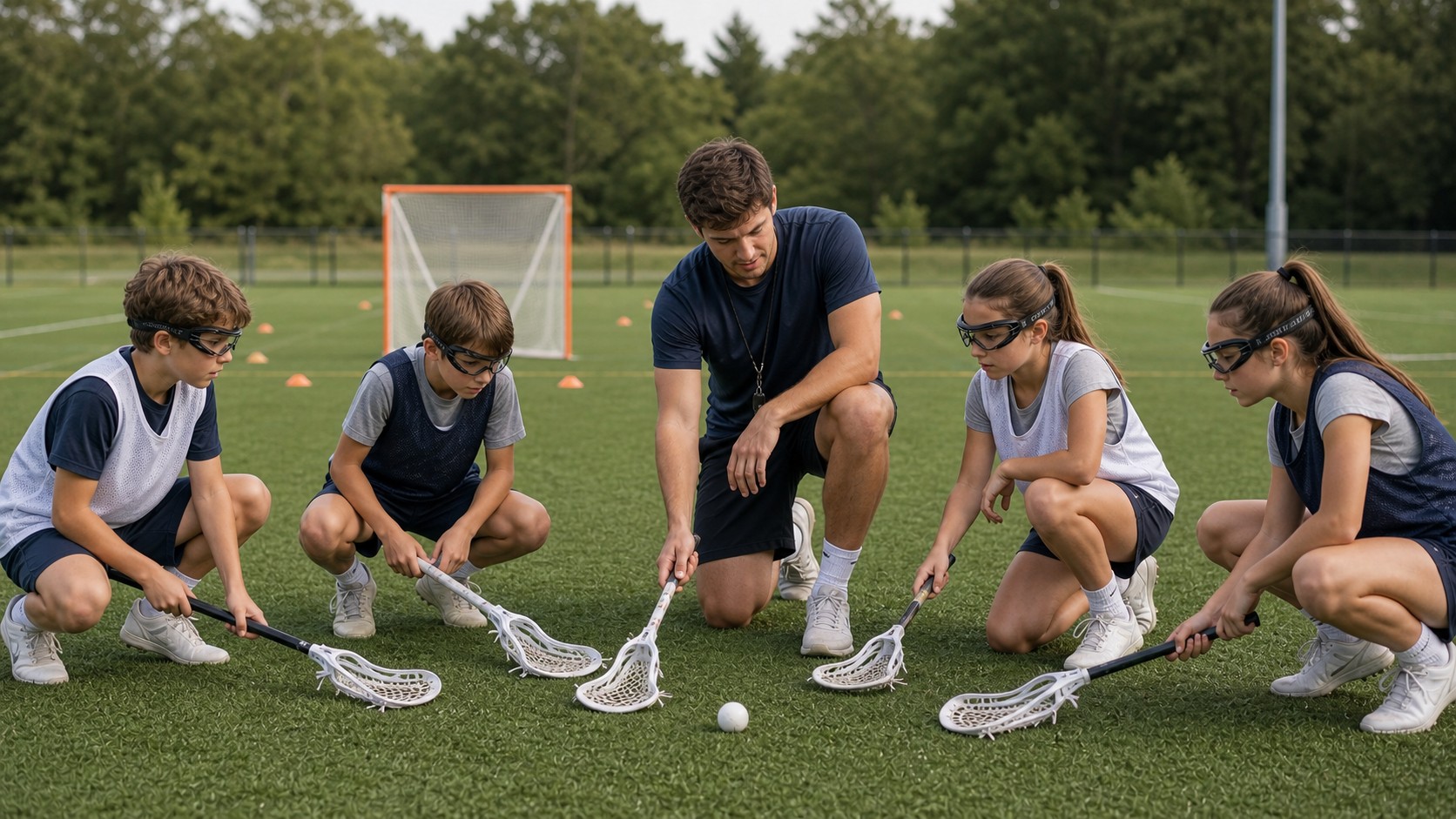
Before players run fast or compete hard, they need safe stick awareness. Sticks should not swing near faces. Players should know where their teammates are. Beginners should understand why mouthguards, goggles, helmets, pads, and goalie gear matter for their format.
Safety language should be calm and consistent. Instead of shouting vague warnings, coaches can use specific cues: sticks below shoulders when waiting, eyes up on ground balls, give space after the whistle, and move your feet before reaching. Children respond better when they know what safe action replaces the unsafe one.
This does not make practice timid. It makes practice trustworthy. Children try harder when they believe the environment is controlled, fair, and not designed to embarrass them.
Grip And Ready Position Build The Base
The way a player holds the stick affects every future skill. A comfortable grip, hands spaced properly for the player's size, and a simple ready position make catching, throwing, and scooping easier. Coaches should check this early before bad habits become familiar.
Catching Needs Soft Hands
Young players often stab at the ball or hold the stick stiffly. Soft hands are the cure. The player should present a target, watch the ball, and give slightly as it enters the pocket. The catch should feel like receiving, not fighting.
Start close. Short, easy passes create success and teach rhythm. As players improve, add movement, different angles, and light pressure. The goal is to build trust that the stick can receive the ball cleanly.
Throwing Should Start With Accuracy
Beginners love throwing hard, but accuracy matters first. A good youth passing drill asks for balanced feet, eyes on target, smooth motion, and a follow-through toward the teammate. Power becomes useful only after the player can send a catchable pass.
Coaches can make passing more active by using partner movement instead of stationary lines. Pass, move, catch, and return. That simple rhythm teaches players that passing is part of team movement, not a separate classroom skill.
When a pass misses, avoid making the player feel careless immediately. Ask what happened: was the target clear, were the hands too low, did the player rush, or did the feet point away? A specific cause leads to a specific fix.
Ground Balls Teach Courage And Possession
Ground balls should appear early in youth practices because they reward effort and create possessions. The cue is simple: move through the ball, get low, use two hands, and protect after the scoop. Children need many safe repetitions before the skill feels natural.
Cradling Should Include Vision
Cradling helps players keep the ball while moving, but coaches should not let children stare at the pocket forever. The long-term skill is cradling while looking up. Players need to see teammates, defenders, space, and boundaries.
Start slowly. Walk with the ball, change direction, stop, look up, and pass. Then jog. Then add a defender shadowing without contact. Each layer asks the player to keep control while seeing more of the field.
Footwork Makes Every Skill Safer
Footwork is not only for advanced players. Young attackers need feet to dodge and create space. Young defenders need feet to avoid reaching or fouling. Goalies need feet to step to shots. Ground balls need feet to approach with momentum.
Coaches can teach footwork through games: mirror drills, cone gates, tag variations, and change-of-direction races. These activities keep children moving while building athletic habits that later become lacrosse skills.
The key is connecting movement to the stick. Run, then catch. Shuffle, then defend. Cut, then receive. Scoop, then pass. Children learn better when footwork and stick work are not separated for too long.
Use Games To Hide Repetition
Children need repetition, but they do not always need to feel like they are repeating. Relay races, partner challenges, small-sided games, and station rotations can create many touches while keeping energy high. The coach still teaches fundamentals; the game format keeps attention alive.
Correct One Habit At A Time
A young player may need to fix grip, feet, eyes, and follow-through on the same pass. Correcting all four at once can overwhelm the player. Choose the habit that matters most in that moment. If the pass is unsafe, fix safety. If the pass is close, fix target and follow-through.
One correction does not mean low standards. It means the coach understands learning. Children build skills in layers, and each layer needs room to stick before the next one arrives.
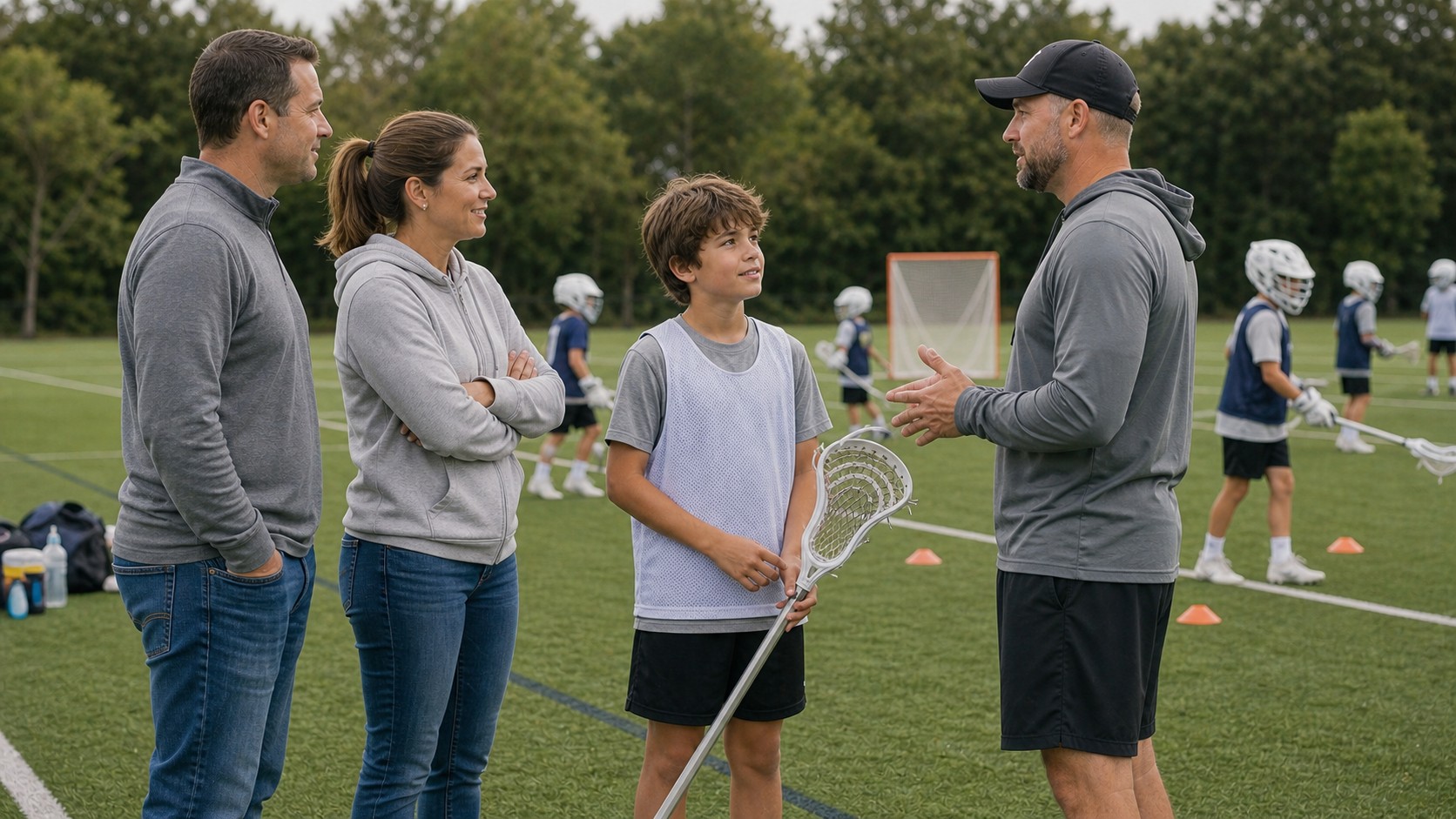
Parents Should Hear The Same Language
Parents can help more when they know the coach's key phrases. If the team uses run through the ball, soft hands, eyes up, or find an outlet, parents can echo those ideas gently at home. Mixed messages can confuse beginners.
Coaches can share one weekly focus with families. This week is ground balls. This week is target hands. This week is safe defensive feet. That small communication helps parents support the work without becoming sideline coaches.
The goal is partnership. Parents keep the child encouraged and prepared. Coaches guide the skill progression. The player hears a consistent message.
Confidence Is A Fundamental Too
A player who is afraid to fail will avoid the reps that create improvement. Coaches should build confidence by naming progress, making mistakes normal, and giving players another chance quickly. Confidence does not mean pretending every rep is perfect. It means helping children believe the next rep is worth trying.
Build Toward Simple Team Concepts
Once basic skills appear, coaches can introduce spacing, support, and simple decisions. Where should you go after passing? Who is your outlet after a ground ball? When should you cut instead of standing still? These questions turn individual fundamentals into team play.
Young players do not need complicated offensive systems to learn teamwork. They need to understand that every action affects a teammate. A good pass helps someone else catch. Good spacing gives someone room. Good communication makes the next decision easier.
A Strong Practice Has A Clear Arc
A good youth practice starts with energy, teaches a small skill, repeats it in different ways, adds a simple decision, and ends with something fun. That arc gives children structure. They know practice will move, but it will not feel random.
The final activity should connect to the day. If the focus was ground balls, end with a small-sided possession game that rewards ground-ball wins. If the focus was passing, end with a keep-away game. The finish helps the lesson stick.
Teaching fundamentals is not about rushing children toward adult lacrosse. It is about building safe, confident players who understand the game one habit at a time. When young players leave practice tired, smiling, and a little more capable, the coach has done important work.
Keep Competition Age Appropriate
Competition can help young players focus, but it has to match the group. A short relay, partner challenge, or small-sided game can create energy without turning practice into a pressure test. The best youth competition rewards the skill being taught, not only the fastest or strongest child.
Use Repetition Without Making Practice Feel Stale
Fundamentals require repetition, but coaches can change the setting. The same ground-ball skill can appear in a relay, a partner race, a sideline pickup, and a small possession game. The cue stays the same while the environment changes.
This helps children recognize the skill in different situations. They are not only learning to scoop during one drill; they are learning that ground balls appear everywhere. That transfer is what makes fundamentals useful during games.
Measure Progress By Behaviors
A young player's progress is not always obvious on the scoreboard. Coaches should look for behaviors: softer catches, quicker outlets, safer stick control, more confident ground-ball approaches, better listening after whistles, and more useful spacing after passes.
These behaviors tell the truth about development. A player may not score yet but may be becoming much more reliable. Parents should hear that message too, because it helps them support the child without reducing the season to goals.
When coaches measure behaviors, practices become calmer. Players know what they are trying to improve. Corrections feel specific. Success becomes something every child can reach, not only the most advanced athlete.
Teach Fundamentals Through Questions
Questions can make young players think without long lectures. Where is your outlet after the scoop? What should your hands do on the catch? Which space helps the ball carrier? A quick question invites the player to connect a skill to a decision.
Plan For Different Confidence Levels
A youth team may include fearless athletes, cautious beginners, and children who are still deciding whether lacrosse feels comfortable. Coaches should plan drills with layers so each player can participate. Start simple, then add speed, pressure, or distance for players who are ready.
This keeps practices inclusive without holding advanced players back. Everyone works on the same fundamental, but the challenge can scale. A confident player may catch on the move while a new player catches stationary. Both are building the same base.
The Best Fundamentals Last Beyond One Season
Grip, catching, throwing, ground balls, cradling, footwork, spacing, communication, and listening do not disappear when players get older. They become the base for dodging, team offense, defense, clears, rides, and special situations.
That is why teaching fundamentals well matters so much. A coach is not merely getting through beginner practice. The coach is giving young players tools they can carry into every future version of lacrosse.
When those tools are taught with patience and purpose, children learn more than mechanics. They learn how to practice, how to respond to feedback, and how to become better teammates.
A Calm Finish Helps Lessons Stick
The end of practice should remind players what improved. A coach can name one team habit, one safety habit, and one skill cue before players leave. That short wrap-up helps children carry the lesson home instead of remembering only the final score of a drill. It also gives parents a constructive topic for the ride home and makes the next practice feel connected.