Beginner Lacrosse Skills Every Young Player Should Learn
The most important beginner lacrosse skills are the ones that help a young player stay safe, keep possession, support teammates, and understand the flow of the game. Catching and throwing matter, but they are only part of the foundation. New players also need cradling, ground balls, footwork, spacing, communication, basic defense, and the confidence to try again after mistakes. A young player who learns these skills early becomes easier to coach, more useful to teammates, and more prepared for the faster parts of lacrosse later.
A: Catching, throwing, ground balls, cradling, footwork, and looking up should appear often.
A: They create possessions and reward effort before advanced stick skills are fully developed.
A: Yes, but gradually and with patience so frustration does not overwhelm progress.
A: Use short accurate throws, clear targets, balanced feet, and regular repetition.
A: Footwork and body position should come before stick checks or contact.
A: Spacing gives teammates room to pass, catch, dodge, and recover from mistakes.
A: Yes. Outlets, ground balls, defense, communication, and hustle all help.
A: Short, consistent sessions usually work better than long pressured workouts.
A: Drops are normal early; soft hands and repetition build confidence.
A: Listening, trying corrections, hustling, and asking clear questions.
Beginner Skills Should Be Useful
Beginner lacrosse skills should help a young player do something useful in a real practice or game. A clean catch keeps possession. A ground ball creates a chance. A safe outlet helps the team breathe. A good defensive angle prevents a dangerous play. Useful skills build confidence because the player can feel how they help.
This is why the first skill plan should be broader than shooting. Goals are exciting, but young players spend far more time catching, throwing, running, scooping, defending, and listening. Those everyday skills decide whether the game feels playable.
Safe Stick Awareness Comes First
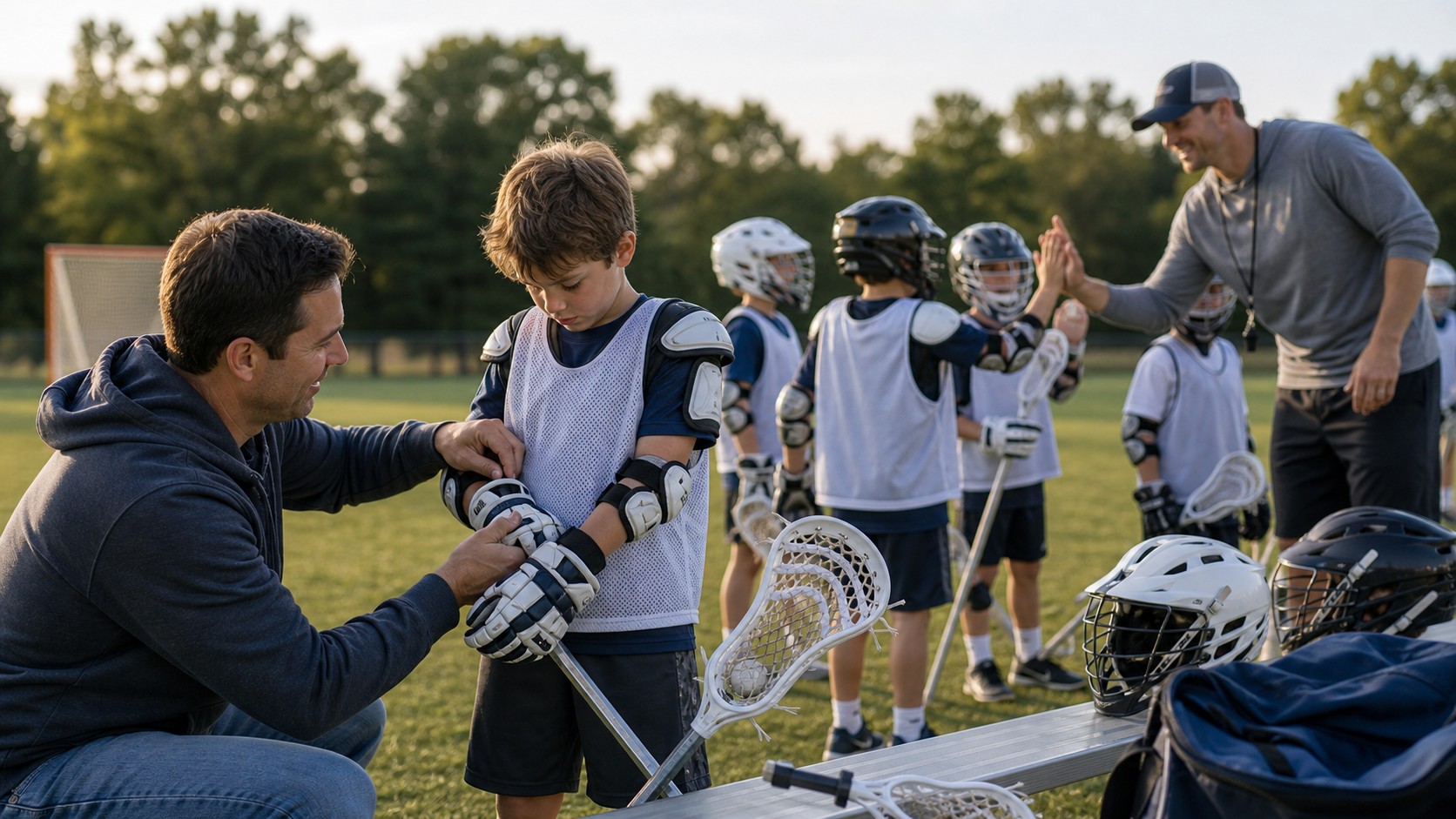
Before catching or shooting, a player needs to know where the stick is. Sticks should not swing near teammates' faces. Players waiting in line should keep the stick controlled. Beginners should learn that their stick is equipment, not a toy to wave around between reps.
This safety habit makes practices smoother. Coaches spend less time stopping dangerous behavior and more time teaching. Teammates feel safer. Parents see that the program has control. The player learns responsibility from the beginning.
Safety does not need to sound harsh. A simple team cue, repeated often, can build the habit. Stick down while waiting. Eyes up on ground balls. Space after the whistle. Children can learn these expectations quickly when adults are consistent.
Catching Is Receiving, Not Grabbing
Young players often try to catch by stabbing at the ball. A better cue is to receive it. Show a target, watch the ball, and let the stick give slightly. That soft motion makes the ball less likely to bounce out.
Throwing Needs A Catchable Target
A good beginner pass is not the hardest pass. It is the pass a teammate can catch. Players should learn to aim for a target, step toward the pass, and follow through. Short accurate passes build trust faster than long throws that sail over everyone.
As accuracy improves, coaches can add movement. Passing while jogging, cutting, or turning teaches players to connect stick work with game movement. The goal is not to win a passing contest. The goal is to move the ball with teammates.
Cradling Should Include Looking Up
Cradling helps players carry the ball, but beginners often stare down at the stick. Coaches should gradually teach players to look up while cradling. The player needs to see pressure, open teammates, field lines, and space.
Start with walking cradles, then jogging, then changing direction. Ask players to call out a color, cone, or teammate while cradling so they learn to lift their eyes. This turns cradling into field awareness instead of a private stick trick.
A player who can cradle while seeing the field becomes calmer. She or he can pass before pressure arrives, avoid sideline traps, and make better choices near teammates.
Ground Balls Are The Great Equalizer
Ground balls let hard-working beginners help right away. The technique is simple but important: run through the ball, get low, use two hands, scoop, protect, and find an outlet. Players should learn that a loose ball is an opportunity.
Footwork Supports Attack And Defense
Footwork helps every position. Attackers need change of direction. Defenders need balance and angles. Midfielders need starts, stops, and recovery. Goalies need quick steps to the ball. Young players who move well become easier to teach later.
Coaches can use simple games to build footwork. Mirror drills, cone gates, tag games, and short races develop movement without turning practice into a track workout. Add sticks once players understand the movement.
Spacing Is A Skill
Young players naturally chase the ball. That instinct creates crowds. Spacing teaches them to help without standing on top of the play. A teammate with the ball needs outlets, cutting lanes, and room to dodge. A player away from the ball can be useful by staying available.
Coaches can teach spacing with simple rules: do not hide behind a defender, move after passing, keep a safe passing lane, and clear through after a cut. These ideas prepare players for more advanced offense later.
Spacing also helps defense. Players learn where danger is, where help should come from, and when chasing the ball creates a new problem. It is a team skill, not just an offensive idea.
Defense Starts With Feet
Beginner defense should begin with footwork, body position, and safe pressure. Checking, contact, and advanced slides can come later when the rule set and age group allow them. A player who learns to move the feet first will foul less and defend better.
Communication Makes Skills Team-Friendly
Young players can learn simple communication early. Call for the ball when open. Say help. Echo a coach or goalie. Tell a teammate when pressure is coming. These short calls make the game less silent and less confusing.
Communication also builds confidence. A quiet player who learns one useful call may become more engaged. A team that talks can recover from mistakes faster because players know they are solving the problem together.
Listening After Whistles Builds Rule IQ
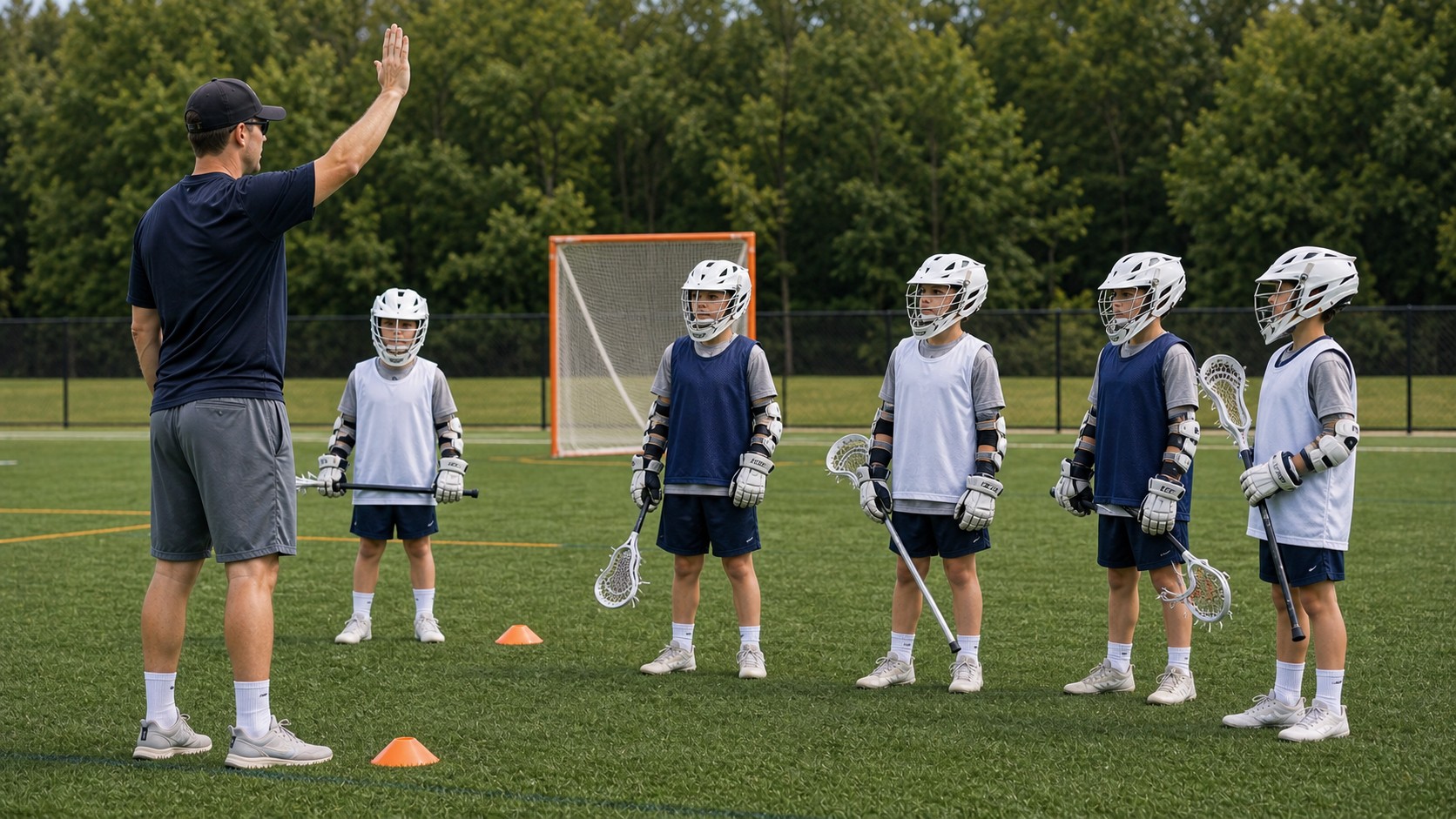
Whistles are learning moments. Instead of wandering away, players should look at the official or coach, find the ball, and listen for the restart. This teaches rule awareness without a classroom lecture.
Parents can reinforce this by praising attention. A child who listens well after a whistle is learning the game even if the stick skills are still developing. Coachability is a real beginner skill.
Over time, players connect whistles to situations: boundary, crease, contact, offside, dangerous play, or restart. That connection makes the game feel less random.
Shooting Should Follow Control
Shooting is fun, but it should follow body control and safety. Young players need to know where the goal, goalie, teammates, and defenders are. A wild shot in a crowded drill can be dangerous. A controlled shot from a good angle teaches better habits.
At-Home Practice Should Stay Short
At-home practice can help, but it should not feel like punishment. Short throwing, catching, wall-ball, or ground-ball sessions are enough for many young players. The goal is frequent comfort with the stick, not exhaustion.
Parents should ask coaches what to practice. One child may need soft hands. Another may need ground balls. Another may need off-hand confidence. Focused practice works better than guessing.
Skill Growth Is Not Always Straight
Young players may improve quickly, plateau, and then improve again. That pattern is normal. A child might catch well one week and struggle the next when movement or pressure is added. Coaches and parents should treat this as part of learning.
The best response is patience with clear expectations. Keep showing up, keep trying corrections, keep celebrating effort, and keep skills connected to game situations. Progress will appear in small ways before it becomes obvious.
Beginner lacrosse skills are not just a checklist to finish. They are habits that keep deepening. A player who learns catching, throwing, ground balls, cradling, footwork, spacing, defense, communication, and listening has a strong foundation for whatever level comes next.
Skill Stations Help Beginners Focus
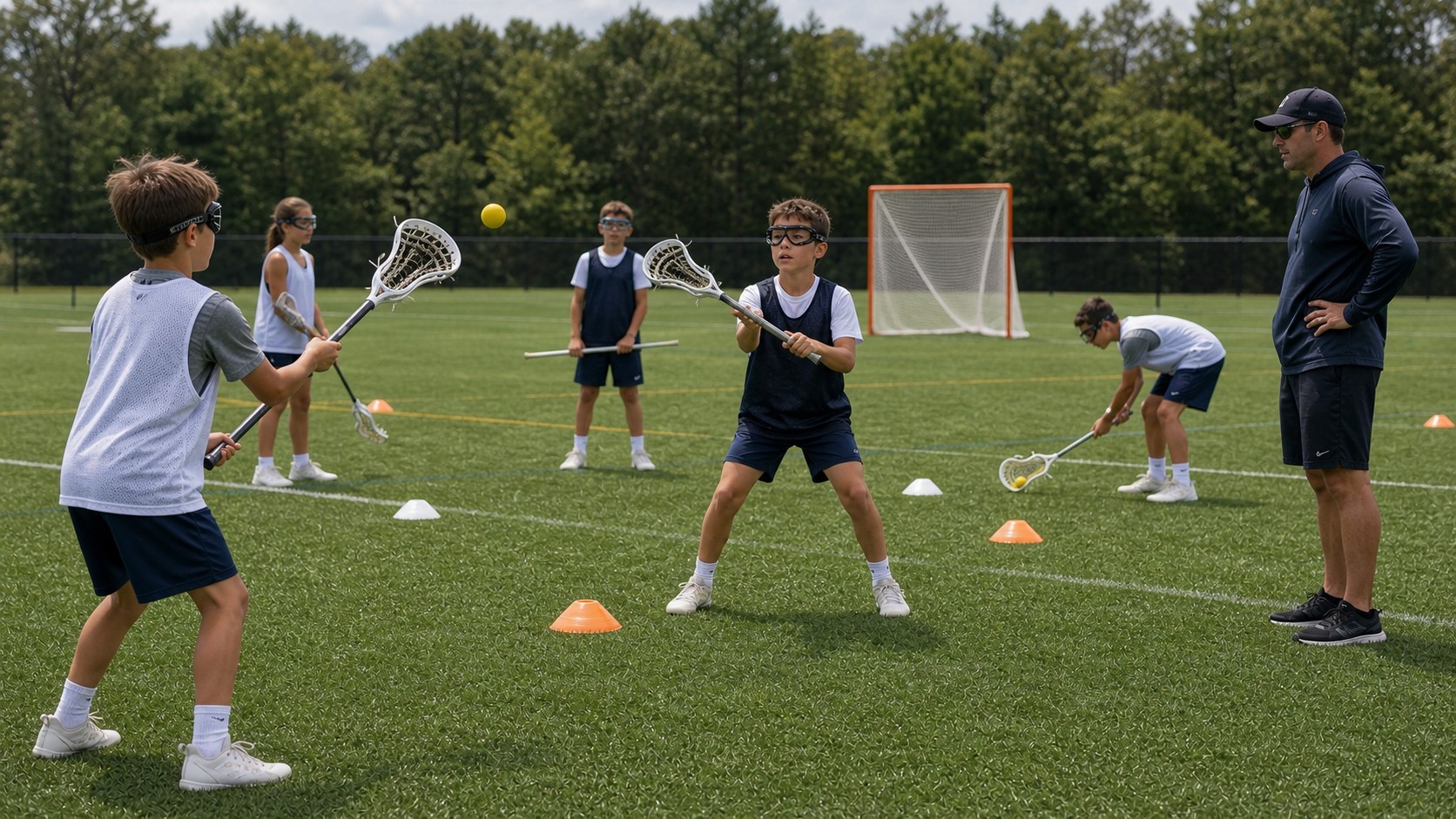
Stations can make a practice feel manageable. One station can focus on catches, another on ground balls, another on footwork, and another on simple passing decisions. Players rotate before attention fades, and each station gives a clear purpose.
Add Pressure Slowly
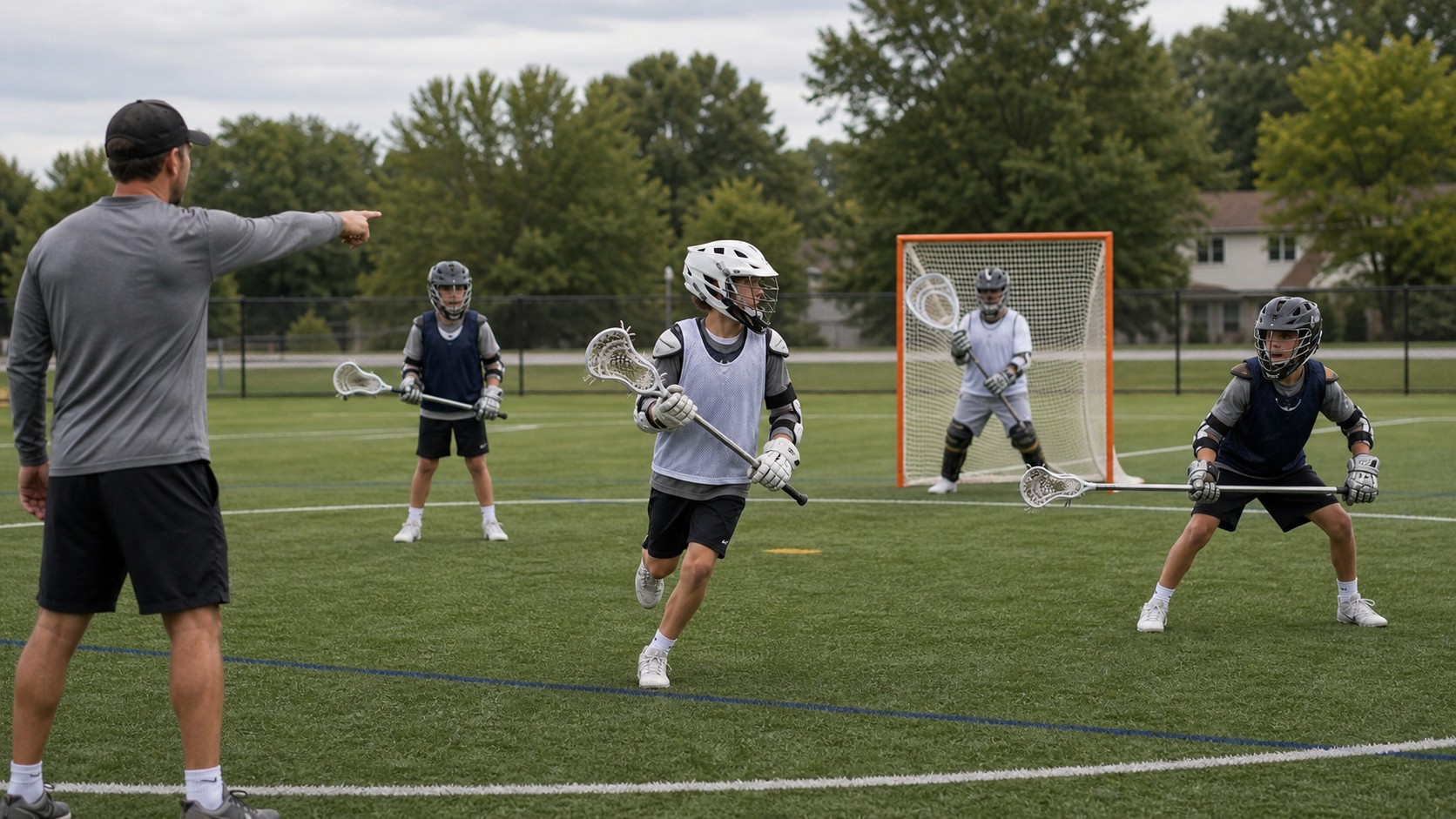
A skill that works alone may break under pressure. That is normal. Coaches can add pressure in layers: first a moving target, then a passive defender, then a time limit, then a small-sided game. Each layer should preserve the main habit.
This keeps beginners from feeling ambushed. They learn that pressure is part of lacrosse, but they also learn how to handle it. The coach can see which skill remains stable and which one needs more quiet repetition.
Useful Players Notice The Next Play
Young players often stop after a pass, shot, or mistake. A useful beginner learns to ask what comes next. After passing, move. After scooping, protect. After missing, recover. After a whistle, listen. This habit turns isolated skills into game awareness.
Coaches can praise next-play behavior loudly. The player who chases a rebound, becomes an outlet, or hustles back on defense is learning lacrosse even if the original play was messy. Those moments build trust.
Parents can watch for the same thing. Instead of only tracking goals, watch whether the child stays involved after the first action. That is often where real development shows.
Make Off-Hand Work Normal
The off hand feels awkward for most beginners, so coaches should introduce it without embarrassment. A few easy catches, carries, or wall-ball touches can make both-hand development feel normal. The goal is steady exposure, not instant perfection.
Connect Skills To Positions Later
Young players do not need to specialize too early. Attackers, midfielders, defenders, and goalies all need basic catching, passing, ground balls, footwork, and communication. Position details become easier when those shared skills exist.
A child who tries several roles may discover unexpected strengths. A quiet player may become a steady defender. A fast player may need midfield decision work. A player with quick reactions may enjoy goalie. Fundamentals keep those options open.
The Best Skill Is Coachability
Coachability makes every other skill easier to improve. A young player who listens, tries a correction, asks a clear question, and keeps working after mistakes will grow. Talent helps, but teachable habits keep development moving.
Coaches can build coachability by making feedback specific and respectful. Players are more willing to listen when corrections feel useful. Parents can support it by praising effort, attention, and resilience instead of only outcomes.
Beginner skills are physical, mental, and social. The player is learning how to move, how to think, and how to be part of a team. That full foundation is what makes youth lacrosse rewarding.
Revisit The Same Skills All Season
Beginner skills should not disappear after one practice. Catching, throwing, scooping, footwork, and communication need to return every week in slightly different forms. Repetition tells young players that fundamentals are the game, not a warmup before the real work. Players who hear that message early become more patient with practice and more willing to repeat simple skills well.
Let Small Wins Build Momentum
Small wins matter. A cleaner catch, a braver ground ball, a louder call, or a faster restart can change how a child feels about practice. Coaches and parents should name those moments because they show the player that improvement is visible.
Momentum grows when players believe their work is paying off. That belief makes them more willing to try the next hard skill, including off-hand practice, defensive footwork, or passing under pressure.