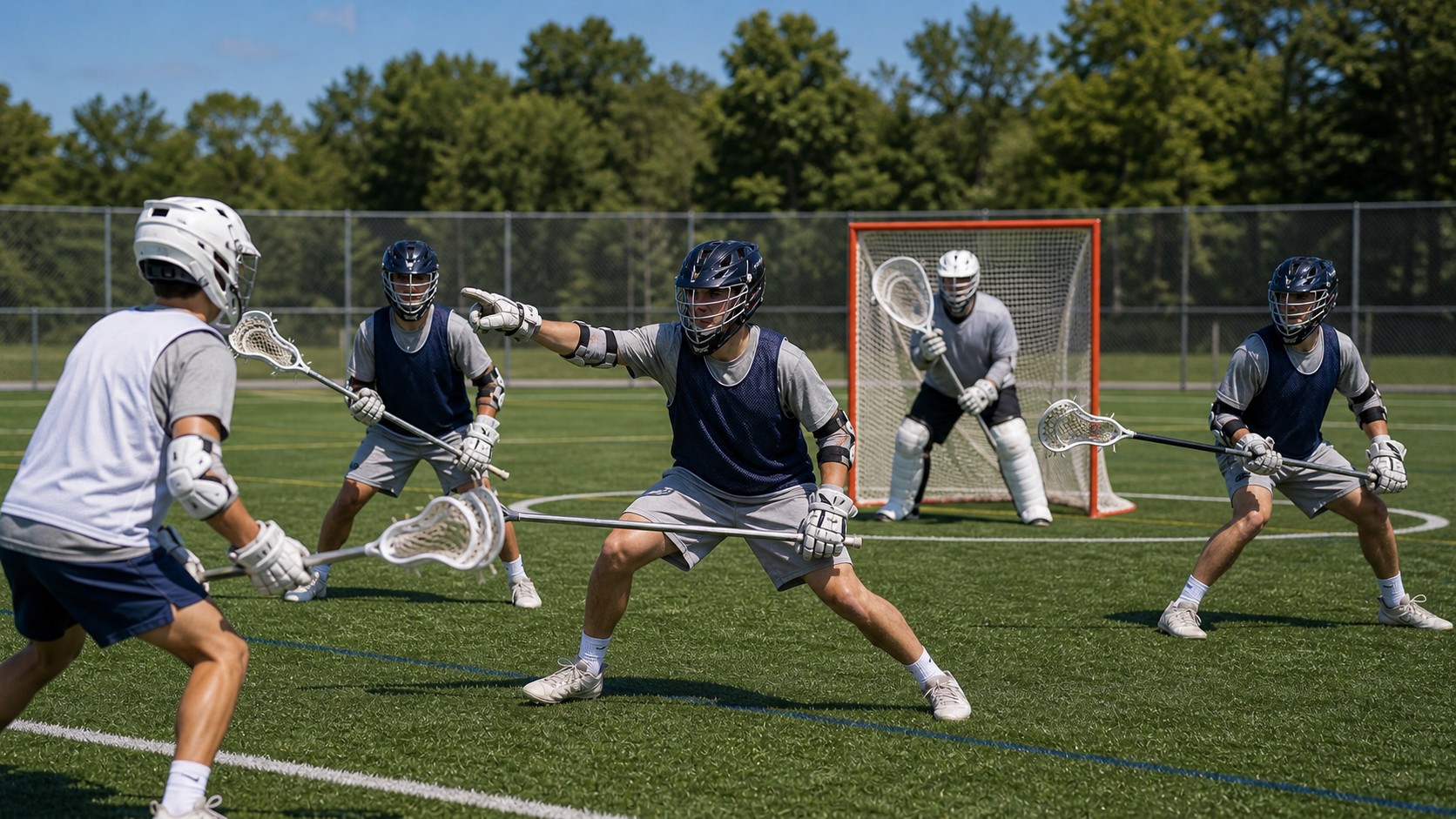
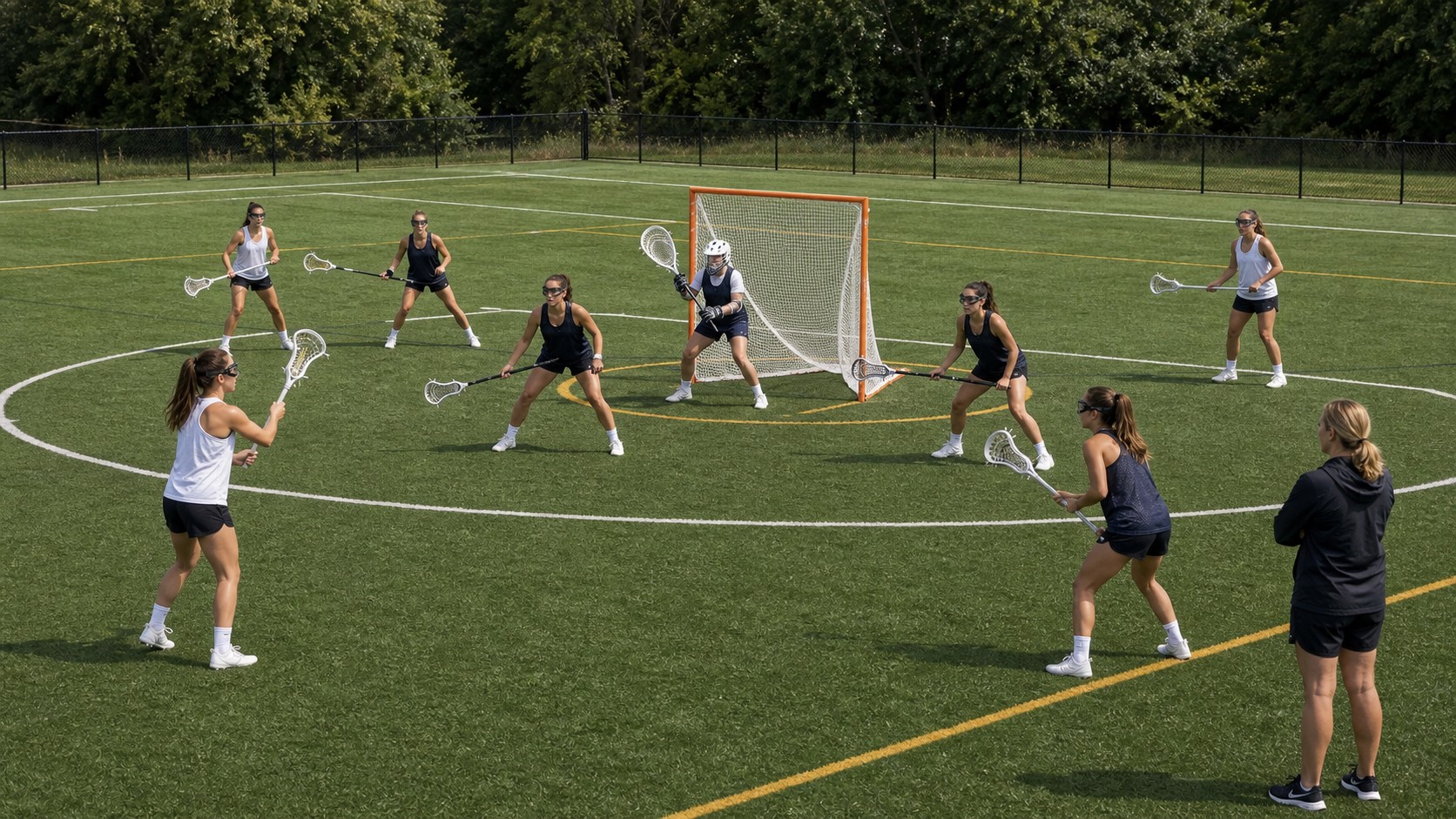
Lacrosse Clears Explained
A lacrosse clear is how a team moves the ball from defense to offense after a save, turnover, ground ball, or possession change. A clear is not just a goalie throwing the ball upfield. It is a team movement pattern involving outlets, spacing, timing, communication, and decisions under pressure. Good clears turn defensive stops into offensive possessions. Bad clears give the ball back quickly, often near the goal that was just protected.
A: A clear is the process of moving the ball from the defensive end into the offensive end.
A: Goalies, defenders, or any player who gains possession in the defensive end may start a clear.
A: They fail from poor spacing, rushed passes, sideline traps, pressure, or unclear outlets.
A: No. A short safe pass can be better than a risky long throw.
A: They create lanes, come back to support, and carry the ball through pressure.
A: Riding pressure is the opponent's attempt to stop or disrupt the clear.
A: The goalie often sees the field and starts the first outlet after a save.
A: Slow down when the fast option is covered or possession needs to be protected.
A: Practice outlets, lane spacing, pressure release, reversals, and failed-clear recovery.
A: The team keeps possession and enters the offensive end under control.
A Clear Turns A Stop Into Possession
A defensive stop is not complete until the team keeps the ball. A goalie save, caused turnover, or ground ball can be wasted if the clear fails immediately. That is why coaches treat clearing as a full team skill rather than an afterthought.
The clear connects defense to offense. Players must spread, talk, protect the stick, and make decisions before the ride traps them. The ball may start with the goalie, but all ten players can affect whether the clear succeeds.
The First Outlet Sets The Tone
The first outlet pass should calm the possession. It does not have to be spectacular. A short, safe pass to a defender or midfielder can be better than a risky throw toward midfield. The goal is to make the next decision easier.
Receivers need to help by showing hands, moving to open space, and communicating pressure. Standing still behind a rider is not an outlet. A good outlet creates a passing lane and an escape plan.
Goalies should scan before throwing. If the ride is baiting a pass, the goalie may need to fake, carry, or use another side. The first choice can decide the whole clear.
Spacing Beats The Ride Before Contact
A ride becomes stronger when the clearing team crowds itself. Two players in one lane allow one rider to bother both. Good spacing stretches pressure and gives the ball carrier multiple answers.
Sidelines Can Become Traps
The sideline is useful because it creates a clear boundary and can open a lane. It is dangerous because it removes one escape direction. A ball carrier who stops on the sideline under pressure may have only a risky pass left.
Teams should practice sideline pressure. Where is the support? Can the carrier reverse the ball? Should a midfielder come back? Does the goalie remain available? These answers prevent panic in games.
Midfielders Connect The Clear
Midfielders often decide whether a clear becomes smooth or chaotic. They need to time cuts, present outlets, carry through space, and recognize when to come back toward the ball. Sprinting away from pressure may look aggressive, but it can leave the ball carrier alone.
A good midfielder reads the ride. If pressure overplays one side, the midfielder can flash into the middle or reverse lane. If the defense protects the middle, a wide carry may be safer. Clearing is a reading skill, not only a running skill.
Conditioning matters here. Tired midfielders stop presenting clean outlets. Teams that want better clears need midfielders who can run with purpose late in games.
Attackers Still Have Clearing Jobs
Attackers may not carry the ball from the defensive end often, but they still affect clears. They can occupy riding defenders, move into legal space, communicate, or prepare for the settled possession after the clear crosses midfield.
The Goalie Must Manage Risk
Goalies can see the field, but they also face pressure after saves. A goalie who rushes every outlet may feed the ride. A goalie who waits too long may let pressure arrive. The skill is choosing the safest useful option quickly.
Goalies should know their teammates' tendencies. Which defender handles pressure calmly? Which midfielder can catch on the move? Which side is the ride overplaying? These details make outlets more intentional.
A Clear Can Become Transition Offense
Some clears create fast breaks or unsettled chances. If the ride is beaten cleanly and the defense is not matched up, the clearing team may attack before settling. That opportunity is valuable, but it still requires judgment.
A rushed transition chance can become a turnover. The ball carrier should know numbers, angle, support, and clock. If the advantage is not real, completing the clear and settling may be smarter.
The best teams can do both. They push when the chance is clean and slow down when possession is more valuable than a hopeful attack.
Failed Clears Are Team Mistakes
It is easy to blame the player who threw the bad pass, but failed clears are often team mistakes. Maybe no outlet came back. Maybe spacing was poor. Maybe the sideline trap was predictable. Maybe the goalie did not communicate pressure. The final turnover is only the visible part.
Practice Clears Against Real Pressure
Clears should be practiced against riders, not only in empty-field patterns. Players need to feel the timing, noise, and pressure of a real ride. Start with controlled pressure, then increase speed as the team understands the shape.
Practice should include recovery after mistakes. What happens after a bobbled pass? Where does the nearest support go? Can the team reverse before pressure closes? These messy moments decide games.
Communication Makes The Field Bigger
A clearing team that talks sees more options. Names, pressure calls, turn calls, reverse calls, and goalie instructions all help the ball carrier. Silence makes the field feel smaller because the player with the ball has to solve everything alone.
Communication should be specific. Here, reverse, one more, time, and pressure are more useful than vague noise. Teams can build these words into drills until they become automatic.
The bench can help too, but it should not overwhelm. Clear voices beat many voices. A confused ball carrier does not need a committee.
Clears Depend On The Score And Clock
Late in a game, a risky clear may be unnecessary if the team is protecting a lead. When trailing, a team may push harder after a stop. Score and clock do not change the fundamentals, but they change the acceptable risk.
Film Shows Hidden Outlets
Film often reveals that a failed clear had an open option for a split second. The player may not have seen it, or the outlet may have appeared too late. Reviewing those moments helps teams improve timing instead of simply yelling about turnovers.
Coaches should show successful clears too. Players learn what spacing looked like when the ball moved cleanly. Positive film builds a model the team can repeat.
A Clear Is A Possession Promise
A team that clears well rewards its defense. Every save or caused turnover has a better chance to become offense. That changes morale because defenders know their work will not be wasted by careless transition.
Clearing is not glamorous, but it is one of the most important team skills in lacrosse. It requires calm, spacing, passing, running, communication, and judgment. When those pieces connect, the ball moves from danger to opportunity.
That is the simple purpose of a clear: leave the defensive end with possession and enter offense ready to play the next phase. Teams that do it consistently control more of the game.
Clears Need A Backup Plan
The first option will not always be open. A good clear has a second and third answer. If the goalie outlet is covered, a defender may carry. If the sideline is trapped, the ball may reverse. If midfield is denied, a player may come back to help.
Do Not Turn Every Clear Into A Race
Some clears should be fast, especially when numbers are available. Others should be calm. A team that treats every clear like a sprint may throw away possessions that could have been protected with one extra pass.
The ball carrier should read pressure, support, clock, and field position. If the defense is disorganized and lanes are open, push. If the ride is set and teammates need shape, use the safe outlet and move together.
Clearing Roles Should Be Named
Teams clear better when roles are clear. The goalie knows the first read. Defenders know release points. Midfielders know lanes. Attackers know whether to occupy riders or prepare for offense. Unclear roles turn one save into nine players guessing.
Role clarity is especially important for young teams. Players may all run away from the ball because they think clearing means sprinting upfield. Coaches should teach that coming back to support can be the smartest clearing movement.
Once roles are named, players can improvise more safely. They know the structure well enough to adjust when pressure changes.
The Ride Is Trying To Speed You Up
The opponent's ride wants the clearing team to hurry into mistakes. A rushed throw, a blind sideline carry, or a panicked cross-field pass is exactly what pressure is designed to create. Clearers need to feel urgency without losing calm.
Use The Whole Width When It Helps
Width can stretch the ride and open lanes, but only if passes are realistic. A wide teammate who is too far away or hidden behind pressure is not a useful outlet. The clearing team should use width with support underneath.
Reversals can be powerful because rides often overload one side. Moving the ball back through the goalie or a safe defender can make pressure chase instead of trap. The key is doing it before the carrier is stuck.
A Good Clear Sets Up Better Offense
The clear does not end the moment the ball crosses midfield. The team still needs to enter offense with spacing, substitutions, and control. A frantic clear may technically succeed but leave the offense disorganized.
Good clearing teams know how to flow into the next phase. Push if transition is real. Settle if the defense recovers. Substitute if needed. Protect possession if the clock matters.
That connection is why clears deserve practice time. They are the bridge from defense to offense, and a shaky bridge makes both sides of the field suffer.
Clears Improve When Players Scan Early
The best clearing decisions often happen before the catch. A defender who scans while the ball is traveling already knows where pressure is coming from, where the safe outlet is, and whether carrying space exists. That early scan turns a rushed catch into a prepared decision.
Bad Clears Often Start With Still Feet
Still feet invite pressure. A receiver who catches flat-footed gives the rider time to close, checks the stick, and pushes the ball toward the sideline. Moving through the catch makes the first step part of the clear.
This does not mean every player sprints upfield. Sometimes the right movement is coming back to the ball or drifting into a better angle. The point is to keep the ride reacting instead of letting it set the trap.
Clearing Confidence Comes From Repetition
A confident clearing team has already rehearsed the stressful moments. It has reversed out of sideline pressure, used the goalie as a release, carried when outlets were covered, and settled after crossing midfield. Repetition makes those choices feel normal.
That confidence changes how opponents ride. If the clearing team stays calm, the ride has to work longer and take more risk. One clean outlet can make pressure overextend.
The goal is not to make clears look fancy. The goal is to make them reliable enough that defensive stops regularly become real offensive possessions.