Man-Down Defense In Lacrosse
Man-down defense in lacrosse is the short-handed situation after a penalty removes one player from the field. The defense cannot cover everything, so it has to protect the most dangerous areas first, rotate together, communicate clearly, trust the goalie, and use the penalty clock as part of the strategy. A good man-down unit does not chase every pass. It survives by staying compact, forcing lower-value shots, clearing loose balls when possible, and avoiding a second penalty that extends the problem.
A: It is the short-handed defensive situation after a penalty removes one player.
A: Most units protect the middle, crease, and highest-danger passing lanes first.
A: They should pressure with discipline, not chase so far that the shape breaks.
A: The goalie sees the whole shape and can call rotations, screens, and cutters.
A: Yes, and a smart clear can burn penalty time or end the threat.
A: Lower-angle or lower-quality shots may be acceptable if the middle stays protected.
A: Retaliation, poor communication, or a second foul can extend the short-handed situation.
A: Compact shape, rotation, sticks in lanes, goalie trust, clears, and composure.
A: Teams should practice it before games because penalty situations arrive suddenly.
A: Survive the penalty, prevent high-quality shots, and regain possession safely.
Man-Down Starts With Acceptance
The first mistake short-handed teams make is trying to pretend nothing changed. Something did change. One player is missing, which means the defense must decide what it can live with and what it absolutely cannot allow. The middle of the field, the crease, and immediate catch-and-shoot lanes usually matter most.
Acceptance does not mean surrender. It means the defense understands the problem. The unit has fewer bodies, so every step must be connected. A defender who chases a harmless pass can create the exact inside look the offense wants.
Compact Shape Buys Time
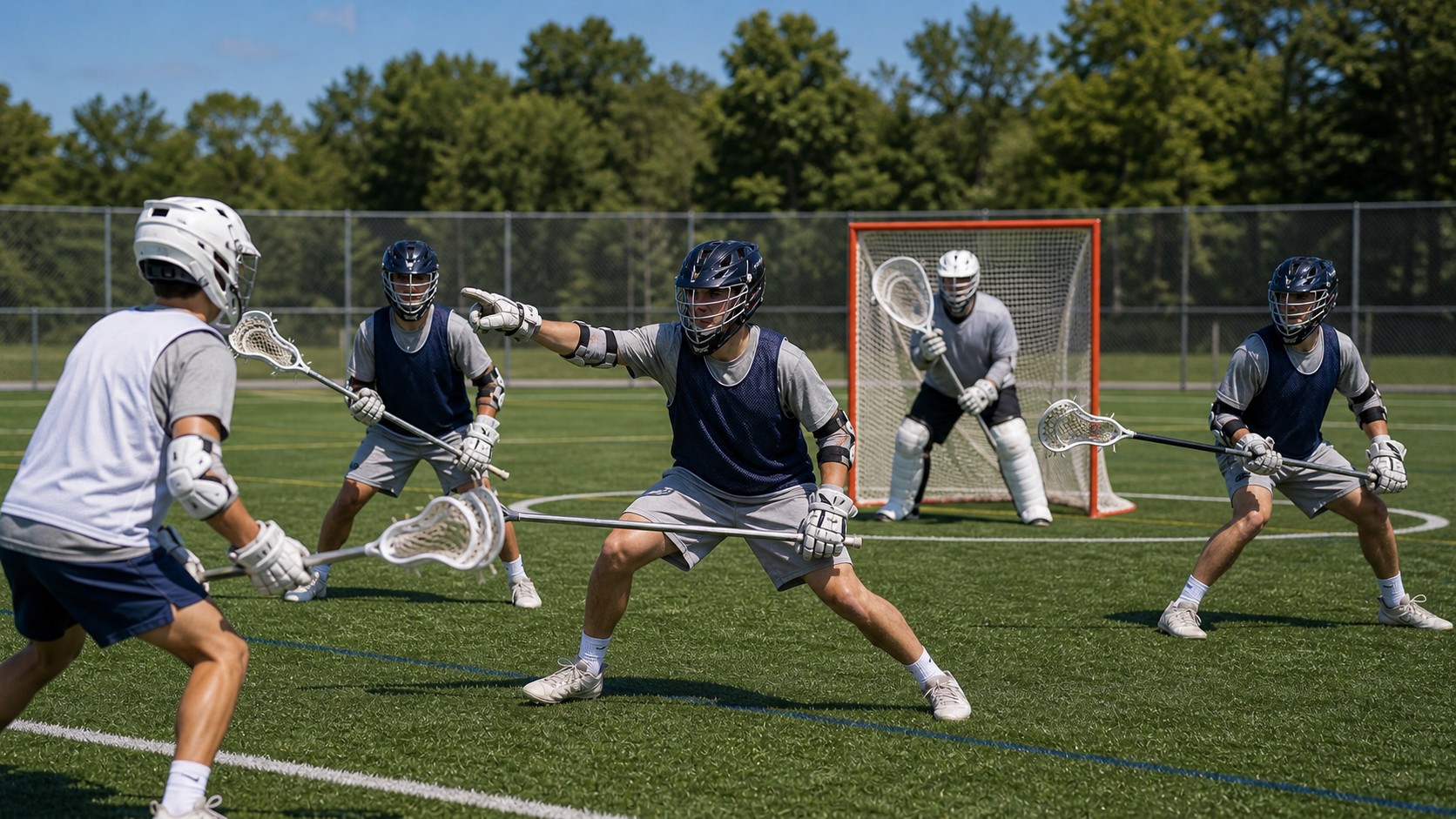
A compact shape forces the offense to work for the goal. The defense wants the ball to move around the outside while the penalty clock runs. If the offense has to make several passes before finding a good chance, the short-handed unit is already doing part of its job.
The shape may vary by team, but the purpose stays the same. Protect dangerous space, make rotations clear, and avoid giving up the easy finish. Compact does not mean passive. Sticks should stay active, feet should move, and players should challenge only when the shape can recover.
Coaches should teach the shape with landmarks. Who protects the crease? Who steps to the wing? Who has the backside skip? Players need simple answers before the speed of a real penalty situation arrives.
The Goalie Is The Organizer
The goalie sees the whole field and should become the loudest organizer. A good goalie names cutters, screens, ball location, and rotation urgency. Field defenders should trust that voice because they cannot see everything while facing the ball or tracking a nearby attacker.
Rotations Must Be Shared
Man-down rotation is not one player's rescue mission. When one defender steps, the others must shrink, recover, or cover the crease. If only one player moves, the offense will find the open teammate. If everyone moves without a plan, the defense becomes a scramble.
Shared rotation requires vocabulary. Teams should use clear calls for ball, crease, skip, recover, and hold. The shorter the call, the easier it is to use under pressure. Long explanations belong in practice, not during a live penalty kill.
Force Lower-Value Shots
A short-handed defense may not prevent every shot. The goal is to prevent the worst shots: clean inside feeds, open catch-and-shoot looks from prime areas, and rebound chances with no body position. If the offense takes a lower-angle shot with the goalie seeing it, the defense may accept that outcome.
Shot quality depends on shooter, angle, goalie vision, screens, score, and clock. A shot that is acceptable against one team may be dangerous against another. Man-down defense still requires scouting and awareness.
Players should avoid thinking in absolutes. The question is not whether the shot is open. The question is whether it is the shot the defense chose to risk. That mindset makes the penalty kill more deliberate.
Clears Can Finish The Kill
A save, blocked pass, or loose ball is only the beginning of escape. The short-handed team still has to clear or at least secure possession. A careless outlet can give the man-up offense another full chance, often with the defense even more tired.
The Penalty Clock Changes Decisions
Early in the penalty, defenders should be patient. There is time for the offense to make mistakes, and there is no need to gamble on the first pass. Late in the penalty, the unit still has to finish the possession. Many goals happen just as a defender relaxes because the penalized player is about to return.
Teams should practice clock awareness. Who calls the release? Does the returning player jump into the shape or find a matchup? Does the defense clear immediately or settle? Those details can decide whether the penalty truly ends.
Avoid The Second Penalty
A second penalty can ruin a good defensive stand. Tired players may slash, push late, argue, or retaliate after contact. Man-down defense requires emotional control because the offense may try to increase stress with quick ball movement and crease pressure.
Leaders should remind teammates to stay calm. A penalty kill is already difficult. Adding time, losing another player, or creating a longer advantage gives the opponent exactly what it wants.
Composure is not passive. It is disciplined effort. Players can still step, talk, block lanes, and fight for ground balls while refusing to make the emotional mistake.
Practice The Recovery After Mistakes
Even good man-down units make mistakes. A rotation may be late, a pass may skip through, or a rebound may pop loose. Teams should practice recovery after the first breakdown instead of assuming perfect execution. The next action often decides whether the mistake becomes a goal.
Man-Down Can Build Momentum
A successful penalty kill can lift a team. The players on the field survived pressure, the goalie made reads, and the bench sees discipline rewarded. That momentum can matter in close games because it turns a dangerous situation into proof of composure.
The key is finishing the play. A kill does not feel complete until the ball is safe or the team is back to even strength with possession under control. Celebrate after the work is done.
Film Reveals The Open Player
Film study helps because live penalty kills feel fast. On video, players can see which pass forced the longest rotation, which defender overstepped, and whether the goalie had a clear view. Those details are hard to process in the moment but easy to learn from afterward.
Coaches should pause before the goal or save, not only after. The useful teaching moment often happens two passes earlier when the shape first bends. Players who see that connection become better at preventing the final breakdown.
Film also rewards good habits that do not show in statistics. A stick in the lane, a crease bump, or a calm recovery may be the reason no shot happened. Those plays deserve attention.
Scouting Changes The Plan
Some man-up units rely on outside shooters. Others feed the crease. Others look for skips. A defense should know the opponent's favorite threat when possible. The basic penalty-kill principles stay the same, but emphasis changes by opponent.
Bench Communication Matters
The bench can help by giving clear, limited information. Too many voices create noise. One coach or leader should manage release time, matchups, and reminders. Players on the field need clarity, not a crowd of overlapping instructions.
Substitutes should also know who returns after the penalty. Confusion at the box can undo a strong stand. The transition from man-down back to even strength should be practiced like any other part of the game.
Survival Is A Skill
Man-down defense is not glamorous, but it is a skill. It asks players to accept disadvantage, communicate under stress, protect priorities, clear when possible, and stay calm until the clock expires. Teams that do this well steal possessions from dangerous situations.
The best penalty kills make the offense feel rushed without the defense becoming frantic. They protect the middle, trust the goalie, rotate together, and finish the play. Surviving a penalty situation is not luck when the habits are trained.
A team that can survive man-down becomes harder to beat because opponents cannot assume every penalty becomes a goal. Discipline becomes defense, and defense becomes momentum.
Use Practice To Name Acceptable Risks
Man-down players need to know what the defense is willing to allow. Maybe an outside shot from a poor angle is acceptable, but a crease feed is not. Maybe one shooter must be challenged more aggressively than another. Naming those risks in practice keeps players from inventing priorities during the penalty.
Teach Players To Read The Offense
The penalty kill should read more than the ball. Players should notice which attacker wants to feed, which shooter is ready, which crease player is setting screens, and which side the offense prefers. Those clues help defenders anticipate the next pass instead of reacting late.
Reading the offense also prevents over-rotation. If a player is not dangerous from a certain spot, the defense may not need to sprint out and open the middle. Smart man-down defense protects priority threats first.
Man-Down Confidence Comes From Repetition
Teams that rarely practice man-down often panic when the situation appears. The ball moves quickly, the goalie is shouting, and everyone feels a step behind. Repetition slows the picture down because players have already seen the rotations.
Practice should include different offensive shapes, short-clock situations, rebounds, and clears after saves. A penalty kill is not one static drill. It is a sequence of connected problems.
Confidence grows when players know the next job. Step, shrink, recover, listen, clear. Those habits help the unit survive even when the offense has skilled shooters.
Bench Energy Can Help Or Hurt
A calm bench helps the penalty kill. Clear release calls, short reminders, and organized substitutions support the group on the field. A frantic bench can add noise and make players rush. Teams should decide who communicates penalty time and who stays quiet.
Finishing The Kill Means Finding The Ball
Many penalty kills break down after the first save or block because defenders relax. The ball may still be loose, the offense may still have numbers, and the penalized player may not be back yet. Finishing the kill means locating the ball, winning body position, and making the next safe play.
This is why rebound drills matter. A goalie save without a box-out can become another shot. A blocked pass without a clear can become another possession. The kill continues until the ball is secure.
A Good Kill Teaches Team Identity
Man-down defense reveals whether a team trusts its structure. Players must sacrifice individual chasing for group survival. They must communicate under stress and value small wins. Those traits carry into even-strength defense too.
A team that kills penalties well often becomes more confident in close games. It knows it can survive pressure without falling apart. That confidence does not remove the need for discipline, but it gives the team a way through mistakes.
The best message is simple: avoid penalties, but be prepared to defend them. A trained penalty kill turns a crisis into a contest the team understands.
Simple Roles Reduce Panic
Penalty kills are easier when every player knows the first responsibility before the whistle. One defender protects the crease, one steps to the ball, another reads the skip, and everyone listens for the goalie. These simple roles prevent the short-handed group from inventing a new plan under stress. When the roles are understood, players can adjust without abandoning the structure. That clarity keeps tired players connected late in the penalty.