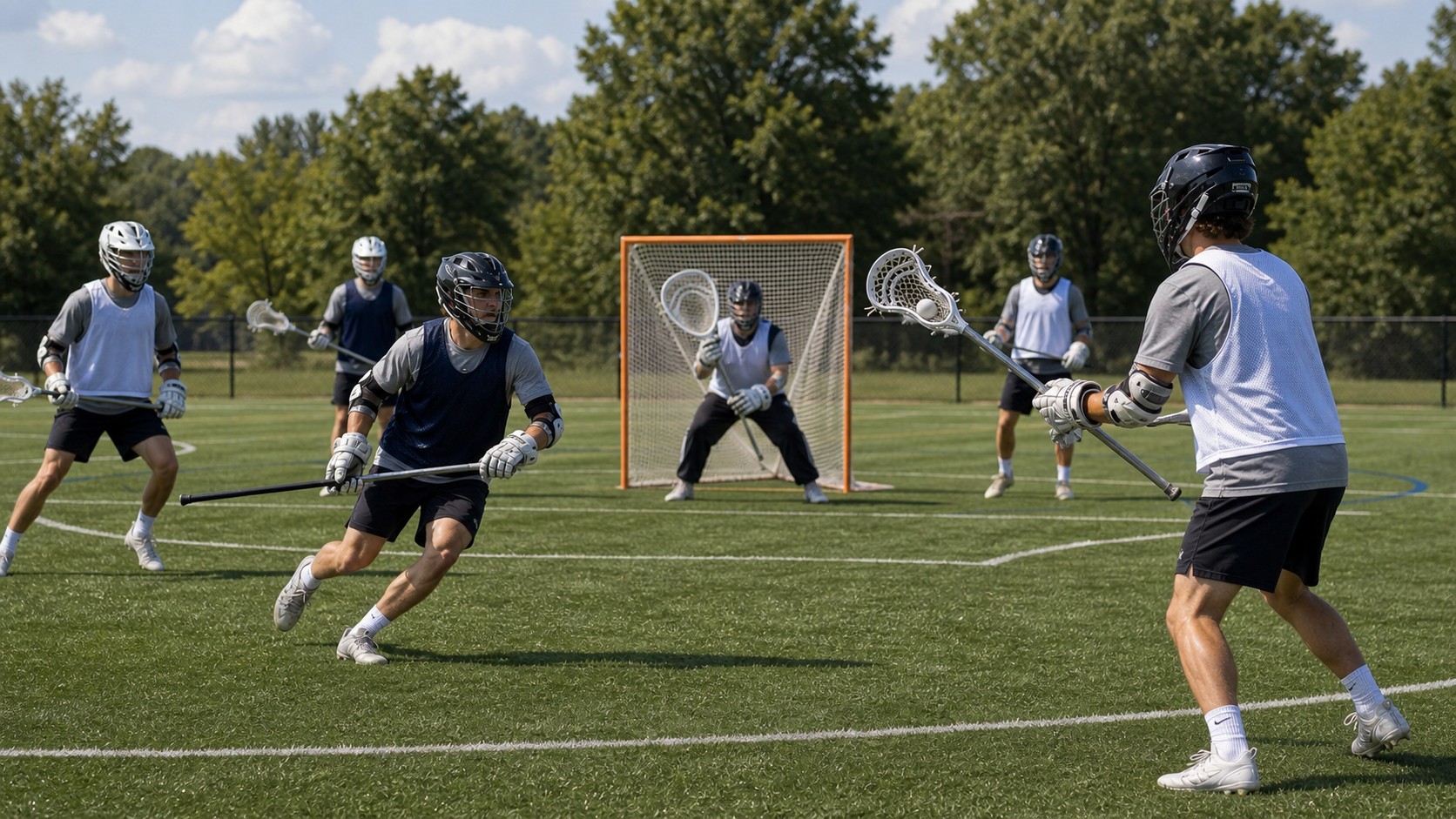
Settled Offense In Lacrosse
Settled offense in lacrosse begins when the defense is matched up and the fast-break chance has passed. The offense can still score, but it has to build the possession through spacing, dodging, passing, off-ball movement, picks, cuts, and shot selection. A smart settled possession is not slow for the sake of being slow. It is organized. The offense makes the defense move, reads help, supports the ball, and waits for a chance that is better than the first forced look.
A: It is offense against a defense that has recovered and matched up.
A: Not necessarily; it is organized offense that builds a good chance.
A: Spacing gives dodgers room and makes defenders cover more ground.
A: It should create a shot, draw help, open a pass, or shift the defense.
A: They cut, clear, screen, support, and occupy defenders away from the ball.
A: Reset when the first action fails, pressure grows, or a better matchup is needed.
A: A shot with useful angle, timing, goalie movement, and rebound or backup support.
A: Yes, if the ball moves without threatening the defense.
A: Start with spacing, outlets, movement after passes, and simple dodge-support concepts.
A: Connected decisions that turn possession into high-quality chances.
Settled Offense Starts After Transition Ends
A team enters settled offense when the defense is back, matchups are mostly organized, and the fast-break advantage is gone. That does not mean the chance to score is gone. It means the offense has to create a chance through structure and decisions rather than pure numbers.
Settled offense rewards patience, but patience must still threaten. Passing around the outside without movement lets the defense rest. Smart possessions make defenders communicate, slide, recover, and guard multiple actions.
Spacing Gives The Ball Room
Spacing is the first settled-offense skill. A dodger needs room to attack. Feeders need angles. Cutters need lanes. Shooters need enough separation to catch ready. If players crowd the same area, the defense can guard several threats with fewer steps.
Good spacing does not mean standing far apart forever. It means occupying useful areas and moving at useful times. A player may widen to create a lane, cut through to empty space, or rotate after a pass. The spacing is alive.
Coaches should teach spacing with landmarks and purpose. Where is the outlet? Where is the crease? Where does the dodge want to go? The answers make the shape meaningful.
Dodging Should Create A Team Advantage
A settled dodge is not only a player trying to beat a defender. It should create an advantage for the team. The dodge may produce a shot, draw a slide, open a feed, or shift the defense for the next action.
Support Must Move With The Dodge
When a player dodges, teammates have jobs. Adjacent players should be available for outlets. Backside players should prepare for skips. Cutters should time movement so they arrive when the passer can see them. If nobody moves, the dodger is isolated in a bad way.
Support also protects against turnovers. A dodger under pressure needs a safe release. If the only option is a desperate throw through traffic, the offense was not connected enough before the dodge began.
Off-Ball Movement Changes The Defense
The defense wants to watch the ball. Off-ball movement punishes that habit. A cutter behind a watching defender, a legal pick, a crease seal, or a clearing movement can create the space that the ball carrier uses later.
Timing matters. A cut that arrives too early clogs the lane. A cut that arrives too late is invisible. Players away from the ball must read the dodger's eyes, the defender's head, and the slide timing.
Good off-ball movement is often unselfish. A player may cut only to pull a defender away. That movement may not appear in the scorebook, but it can create the goal.
Ball Movement Should Stress The Defense
Passing for its own sake is not enough. The ball should move to improve angle, attack a matchup, force a rotation, or create a shot. If defenders can stand still while the ball moves, the possession is not stressing them.
Shot Selection Honors The Possession
A settled possession can include many passes, cuts, and dodges. A poor shot at the end wastes that work. Players should understand which shots the team wants and which shots are likely to fuel transition the other way.
Good shot selection depends on angle, distance, pressure, goalie vision, rebound support, backup rules, and clock. A shot does not have to be perfect, but it should fit the situation.
Resets Are Part Of Offense
A reset can feel disappointing to beginners because it looks like the team gave up. In reality, resetting can be a smart offensive decision. If the first dodge fails, a reset keeps possession and lets the team attack a shifted defense.
Resets can also help substitutions, matchups, and clock management. A team may want a certain player on the field or a tired defender isolated. Slowing down for a moment can create a better chance later.
The key is resetting with purpose. A reset that leads to the same crowded dodge is not progress. A reset that changes angle or matchup is offense.
Possession Value Changes With Context
Late in a close game, a settled possession may be worth more than a quick low-quality shot. When trailing, the offense may need urgency. When leading, the team may need the defense to work longer. Context changes the same decision.
Beginners Need Simple Settled Rules
Young or new players can start with a few simple rules. Give the ball carrier space. Move after passing. Be an outlet. Cut with a purpose. Do not stand behind a defender. Reset when trapped. These rules create structure before advanced plays arrive.
As players improve, coaches can add formations, picks, two-man games, backside rotations, and scripted actions. The foundation remains the same: connected movement creates better chances.
Defense Tells The Offense What Comes Next
Settled offense should read the defense. Is the slide early? Is the crease open? Is a defender ball watching? Is the goalie seeing every shot? Is one matchup tired? The defense gives information on every pass and dodge.
Players who learn to read those cues become less dependent on memorized plays. A play may start the possession, but the defense decides how it should continue.
This is why film helps. Players can see what the defense did and whether the offense noticed. The best lesson may happen away from the ball.
Communication Keeps Possessions Connected
Offensive communication can be simple: one more, reset, hold, cut, behind, skip, and time. These calls help players act together. Silence forces everyone to guess.
Practice Should Include Failed Actions
Not every dodge works, and not every pass creates a shot. Practice should include what happens next. If the first dodge is stopped, where is the reset? If the cutter is covered, who fills? If the shot is passed up, how does the ball move?
These second and third actions make settled offense hard to defend. A defense may survive the first look but break on the next one. Teams that practice only perfect first options often struggle in real games.
Smart Possessions Wear Defenses Down
A good settled possession can tire and frustrate defenders. They have to communicate, slide, recover, fight through picks, protect the crease, and track off-ball movement. Even if the first chance does not score, repeated smart possessions can build pressure.
Settled offense is not about holding the ball without purpose. It is about making the defense solve problem after problem until a high-quality chance appears. That requires skill, patience, and trust.
Teams that build smart possessions become more reliable because they do not depend only on fast breaks or individual dodges. They can create offense when the game slows down, which is essential against strong defenses.
Possession Starts With The First Easy Pass
A settled possession often begins with a simple pass that lets everyone breathe. After a clear or restart, forcing the first dodge before teammates are spaced can waste the possession. The easy pass gives the offense time to organize.
Teach Players To Move After Passing
Many young players pass and then admire the ball. Settled offense improves when the passer moves with purpose. That movement might be a cut, a replace, a clear-through, or a support angle. The pass should start the next action.
Movement after passing also prevents defenders from relaxing. If every pass creates a new position, the defense must adjust constantly. That is how a simple possession becomes difficult to guard.
Use Matchups Without Freezing The Offense
Coaches may want to attack a specific matchup, but the offense should not become frozen while waiting for one player. Teammates still need to move, screen, occupy help, and be ready for the ball. A matchup is a starting point, not the whole possession.
If the defense sends help, the matchup has already done something useful. The ball can move to the open teammate. If no help comes, the dodger may continue. Reading that response keeps the offense connected.
The danger is turning settled offense into spectators watching one player. Good teams attack matchups while still playing team offense.
Use The Crease With Purpose
Crease players can screen, occupy help, finish feeds, and create confusion. They can also clog lanes if they stand in the wrong place. The crease role should be taught clearly so inside presence helps the offense rather than shrinking space.
Patience Needs Pressure Behind It
Patient offense still has to threaten. If the ball moves slowly around the outside with no dodges, cuts, or inside looks, the defense is not under pressure. Patience should mean waiting for a better chance while actively creating one.
A possession can include tempo changes. Slow the ball to set the shape, attack with speed, reset after help, then attack again. These changes are harder to defend than one constant pace.
The Best Possessions Have Memory
A settled offense should learn during the possession. If the slide came early on the first dodge, the second action can attack the backside. If the goalie saw every outside shot, the offense can look for screens or extra passes. Each action gives information.
This is what makes smart possessions feel connected. The team is not running unrelated plays. It is using what the defense just revealed to make the next decision sharper.
When players develop that memory, settled offense becomes creative without becoming chaotic. The possession has structure, but it also responds to the game in front of it.
Every Player Must Stay Playable
Settled offense becomes easier to guard when one or two players disappear. A teammate who stands hidden behind a defender is not helping the ball. Staying playable means showing a passing angle, occupying help, cutting with timing, or creating space for the next action.
Simple Actions Can Become Complex Pressure
A basic pass, dodge, and replace can stress a defense if every player moves on time. The action does not need to be complicated to create a slide or open a skip. It needs spacing, pace, and support.
Coaches can build from these simple habits. Once players understand how one action shifts the defense, they can layer picks, re-dodges, and backside cuts without losing the shape of the possession.
Settled Offense Rewards Patient Urgency
The phrase sounds contradictory, but good settled offense needs both patience and urgency. Patience keeps players from forcing the first covered look. Urgency keeps the ball moving with intent so the defense cannot rest.
That balance appears in small choices. Move after passing, arrive ready after a cut, reset before pressure becomes a turnover, and attack again before the defense fully relaxes. None of those choices require panic.
When a team learns patient urgency, settled offense feels purposeful. The possession may last longer, but every pass and movement is trying to create a better shot.