Box Lacrosse Explained
Box lacrosse is the indoor, close-quarters version of lacrosse, played on a rink-style surface where space disappears quickly and decisions have to be made under pressure. The sport uses the same essential stick skills as field lacrosse, but the boards, smaller floor, shorter routes to goal, and repeated body positioning give it a distinct personality. For beginners, box lacrosse can look chaotic at first. Once you understand the surface, the roles, and the way teams create space, the game becomes much easier to follow.
A: The name comes from the enclosed indoor playing area often described as a box.
A: No, it is played on a dry covered rink-style surface.
A: They face close-range shots, screens, and rebounds in a compact area.
A: Yes, boards affect loose balls, pressure, and positioning.
A: No, youth, club, amateur, and professional versions exist in different regions.
A: It often does because players handle the ball under immediate pressure.
A: They can be, especially when contact becomes careless or unsafe.
A: They can adapt, but tight-space timing usually takes practice.
A: Watch the ball carrier, then the nearest pick, then the crease.
A: The floor is small, the boards keep play alive, and shots develop quickly.
How Box Lacrosse Works
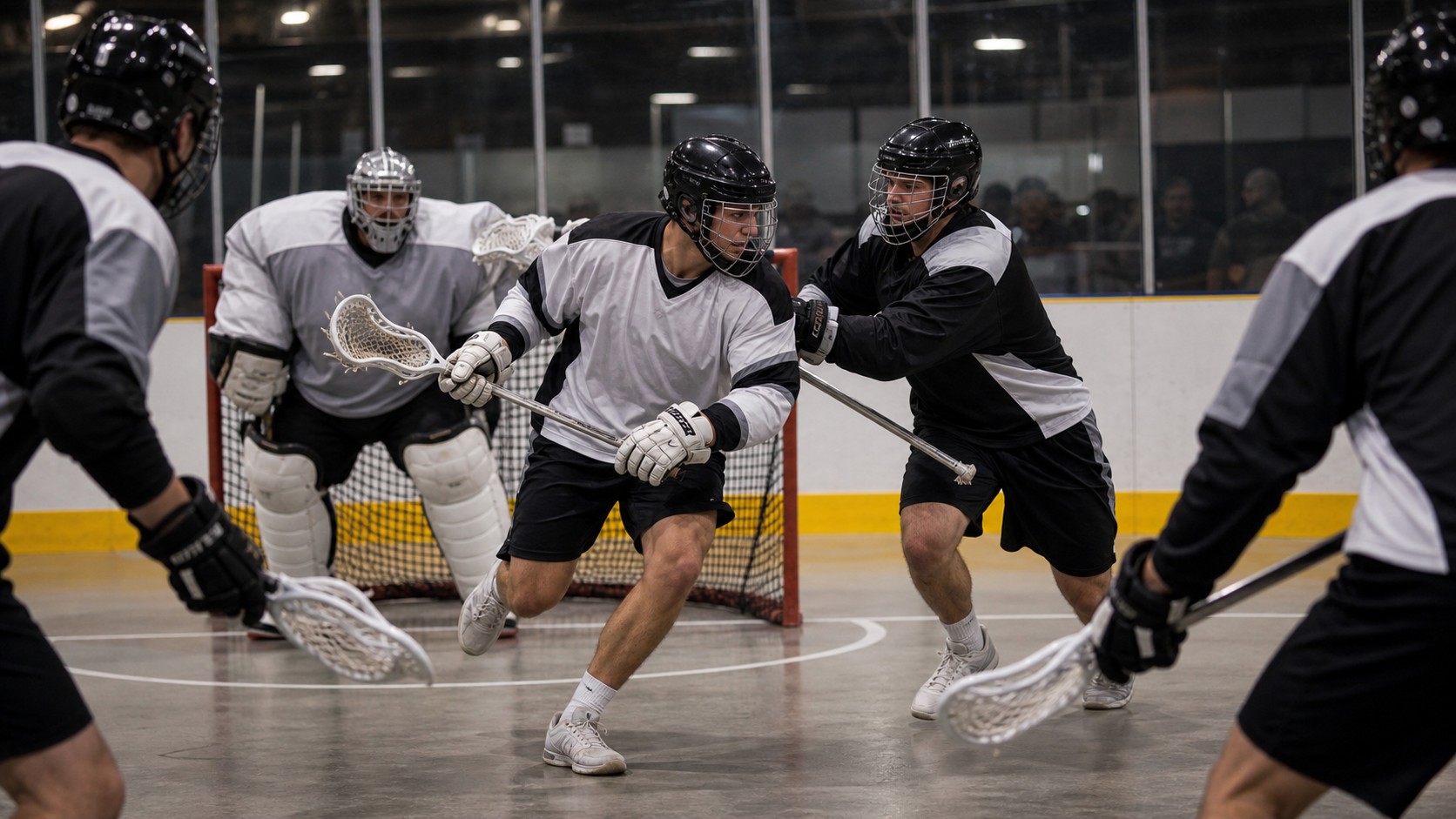
Box lacrosse is built around compression. The playing surface is smaller than a field, the boards keep many loose balls alive, and the goal is close enough that every mistake can become dangerous. That combination creates a game of quick passes, hard cuts, body position, and finishing under pressure. Beginners should not try to watch all ten moving pieces at once. Start with the ball, then notice the closest defender and the nearest off-ball cutter.
The sport still depends on classic lacrosse skills. Players catch, cradle, pass, shoot, defend, and scoop ground balls with a stick. What changes is the amount of time available for each skill. A pass that might be comfortable outdoors can become risky indoors if the receiver is not ready. A dodge that would build slowly on a field may need to turn into a pass after two steps in box.
Boards, Corners, And The Crease
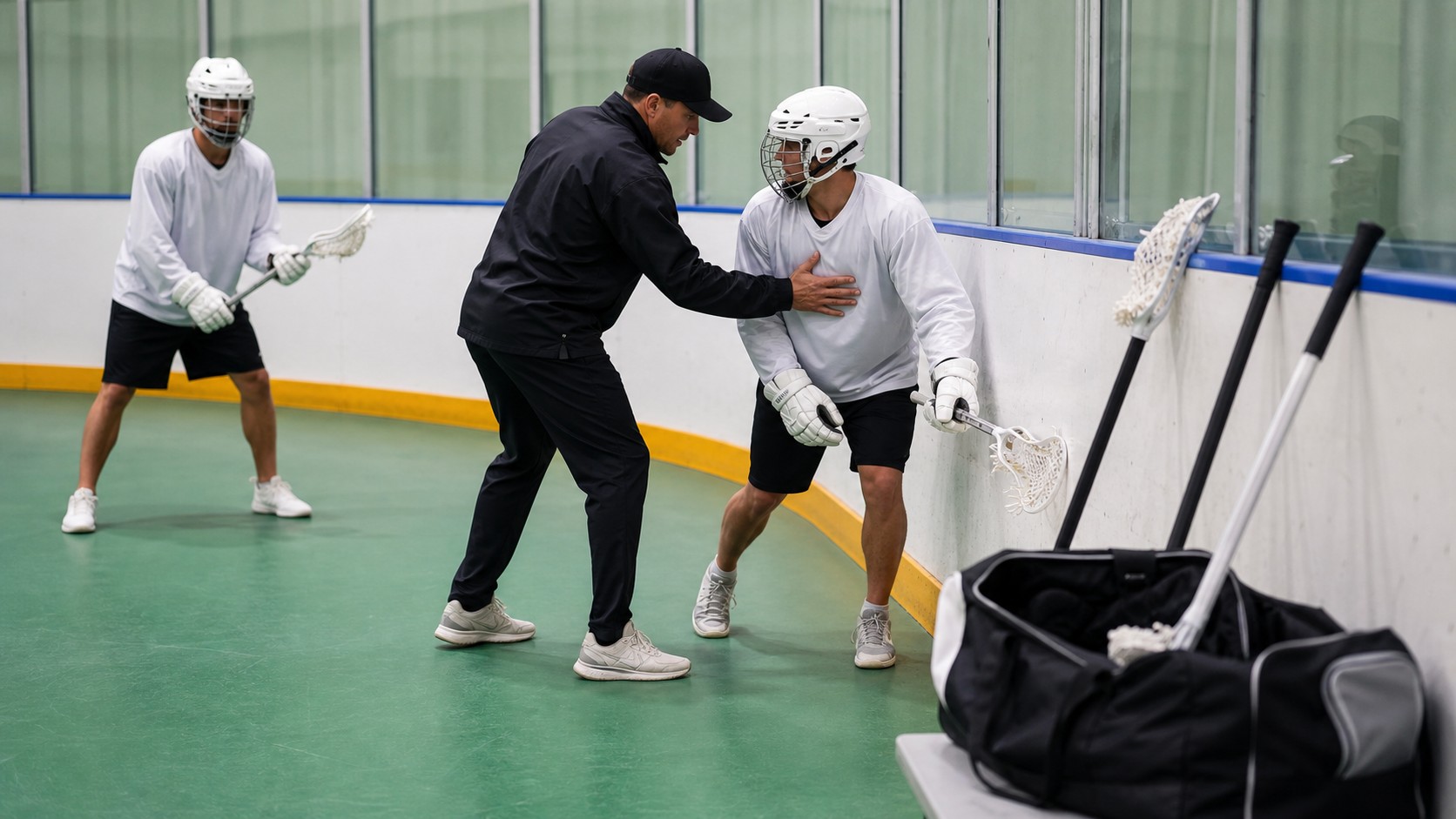
The boards are one of the defining features of box lacrosse. They prevent many loose balls from leaving play and create physical battles along the wall. Good players do not simply crash into those battles; they arrive with balance, protect the stick, and know where support is coming from. A teammate who provides a short outlet can be just as important as the player who wins the ball.
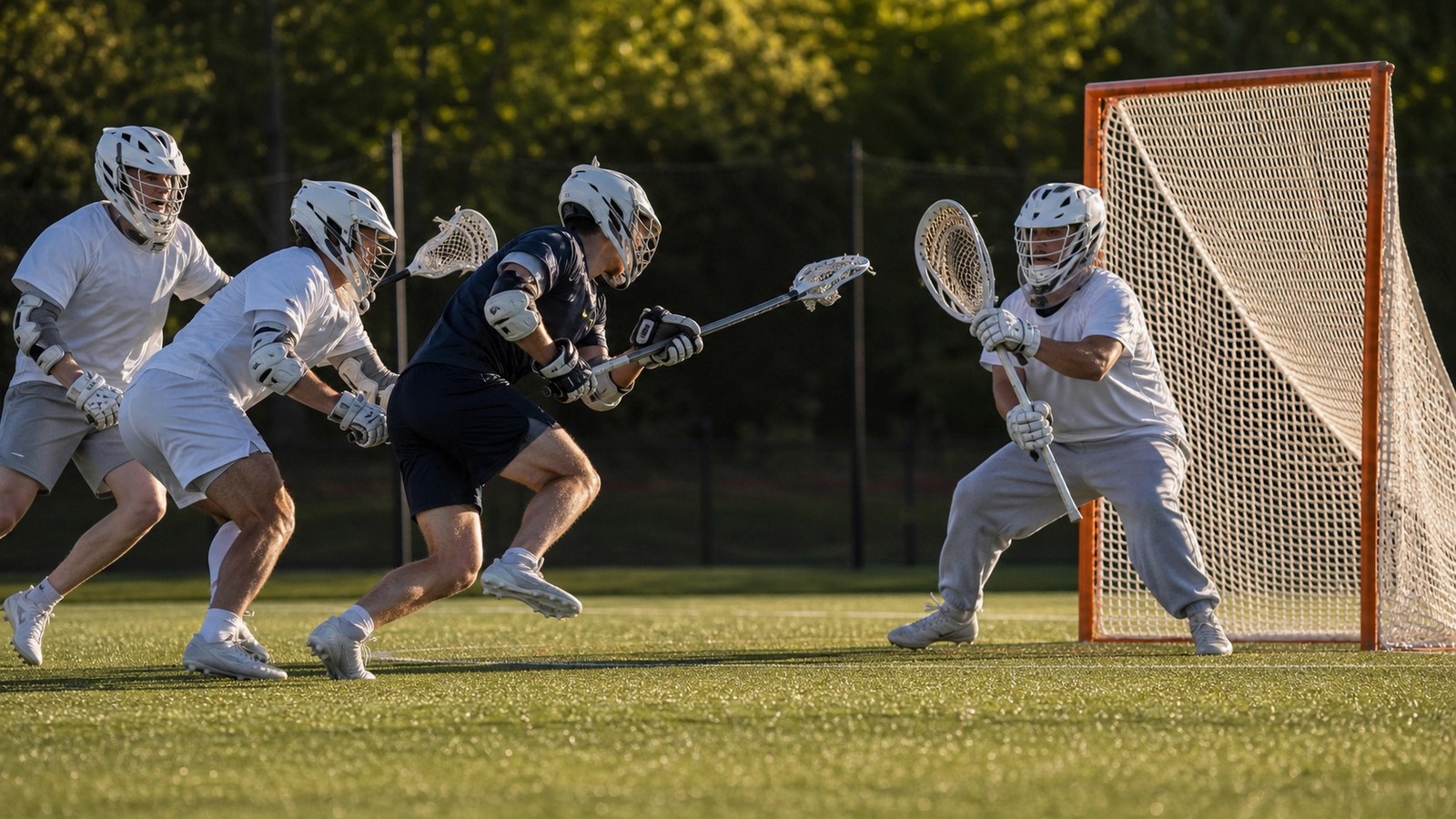
The crease is another major reference point. Attackers want to get dangerous looks near it, but they have to respect the rules that protect the goalie and define legal space. Defenders want to guard the middle without overcommitting to one fake. Goalies must track shots through screens, sticks, rebounds, and bodies. That is why box lacrosse often feels like a series of small contests near the most valuable area of the floor.
Offensive Strategy
Box offenses create space by forcing defenders to make fast choices. Picks, slips, skip passes, and quick ball movement can turn a crowded floor into a shooting lane. The best possessions do not rely only on one player dodging through everyone. They use timing so that a defender has to choose between helping on the ball and staying with a cutter.
Shooting is also different indoors. Players need deception because goalies see many attempts from close range. A fake, a changed release point, or a shot through a screen can matter more than raw power. Rebounds are part of the plan, too. If a shot misses or kicks loose, nearby attackers must be ready to extend the possession.
Defensive Strategy
Defensively, box lacrosse rewards compact discipline. Defenders protect the middle, communicate through picks, and avoid chasing checks that open better lanes. Because the floor is small, one bad overplay can force several teammates to rotate at once. A smart defender understands when to apply pressure and when to hold shape.
Goalie communication is important because the goalie sees screens and backside movement from a different angle. Defenders need to help the goalie see shots when possible, clear rebounds, and manage sticks around the crease. The work can look messy, but good defense has a calm structure underneath it.
Why Coaches Value Box Training
Many coaches like box lacrosse because it gives players repeated pressure touches. A player has to catch in traffic, pass before a lane closes, and protect the stick while contact is nearby. Those habits are useful in field lacrosse as well, especially around the crease or during unsettled situations.
Box training can also build confidence. Players learn that pressure is not a reason to throw the ball away. They learn to keep their feet, use their body legally, and look for the next simple play. That confidence is one of the biggest benefits of the format.
How To Watch Your First Game
For your first box lacrosse game, do not worry about every advanced term. Watch how the offense uses picks, how defenders talk through those picks, and how often a loose ball near the boards changes possession. Notice how quickly a harmless-looking pass can become a shot when the receiver catches near the middle.
Once those cues make sense, the game slows down in your mind even though the players are still moving fast. You begin to see that box lacrosse is not random contact. It is a tight, skilled, physical version of lacrosse where space has to be created instead of simply found.
A useful way to understand box lacrosse strategy is to think in terms of pressure and release. Pressure appears when the ball carrier is pinned near the boards, when a defender crowds the hands, or when a goalie cannot see through traffic. Release appears when a teammate becomes available for a short pass, when a pick delays a defender, or when a cutter flashes into the middle at the exact moment the defense turns its head.
Because the floor is tight, patience looks different indoors than it does outdoors. A patient box offense is not necessarily holding the ball for a long time. It may be moving the ball quickly while waiting for the defender who is half a step late. The best players understand that a rushed shot from a poor angle can be less valuable than one more pass into the middle.
Defensive patience matters just as much. Young defenders often want to solve every possession with a big check, but box lacrosse punishes that habit. A missed check can open a seam, screen the goalie, or force a teammate to leave the crease area. Strong defenders keep their feet under them and make the attacker work through legal body position.
The boards also teach a subtle lesson about support. The player fighting for a loose ball may be the obvious focus, but the possession is often won by the teammate who arrives as an outlet. Coaches value players who recognize when to dig, when to seal, and when to become the next pass. That awareness separates useful toughness from simple collision.
Goalies change the rhythm of the indoor game. Their equipment is larger, but the shots are closer and often hidden by screens. A shooter who only throws the ball hard may feed the goalie’s strengths. A shooter who changes levels, waits for a screen, or sells a fake can create a better chance without needing a perfect angle.
For beginners, the indoor game becomes clearer when you watch one two-player action at a time. Follow a pick near the wing, then watch whether the defenders switch, fight through, or hesitate. That one choice often explains why a shooter suddenly has room. Box lacrosse may look crowded, but small delays create real openings.
The transition game is another reason box lacrosse feels exciting. A loose ball, save, or careless pass can become an odd-player rush before the defense is fully organized. Teams that substitute cleanly and communicate early can prevent those chances. Teams that admire a turnover for even a second may find themselves defending a high-quality shot.
Box lacrosse is also valuable because it gives repeated feedback. A player who carries with the stick exposed will feel pressure immediately. A player who stands still off the ball will disappear from the possession. A player who cuts hard, presents a target, and moves the ball quickly will understand why coaches praise simple, sharp decisions.
For Box Lacrosse Explained: Rules, Gameplay, and Strategy, the most helpful mindset is to treat each rule as a clue about player behavior. Rules are not separate from strategy. They decide where players can stand, how defenders can apply pressure, how quickly the offense must act, and which choices create risk. Once that connection is clear, the game becomes easier to learn and more interesting to watch.
Another useful habit is to study mistakes without assuming they are random. A rushed pass may come from poor spacing. A weak shot may come from a dodge that started too late. A defensive breakdown may come from one missed communication several passes earlier. Lacrosse moves quickly, but the reasons behind a play are usually visible if you rewind the sequence in your mind.
Players and families should also remember that level matters. Youth, high school, college, club, and professional environments may use different timing rules, field dimensions, contact standards, or equipment requirements. The concepts in this guide provide a strong foundation, but the local coach and rulebook should always settle season-specific details.
The best learning happens through repetition with attention. Watching one game, practicing one skill session, or reading one guide can help, but confidence comes from seeing the same patterns again and again. Each possession gives another example of spacing, pressure, support, and decision-making. Over time, those examples turn a fast sport into a readable one.
That is why Box Lacrosse Explained: Rules, Gameplay, and Strategy should be understood as a practical guide rather than a list to memorize. A reader who can explain the main space, the main roles, and the main pressure points will already be ahead of most first-time viewers. The smaller rule details become easier once the basic shape of the game is familiar.
A helpful practice method is to pair one concept with one viewing habit. If the concept is spacing, watch the players who are not touching the ball. If the concept is defense, watch the first helper instead of the checker making contact. If the concept is transition, watch the players sprinting into support positions. This keeps learning active instead of passive.
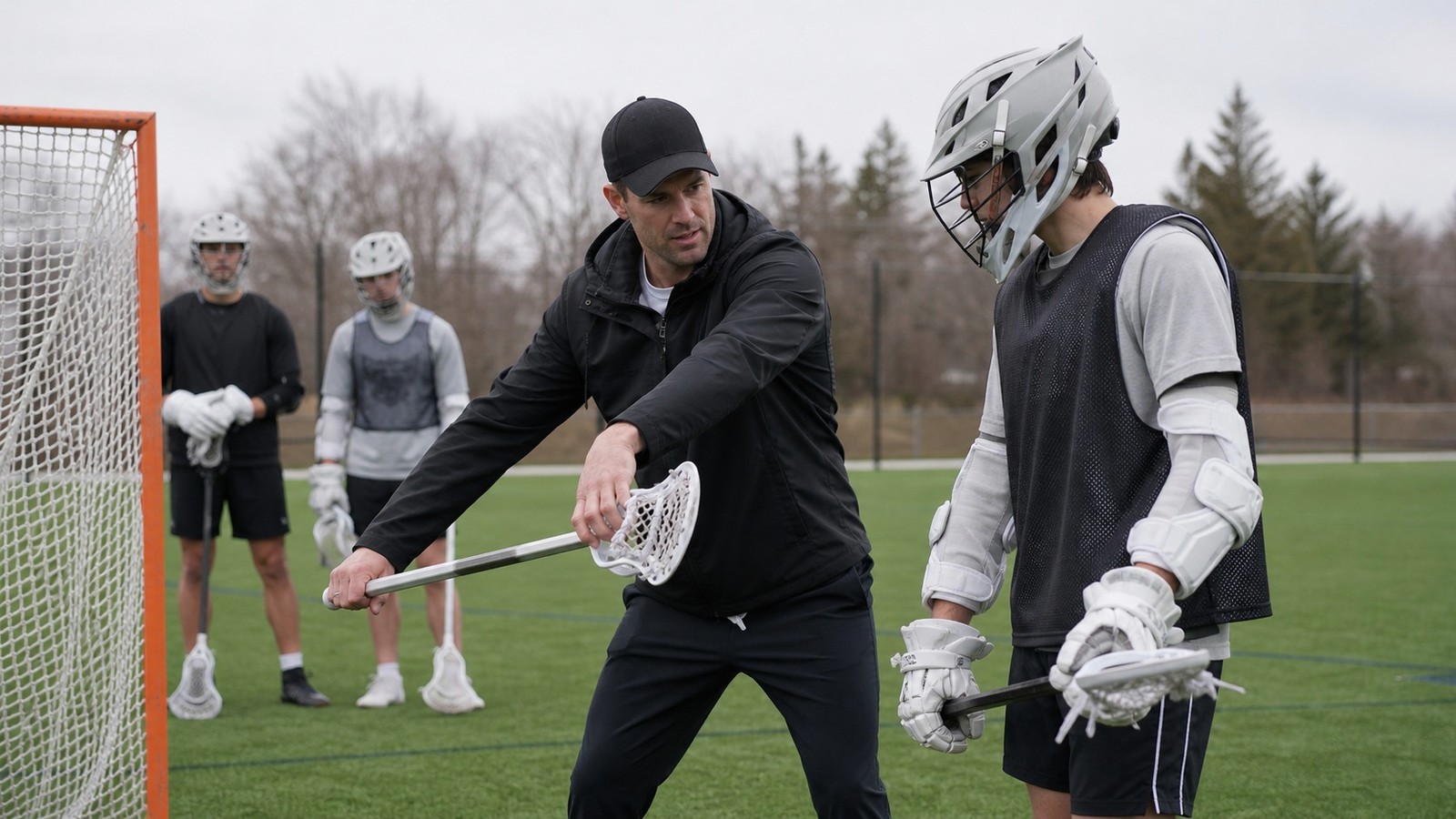
Coaches often build progressions in the same order. They start with a skill in isolation, add a defender, add a teammate, then place the same skill inside a game-like sequence. That progression explains why beginners should not be embarrassed by simple drills. Simple drills create the control needed for faster, messier possessions.
For parents, the most useful questions are concrete. Ask what a player should practice at home, how contact is introduced, how playing time is handled, and what equipment is required for that exact league. Clear answers tell you more than broad promises. A strong program can explain how beginners become safer, smarter, and more confident over time.
For fans, the payoff comes when the game starts to slow down mentally. The ball still moves quickly, but you begin to anticipate the next pass, the likely slide, or the reason a player is cutting through. That anticipation is the moment lacrosse becomes more than a blur of sticks and running. It becomes a tactical sport with visible patterns.
Another sign of understanding is being able to describe the choice before judging the result. A missed shot is not automatically a bad shot, and a completed pass is not automatically the best pass. Context matters: time, score, pressure, angle, support, and risk all shape whether a decision was sound. Learning those clues makes every possession more meaningful.