Field Lacrosse vs Box Lacrosse
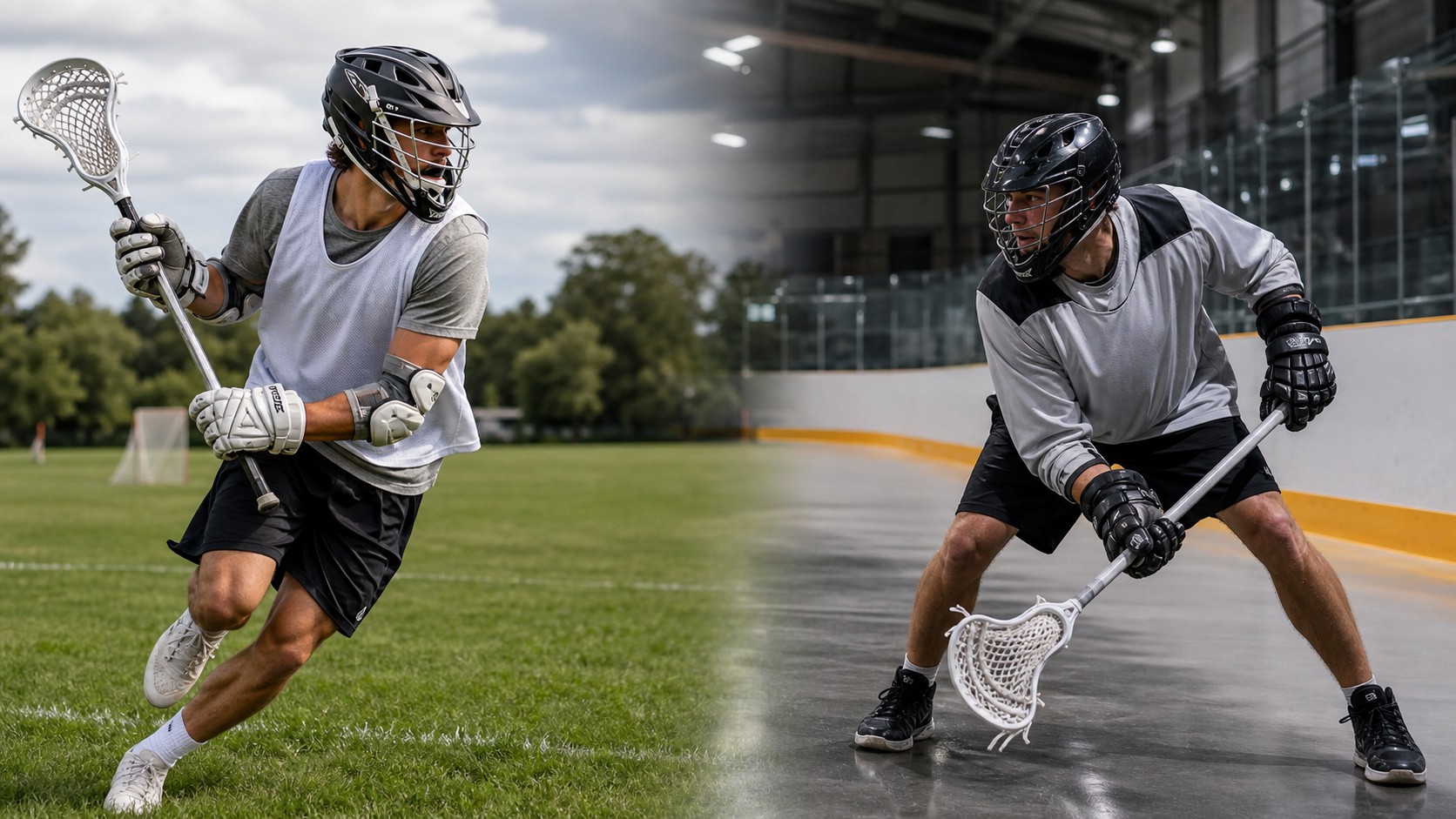
Field lacrosse and box lacrosse share the same core language: sticks, a hard rubber ball, quick passing, dodging, shooting, checking, and constant decisions under pressure. Yet the two formats feel very different once play begins. Field lacrosse stretches the game across open grass or turf, while box lacrosse compresses it inside an indoor rink with boards, shorter possessions, and tighter defensive pressure. Understanding that contrast helps players choose the right training path, helps parents know what their athlete is learning, and helps new fans read the game with far more confidence.
A: It is not automatically harder, but the smaller surface makes pressure arrive faster.
A: Yes, though the player must adapt to tighter lanes, boards, and quicker decisions.
A: Often yes, because it builds stick protection, quick passing, and finishing under contact.
A: Field usually involves longer running patterns, while box creates shorter repeated bursts.
A: The better starting point is usually the strongest local program with safe coaching.
A: They are similar, but legal dimensions and pockets should be checked by league.
A: The boards and smaller surface naturally create more body positioning and contact.
A: No, box goalies wear different gear and face different shot patterns.
A: Yes, opportunities vary by region and league structure.
A: If scheduling and coaching quality allow, both formats can round out a player’s game.
The Biggest Difference Is Space
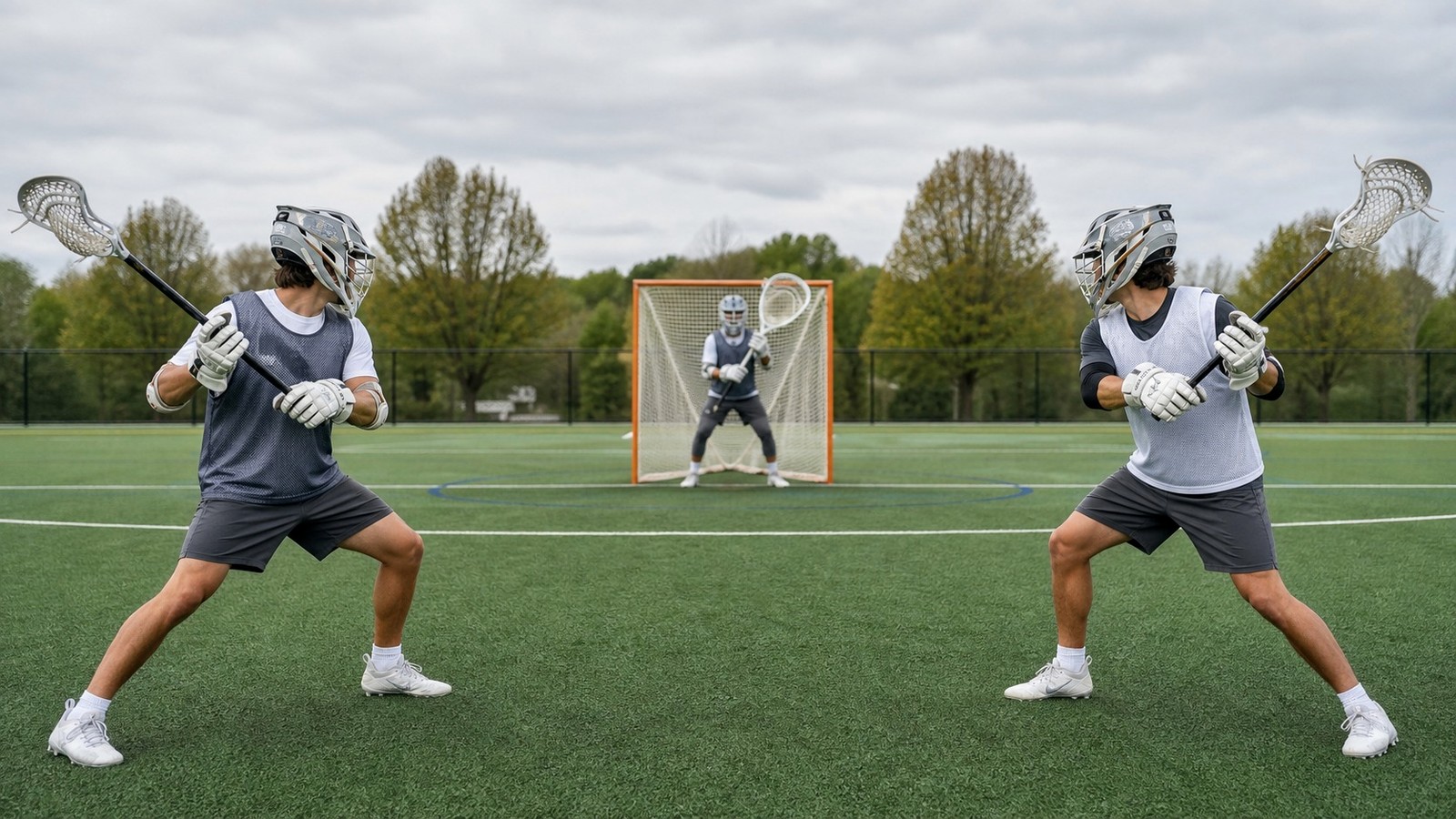
The clearest difference between field lacrosse and box lacrosse is the amount of room players have to solve problems. Field lacrosse gives attackers, midfielders, and defenders broad lanes to run, recover, substitute, and reset the shape of a possession. A dodger may start ten yards from pressure, use a pick, carry behind the goal, and still have room to pass back to the top. That space creates a game that often looks like a blend of sprinting, spacing, patience, and sudden acceleration.
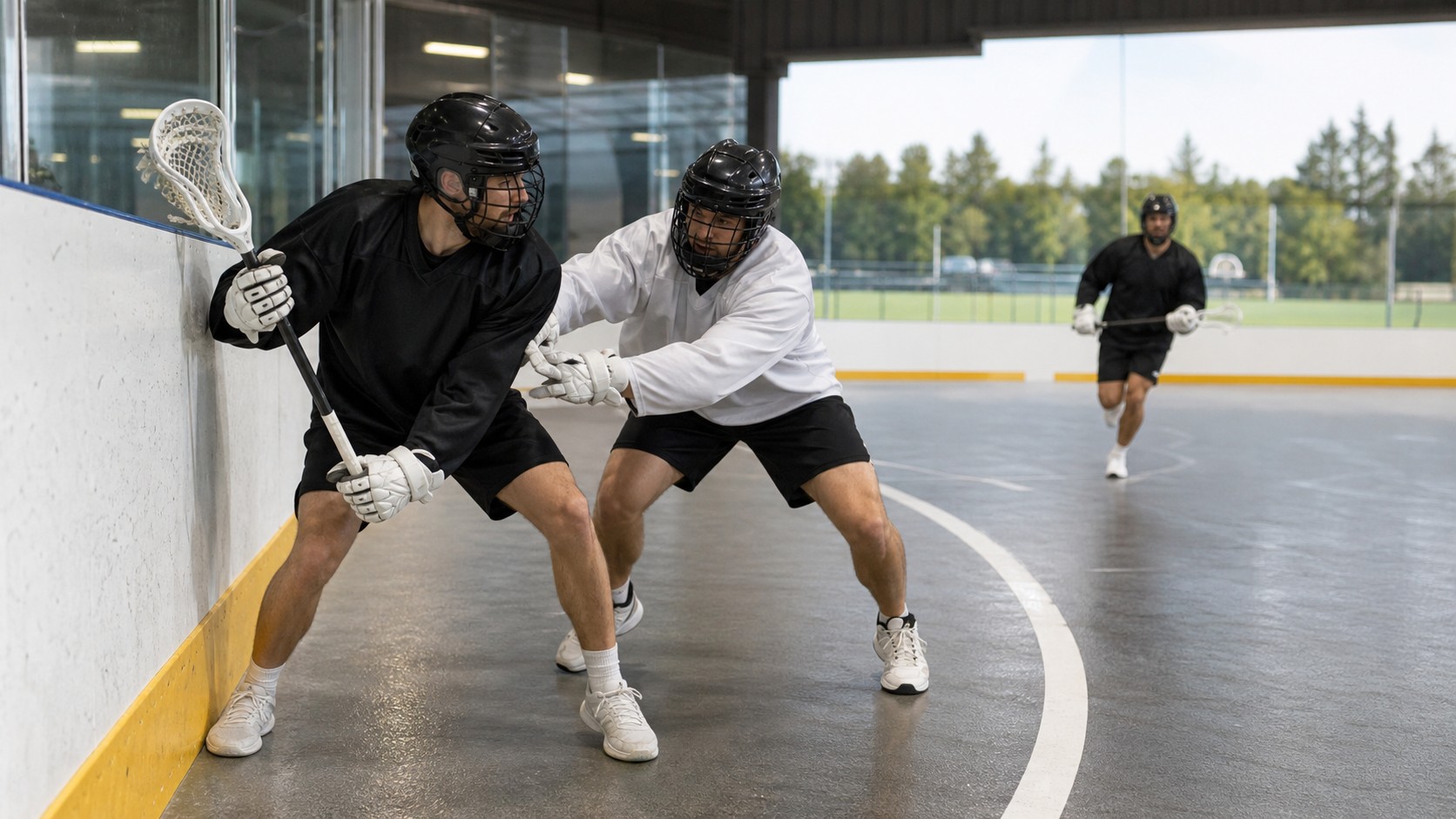
Box lacrosse takes much of that room away. The indoor surface is smaller, the boards keep many loose balls in play, and defenders can close gaps quickly. A player who hesitates in box lacrosse may find a passing lane gone before the stick is loaded. That pressure is the point: box teaches players to protect the stick, move the ball quickly, finish near the crease, and stay balanced when contact is close.
How The Pace Feels
Field lacrosse can be extremely fast, but its speed is stretched across longer transitions and larger tactical shapes. A defensive stop may become a clear, then a midfield carry, then a substitution, then a settled offensive possession. Fans who are new to the sport should watch how teams use the full field before judging pace only by sprinting. A smart field team may slow down briefly so it can attack with better spacing.
Box lacrosse often feels faster because the next scoring chance is always nearby. Turnovers can become shots within seconds, and rebounds can create immediate second chances. The ball rarely disappears into empty space for long. Even a simple pass across the top can force the defense to rotate, because the goal sits close enough for a quick catch-and-shoot to matter.
Neither rhythm is better in a universal sense. They simply ask players to solve different timing problems. Field rewards the ability to recognize when to run and when to organize. Box rewards the ability to decide before the defense squeezes away the easy option.
Contact And Defensive Pressure
Both formats include physical play, but the contact has a different flavor. In field lacrosse, defenders often manage approach angles over longer distances. They need to break down under control, keep the stick in the right lane, and avoid lunging at a dodger who can escape into open grass. Good field defense is patient because one missed step can open a wide path to the middle.
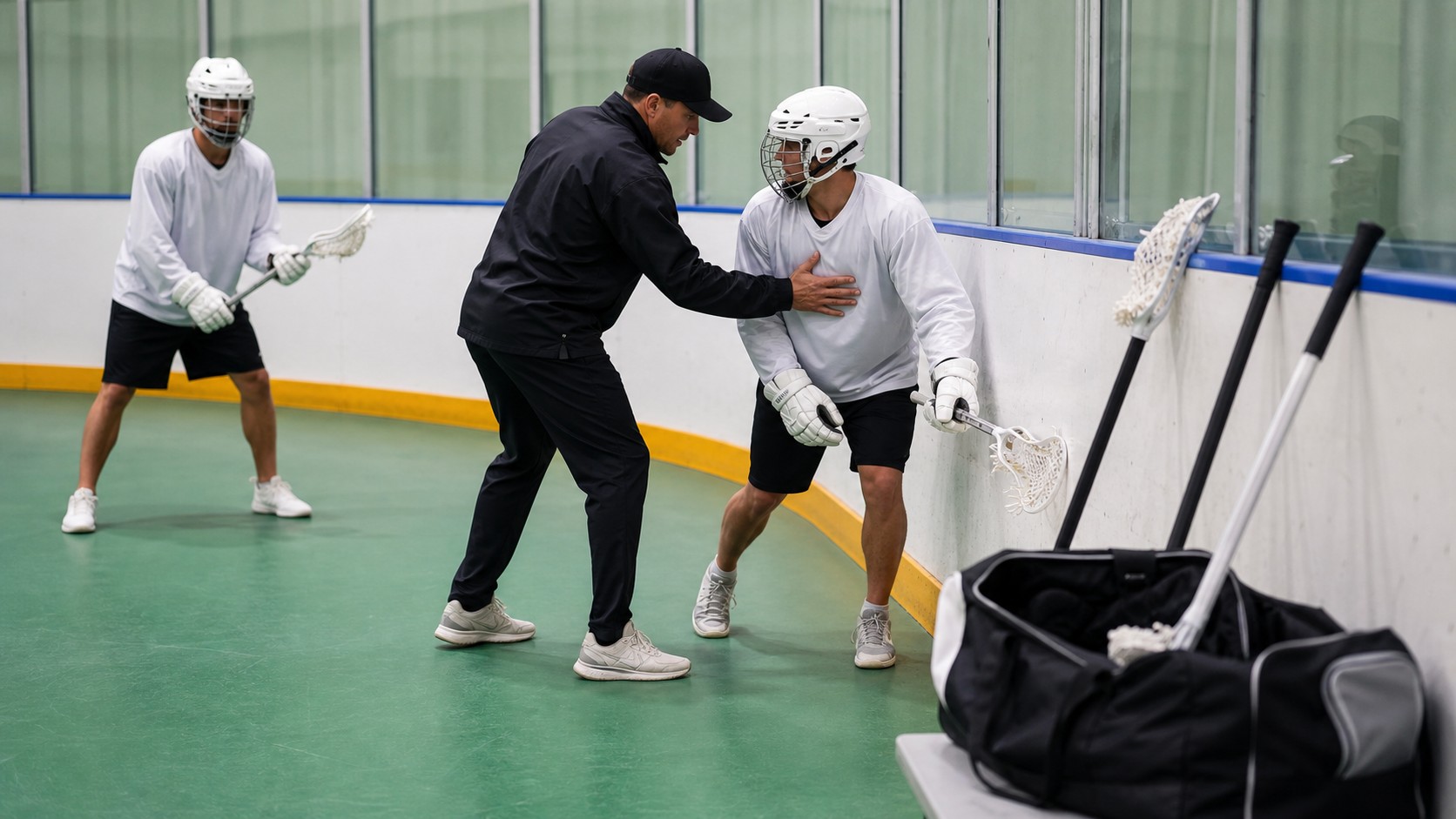
In box lacrosse, defenders can use the boards, the crease area, and nearby help to crowd a ball carrier. The pressure can feel constant, especially when an attacker tries to work from the corner or wing. That does not mean box is uncontrolled. Legal contact still depends on the rule set, age group, and league, but the tight surface naturally makes body position more obvious.
What Each Format Teaches Players
Field lacrosse is excellent for learning spacing, full-field awareness, transition running, and role discipline. Players see how attack, midfield, defense, and goalie responsibilities connect across a large surface. A midfielder learns that a careless turnover can stress the defense eighty yards away. An attackman learns that off-ball movement can matter as much as a dodge.
Box lacrosse is excellent for learning quick hands, compact passing, finishing in traffic, screening, and reading pressure. Players get repeated touches because the playing area is smaller and the ball returns to danger quickly. A beginner who plays box may become comfortable catching with a defender nearby, which is a valuable skill in any version of lacrosse.
The formats support each other beautifully when coaching is strong. A field player who trains indoors can become calmer near the crease. A box player who trains outdoors can learn how to use open space instead of forcing every play into contact.
Equipment, Goalies, And Game Feel
Equipment is another area where players should slow down and check the actual league rules. Men’s field lacrosse typically uses helmets, gloves, shoulder protection, arm protection, and position-specific sticks. Box lacrosse also uses protective equipment, but goalie gear and the indoor environment create a noticeably different visual style. Youth and regional rules may add their own requirements, so families should confirm before buying.
Goalies experience the formats in different ways. Field goalies see shots from distance, angle changes from behind the cage, and long passes that shift the defense. Box goalies face more close-range traffic, screens, and rebounds. Both jobs demand courage and tracking, but the technical demands are not identical.
Which One Should A Player Choose?
The best choice depends on access, coaching, goals, and personality. A player who loves running in space may fall in love with field lacrosse immediately. A player who enjoys quick exchanges and tight competition may feel drawn to box. Parents should pay attention to practice quality, safety culture, and whether players are actually touching the ball often enough to improve.
For many athletes, the answer is not either-or. Playing both formats can build a broader skill set and a more resilient feel for pressure. The important thing is to treat each format as its own game, not as a lesser version of the other. Field lacrosse and box lacrosse share a family resemblance, but each has its own intelligence.
The central lesson is that format shapes decision-making. Players do not simply perform isolated skills; they perform them inside a space, a rule set, and a team structure. A pass, dodge, or shot that makes sense in one context may be rushed or poorly timed in another. Good learning starts with seeing those contexts clearly.
Beginners should connect every rule to the behavior it encourages. Boundary rules shape risk. Crease rules protect goalies. Contact rules define safe pressure. Timing rules prevent teams from holding the ball without purpose. When rules are understood this way, they feel less like trivia and more like the architecture of the game.
Coaches often talk about simple plays because simple plays survive pressure. A clean catch, a hard cut, a balanced defensive approach, and a ground ball through contact can change a possession. Advanced tactics matter, but they work best when the basic actions are dependable.
Viewers can follow the same path. Instead of trying to decode every term at once, watch the ball carrier, the nearest defender, and the teammate who becomes available next. That small triangle reveals much of the sport’s logic. Over time, the surrounding rotations and substitutions become easier to read.
The comparison is most useful when it leads to better choices. A player choosing a season can think about which pressure they want to practice: open-field spacing or tight-area execution. A parent choosing a program can ask which coaches teach those pressures safely. A fan choosing what to watch can use the format difference as a guide, noticing how the same sport rewards different kinds of timing.
For Field Lacrosse vs Box Lacrosse: Key Differences Every Player Should Know, the most helpful mindset is to treat each rule as a clue about player behavior. Rules are not separate from strategy. They decide where players can stand, how defenders can apply pressure, how quickly the offense must act, and which choices create risk. Once that connection is clear, the game becomes easier to learn and more interesting to watch.
Another useful habit is to study mistakes without assuming they are random. A rushed pass may come from poor spacing. A weak shot may come from a dodge that started too late. A defensive breakdown may come from one missed communication several passes earlier. Lacrosse moves quickly, but the reasons behind a play are usually visible if you rewind the sequence in your mind.
Players and families should also remember that level matters. Youth, high school, college, club, and professional environments may use different timing rules, field dimensions, contact standards, or equipment requirements. The concepts in this guide provide a strong foundation, but the local coach and rulebook should always settle season-specific details.
The best learning happens through repetition with attention. Watching one game, practicing one skill session, or reading one guide can help, but confidence comes from seeing the same patterns again and again. Each possession gives another example of spacing, pressure, support, and decision-making. Over time, those examples turn a fast sport into a readable one.
That is why Field Lacrosse vs Box Lacrosse: Key Differences Every Player Should Know should be understood as a practical guide rather than a list to memorize. A reader who can explain the main space, the main roles, and the main pressure points will already be ahead of most first-time viewers. The smaller rule details become easier once the basic shape of the game is familiar.
A helpful practice method is to pair one concept with one viewing habit. If the concept is spacing, watch the players who are not touching the ball. If the concept is defense, watch the first helper instead of the checker making contact. If the concept is transition, watch the players sprinting into support positions. This keeps learning active instead of passive.
Coaches often build progressions in the same order. They start with a skill in isolation, add a defender, add a teammate, then place the same skill inside a game-like sequence. That progression explains why beginners should not be embarrassed by simple drills. Simple drills create the control needed for faster, messier possessions.
For parents, the most useful questions are concrete. Ask what a player should practice at home, how contact is introduced, how playing time is handled, and what equipment is required for that exact league. Clear answers tell you more than broad promises. A strong program can explain how beginners become safer, smarter, and more confident over time.
For fans, the payoff comes when the game starts to slow down mentally. The ball still moves quickly, but you begin to anticipate the next pass, the likely slide, or the reason a player is cutting through. That anticipation is the moment lacrosse becomes more than a blur of sticks and running. It becomes a tactical sport with visible patterns.
Another sign of understanding is being able to describe the choice before judging the result. A missed shot is not automatically a bad shot, and a completed pass is not automatically the best pass. Context matters: time, score, pressure, angle, support, and risk all shape whether a decision was sound. Learning those clues makes every possession more meaningful.
The same approach helps players stay patient with development. Lacrosse can feel unforgiving when the ball pops out of a stick or a defender closes space faster than expected. Those moments are normal. A player who keeps learning the next read, the next footwork detail, and the next support position is building the habits that eventually make the sport feel natural.