What Makes Field And Box Lacrosse Different?
Field lacrosse and box lacrosse are two versions of the same sport, but they are not interchangeable copies. Both use sticks, goals, passing, catching, dodging, shooting, and defensive pressure, yet each format creates a different learning experience. Field lacrosse opens the game up across a large outdoor field, while box lacrosse pulls the game into a smaller indoor space where every catch is under pressure. If you are a new fan, parent, or player, the easiest way to understand the difference is to compare how the playing area changes everything else.
A: They share core skills, but the rules, surface, pace, and tactics create different games.
A: Box often feels more physical because space is tighter, though legal contact depends on the league.
A: Field may be easier for spacing, while box may be easier for seeing repeated scoring chances.
A: Yes, and many players benefit from learning both environments.
A: The indoor game gives less time, so players learn to catch and release quickly.
A: Usually, because the field is larger and transitions cover more ground.
A: Yes, youth leagues often adjust contact, equipment, timing, and field rules.
A: No, but beginners need coaching that teaches safety and control.
A: Both help, but box adds pressure and field adds range and angle variety.
A: They should check the exact league list before purchasing anything.
The Playing Area Changes The Game
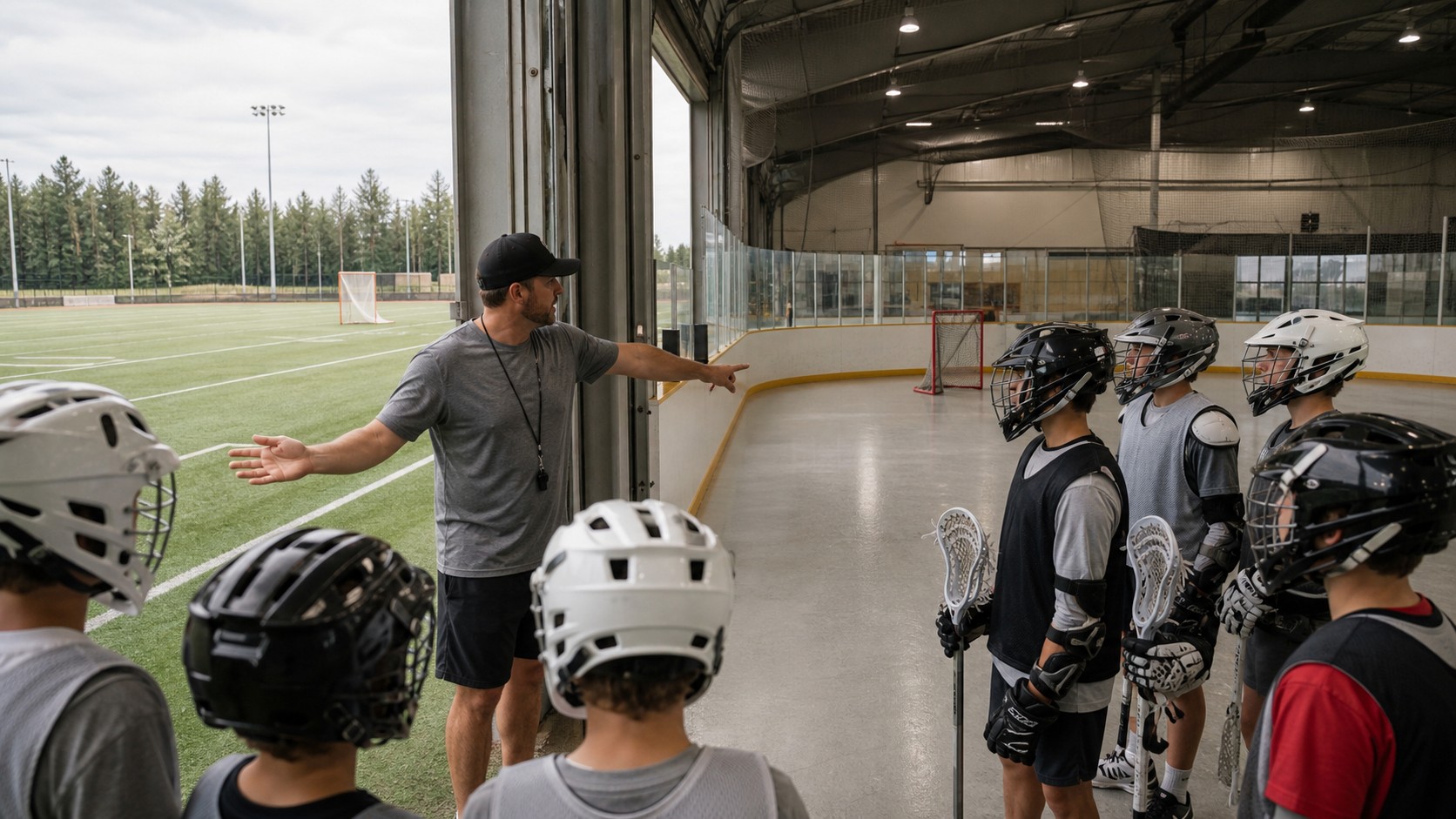
The playing area is not just a background detail; it is the engine that changes how every possession works. Field lacrosse uses a large outdoor space where teams can spread out, clear the ball through midfield, and create offense from a variety of shapes. Players have more room to accelerate, recover, and see the next pass. That extra space is why field lacrosse often feels more layered to a new viewer.
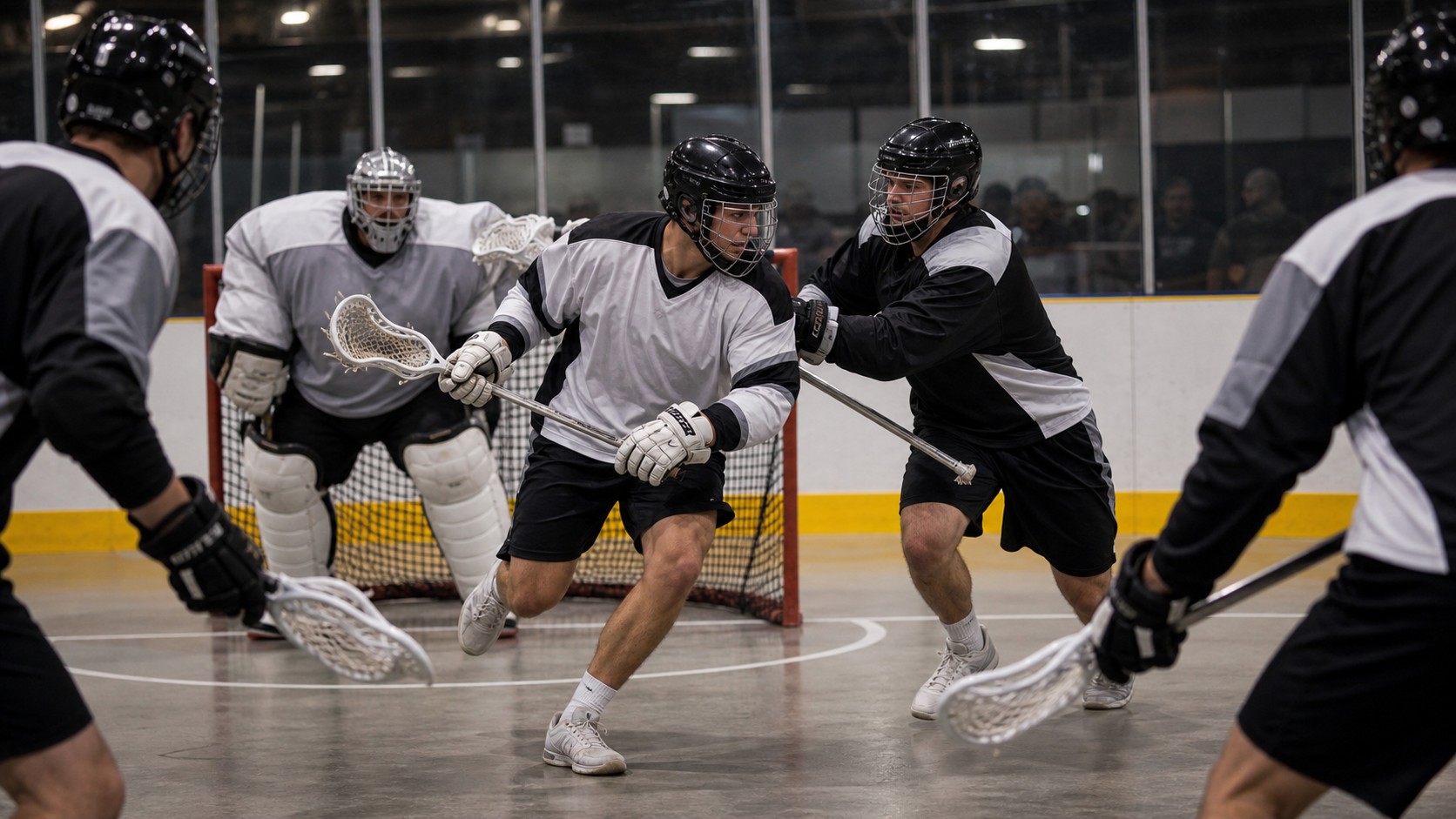
Box lacrosse compresses the same basic skills into an indoor surface. The boards keep the ball alive, the goal is never far away, and defenders can close on the ball carrier quickly. Instead of long build-ups, box possessions often hinge on quick reads, picks, rebounds, and interior passing. The smaller area turns hesitation into a problem almost immediately.
Rules, Rosters, And Roles
The exact rules vary by governing body and age level, but the role structure is visibly different. Field lacrosse generally separates attack, midfield, defense, and goalie responsibilities across a wide layout. Midfielders connect the game because they travel between ends. Attackers and defenders may spend more time in their specialized zones, which makes team shape easier to see once you know what to look for.
Box lacrosse uses fewer runners and a more compact rotation. Players still have tendencies and responsibilities, but the smaller surface makes everyone feel closer to the action. A player may defend, collect a loose ball, join transition, and become part of a scoring chance in a very short sequence. That constant involvement is one reason box is valued as a development environment.
Why The Pace Feels Different
Field lacrosse pace is dramatic because it alternates between long movement and sudden attacks. A team may take time to substitute, settle, and probe a matchup, then explode toward goal. The calm moments are not empty; they are often when players are organizing spacing, reading slides, and setting up the next dodge.
Box pace feels relentless because the next collision, pass, or shot is usually nearby. The boards reduce dead space, and the short distance to goal makes small mistakes expensive. Viewers may notice that box players seem to pass sooner and shoot through heavier traffic. They have to, because the defense does not have far to travel.
How Skills Carry Over
The two formats develop overlapping skills in different ways. Field lacrosse teaches players how to use space, recognize full-field numbers, and understand the relationship between positions. A player learns how a turnover in one area can stress teammates far away. That broader awareness is valuable for team play and game management.
Box lacrosse teaches players to handle pressure without panic. The ball carrier must protect the stick, keep the feet alive, and find small passing windows. Off-ball players must cut with purpose because standing still in a crowded area rarely helps. Those habits transfer well because pressure exists in every format, even when the field is larger.
Which Format Should You Start With?
A beginner can start in either format if the coaching is safe, organized, and age appropriate. The better question is not which format is universally superior, but which local program will give the player frequent touches, clear instruction, and a reason to keep practicing. A weak program in the perfect format is still a weak program.
Families should also consider personality. Some players love the open running of field lacrosse. Others enjoy the busy, close-range problem solving of box lacrosse. A player who can eventually sample both may discover that each version makes the other easier to understand.
A Simple Way To Watch Both
When watching field lacrosse, start by following spacing. Notice how far teammates are from the ball, which players stay balanced behind the play, and how the defense prepares to slide. When watching box lacrosse, start by following pressure. Notice how fast defenders arrive, how often players use picks, and how quickly the ball moves after a catch.
That viewing habit turns the comparison from a list of rule differences into a practical way to read the sport. Field asks how a team uses space. Box asks how a team survives and exploits pressure. Together, they show why lacrosse can look both elegant and intense within the same sporting family.
The difference between the two formats is not only about where the game is played. The surface changes the kinds of mistakes players can survive. Outdoors, a player may have time to recover after a loose touch or a slow read. Indoors, that same hesitation can invite a defender, a board battle, or a quick counterattack. The rules and tactics grow from that reality.
Field lacrosse can feel more spacious, but that does not make it simpler. The larger field creates more relationships to manage. Players must understand who is behind the ball, who is available for a skip pass, who is protecting against transition, and who should substitute. The challenge is not constant crowding; it is keeping a large team shape connected.
Box lacrosse can feel more crowded, but that does not make it only physical. The best indoor players are not just strong. They are calm, deceptive, and precise. They use small fakes, quick passes, and body position to create inches of advantage. Those inches matter because the scoring area is close and heavily defended.
For development, the formats answer different questions. Field asks whether a player can use space with purpose. Box asks whether a player can make a useful play when space is scarce. A well-rounded player benefits from both questions because real games rarely give the same problem twice.
Parents often ask which version is better for a child’s future. The honest answer depends on coaching, repetition, safety, and enthusiasm. A strong box program can build incredible hands. A strong field program can build excellent spacing and transition instincts. The best environment is the one where the player receives good instruction and wants to keep returning.
Fans can use simple cues to switch their viewing lens. In field lacrosse, look for long clears, substitutions, and wide dodging lanes. In box lacrosse, look for picks, wall battles, and quick shots through traffic. These cues explain why the same athlete may look different across the two formats.
It is also normal for rules to vary by league. Youth safety modifications, local equipment requirements, shot-clock rules, and contact standards can all change details. That does not erase the broad comparison. Field still emphasizes open-space organization, while box still emphasizes tight-space execution.
When players learn both versions, they often gain a calmer understanding of pressure. The field player becomes less rushed near the crease after box experience. The box player becomes better at using width and patience after field experience. That exchange is why many coaches see the formats as partners rather than rivals.
For What Is the Difference Between Field and Box Lacrosse? A Complete Breakdown, the most helpful mindset is to treat each rule as a clue about player behavior. Rules are not separate from strategy. They decide where players can stand, how defenders can apply pressure, how quickly the offense must act, and which choices create risk. Once that connection is clear, the game becomes easier to learn and more interesting to watch.
Another useful habit is to study mistakes without assuming they are random. A rushed pass may come from poor spacing. A weak shot may come from a dodge that started too late. A defensive breakdown may come from one missed communication several passes earlier. Lacrosse moves quickly, but the reasons behind a play are usually visible if you rewind the sequence in your mind.
Players and families should also remember that level matters. Youth, high school, college, club, and professional environments may use different timing rules, field dimensions, contact standards, or equipment requirements. The concepts in this guide provide a strong foundation, but the local coach and rulebook should always settle season-specific details.
The best learning happens through repetition with attention. Watching one game, practicing one skill session, or reading one guide can help, but confidence comes from seeing the same patterns again and again. Each possession gives another example of spacing, pressure, support, and decision-making. Over time, those examples turn a fast sport into a readable one.
That is why What Is the Difference Between Field and Box Lacrosse? A Complete Breakdown should be understood as a practical guide rather than a list to memorize. A reader who can explain the main space, the main roles, and the main pressure points will already be ahead of most first-time viewers. The smaller rule details become easier once the basic shape of the game is familiar.
A helpful practice method is to pair one concept with one viewing habit. If the concept is spacing, watch the players who are not touching the ball. If the concept is defense, watch the first helper instead of the checker making contact. If the concept is transition, watch the players sprinting into support positions. This keeps learning active instead of passive.
Coaches often build progressions in the same order. They start with a skill in isolation, add a defender, add a teammate, then place the same skill inside a game-like sequence. That progression explains why beginners should not be embarrassed by simple drills. Simple drills create the control needed for faster, messier possessions.
For parents, the most useful questions are concrete. Ask what a player should practice at home, how contact is introduced, how playing time is handled, and what equipment is required for that exact league. Clear answers tell you more than broad promises. A strong program can explain how beginners become safer, smarter, and more confident over time.
For fans, the payoff comes when the game starts to slow down mentally. The ball still moves quickly, but you begin to anticipate the next pass, the likely slide, or the reason a player is cutting through. That anticipation is the moment lacrosse becomes more than a blur of sticks and running. It becomes a tactical sport with visible patterns.
Another sign of understanding is being able to describe the choice before judging the result. A missed shot is not automatically a bad shot, and a completed pass is not automatically the best pass. Context matters: time, score, pressure, angle, support, and risk all shape whether a decision was sound. Learning those clues makes every possession more meaningful.
The same approach helps players stay patient with development. Lacrosse can feel unforgiving when the ball pops out of a stick or a defender closes space faster than expected. Those moments are normal. A player who keeps learning the next read, the next footwork detail, and the next support position is building the habits that eventually make the sport feel natural.