How To Play Women’s Lacrosse
To play women's lacrosse well, a player needs more than a stick and speed. She needs the ability to catch and throw, cradle while seeing the field, scoop ground balls, move into useful space, defend legally, understand restarts, and make decisions that help the team keep possession. Strategy starts with simple choices: when to pass, when to carry, when to cut, when to reset, and how to protect dangerous areas. Once those basics connect, the game becomes readable instead of chaotic.
A: The main goal is to use stick skills, movement, and teamwork to create legal scoring chances.
A: Beginners should practice catching, throwing, cradling, scooping, footwork, and looking up while moving.
A: She should pass when a teammate has a safer lane, better angle, or clearer next decision.
A: They should move their feet, control stick pressure, respect space rules, and avoid desperate contact.
A: Spacing gives teammates room to cut, pass, dodge, shoot, and recover after mistakes.
A: Players should look to the official, locate the ball, hear the restart, and organize quickly.
A: Yes. Ground balls, outlets, cuts, rides, defensive stops, and communication all help the team.
A: Strategy begins with possession choices: keep the ball, find space, support teammates, and protect danger areas.
A: A good drill connects a skill to a game decision instead of repeating motion without context.
A: She should shoot when the lane is legal, the angle is useful, and the team has support for the outcome.
Playing Starts With Possession
Women's lacrosse is built around possession. The team with the ball can attack, substitute, settle, draw a foul, or protect a lead. The team without the ball must defend, communicate, and look for a legal chance to regain control. Beginners who understand possession will understand the game faster than players who think only about shooting.
Possession begins in many ways: draws, ground balls, interceptions, goalie saves, rides, clears, and restarts. A player who can catch safely, scoop under pressure, and make a simple outlet pass is already valuable. The spectacular play matters less than the reliable play that keeps the team organized.
Catching And Throwing Must Become Comfortable
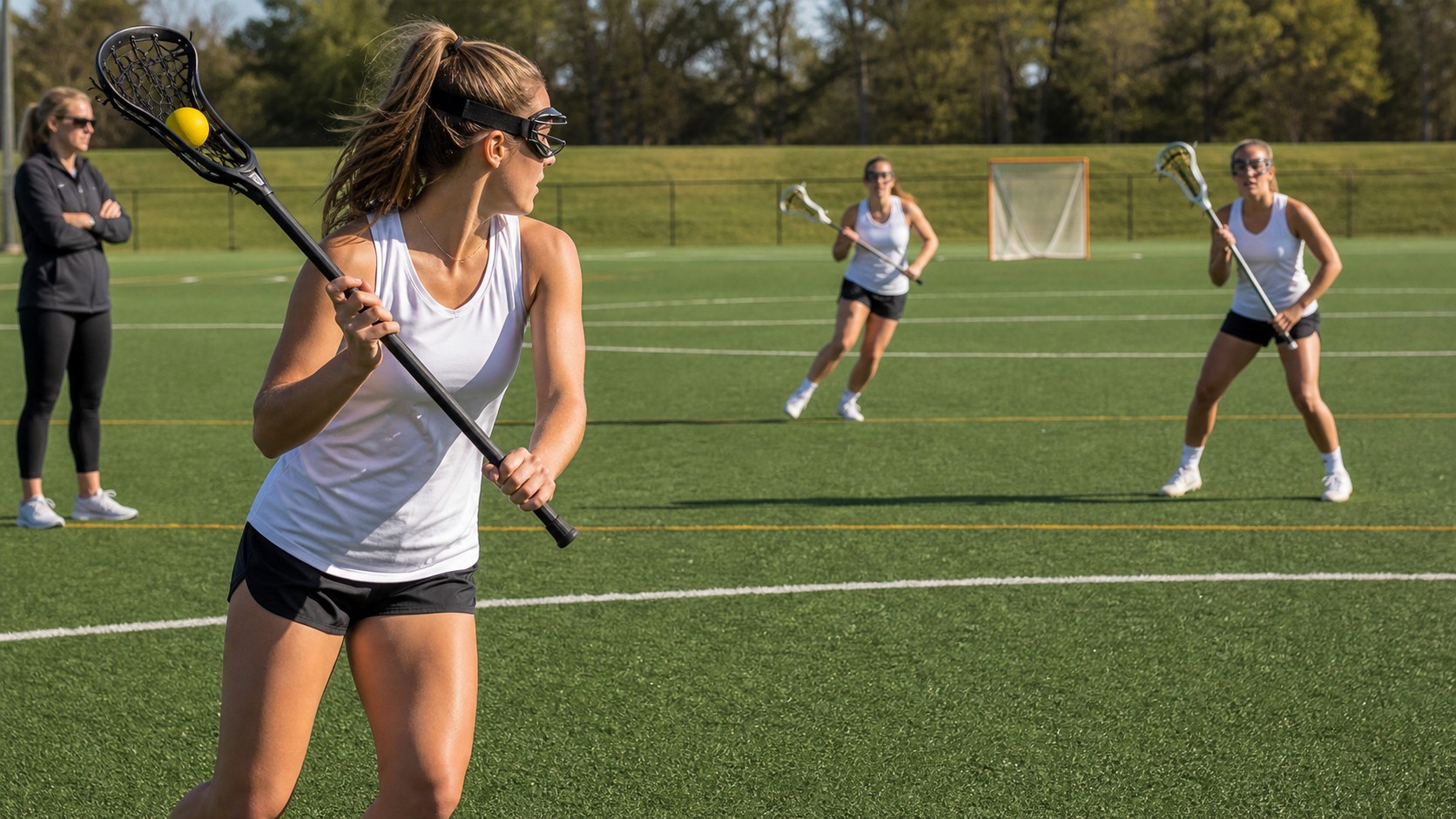
The stick can feel awkward at first. That is normal. Catching improves when the player gives with the ball, keeps eyes on the pass, and presents a clear target. Throwing improves when the player uses balanced feet, follows through, and aims for a teammate's catchable space rather than simply throwing hard.
Short passing should come before long passing. A beginner who can complete ten clean short passes is building the foundation for harder feeds later. Wall ball, partner passing, and small groups all help because they create repetition. The goal is not perfect style in one day. The goal is making the stick feel less foreign every week.
Players should practice both hands over time. The off hand may feel clumsy, but it expands options. A player who can only turn one direction becomes easier to defend. Even a developing off hand can help a player escape pressure or make a safer pass.
Cradling Should Not Hide The Field
Cradling helps keep the ball in the stick while running, but it should not make the player stare downward. The best cradling supports vision. A player needs to see open teammates, defensive pressure, field lines, and space near the goal.
Ground Balls Are Team-Changing Plays
A loose ball is not a break from the game. It is a chance to win the next possession. Good ground-ball technique uses two hands, low body position, movement through the ball, and an immediate plan after the pickup. The player should not scoop and freeze. She should scoop, protect, and connect.
Ground balls also reveal effort. Coaches trust players who compete for loose balls because those possessions often decide games. Beginners can become useful quickly by learning to run through the ball and make a safe next pass.
Field Basics Give Skills A Purpose
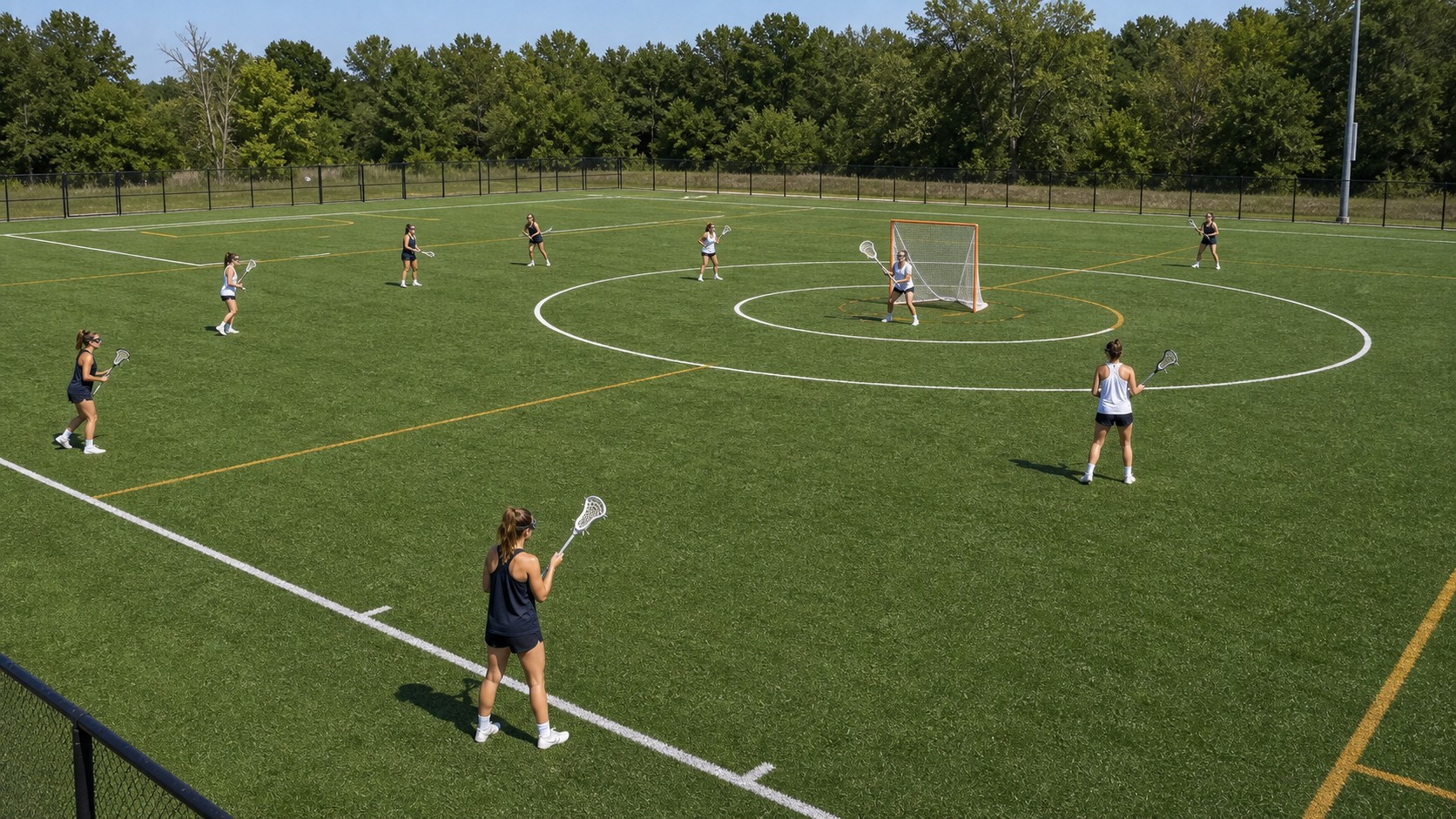
The field tells players where the game is organized. The crease protects the goalie. The arcs and critical areas shape shooting and defensive positioning. Sidelines can trap a carrier. The center area matters on draws. Substitution areas matter when players rotate in and out. A player who knows these landmarks feels less lost.
Field awareness also means knowing where not to stand. Crowding the ball can bring extra defenders into useful space. Drifting too far away can remove a passing option. Good spacing gives the ball carrier choices and gives defenders harder decisions.
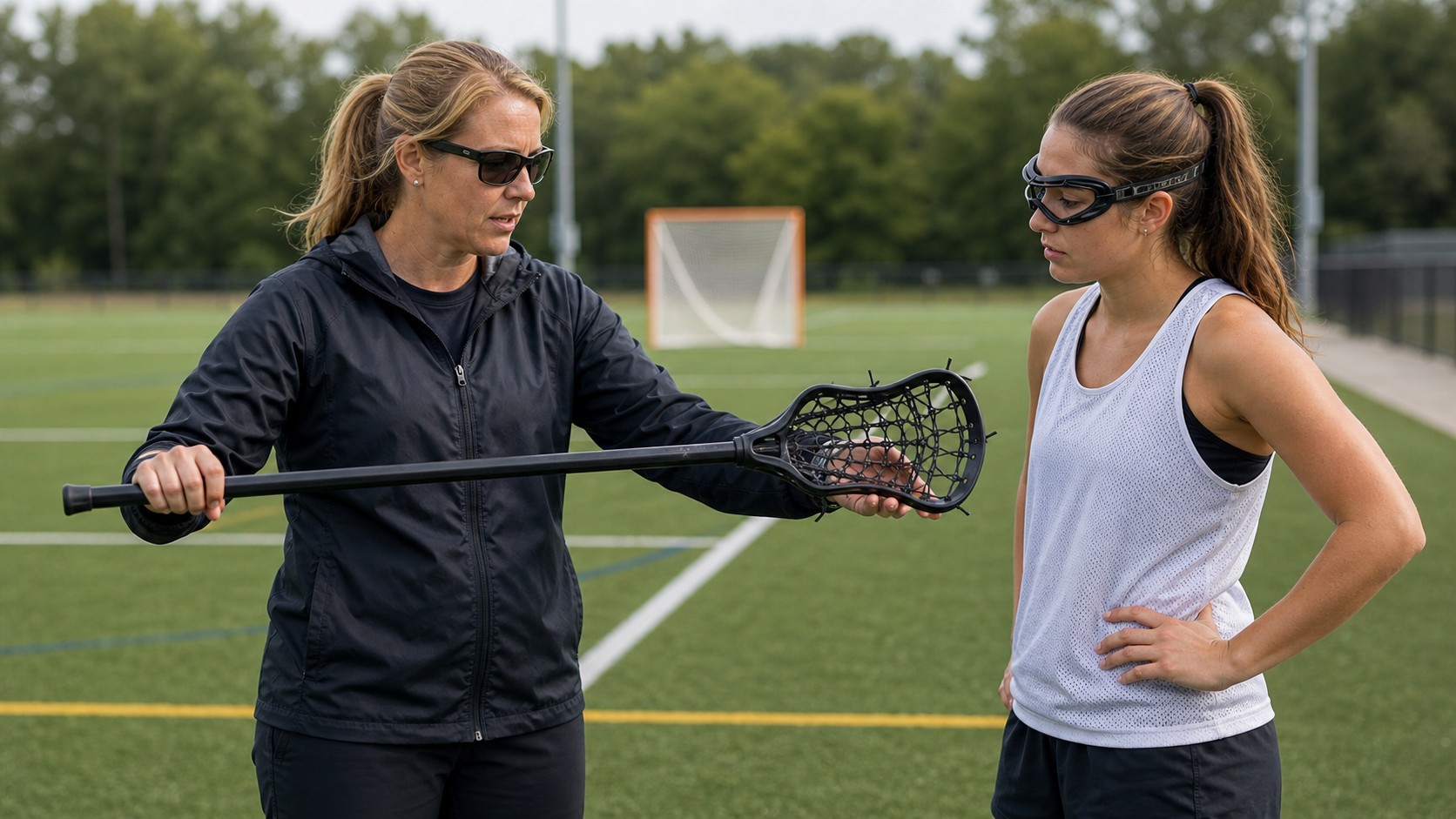
New players should learn field basics during drills, not only in explanations. A coach can point to where a cut should begin, where a defender should recover, or where a restart happens. The field becomes meaningful when it is tied to action.
Simple Offense Is About Choices
Offense is not just dodging toward goal. A player should ask whether to carry, pass, cut, shoot, or reset. Carry when space is open and pressure is manageable. Pass when a teammate has a better angle. Cut when the ball carrier needs a target. Reset when the first chance becomes crowded.
Good Defense Uses Feet First
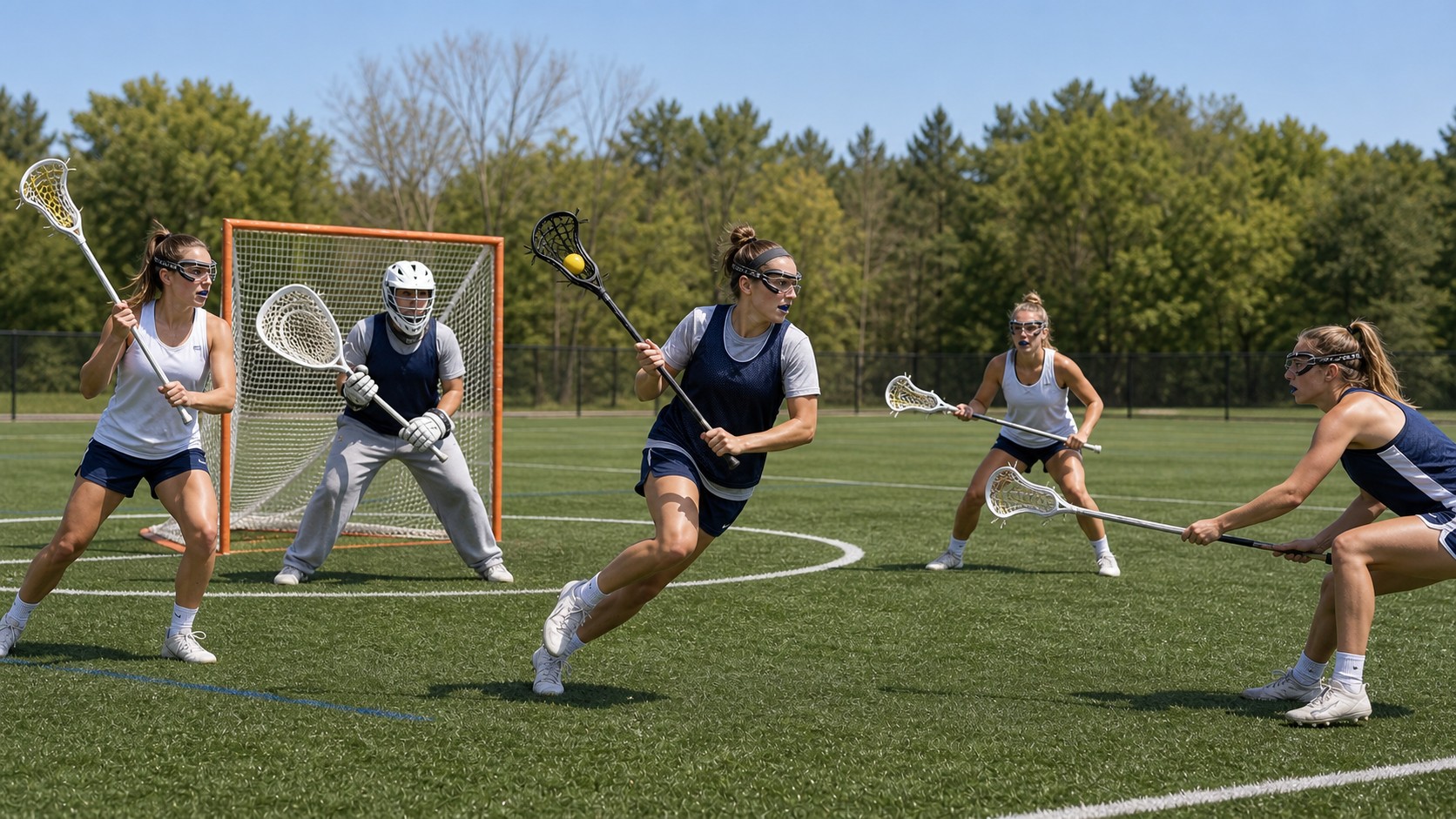
Women's lacrosse defense depends on body position and legal pressure. A defender should approach under control, stay balanced, communicate help, and avoid dangerous stick or body contact. Reaching wildly usually means the feet were late. Moving early keeps the defender legal and useful.
Defenders should learn to guide attackers toward lower-value space. Not every stop has to be a takeaway. Forcing a reset, a poor angle, or a rushed pass can be excellent defense. That mindset helps beginners avoid panic when they cannot immediately win the ball.
Transition Connects Both Ends
Transition happens when possession changes and the field has not settled. A goalie save can become a clear. A ground ball can become a fast attack. A turnover can force defenders to recover quickly. Midfielders often carry heavy responsibility because they connect offense and defense.
In transition, the first decision matters. A player should look up before running into pressure. The safest pass may be sideways or backward, not always forward. Teammates should create outlets rather than sprinting away from the ball. A team that clears calmly gets more chances to play offense.
Defensively, transition requires communication. Someone must stop the ball, someone must protect the middle, and others must recover to marks. Confusion is normal for beginners, which is why simple call words and repeated drills help.
Restarts Reward Organized Teams
After a whistle, the team that organizes fastest often gains an advantage. Players should locate the ball, hear the official, check spacing, and be ready to move. Standing still in confusion gives opponents time to set up or attack.
Strategy Begins Before Advanced Plays
Beginners do not need complicated playbooks to think strategically. The first strategy is keeping possession with smart choices. The second is using space so teammates have lanes. The third is protecting dangerous areas on defense. These simple ideas explain much of the game.
As players improve, strategy becomes more layered. They learn when to isolate a matchup, when to draw help, when to cut behind a defender, when to slow the game, and when to attack quickly. Each advanced idea grows from the same foundation: read the field and make the next useful play.
Practice Should Connect Skill To Decisions
A practice drill is most useful when it connects technique to a game decision. Catch and throw, then cut. Scoop, then pass to an outlet. Cradle, then look up and choose between two teammates. Defend, then recover after the pass. These small connections help skills survive game pressure.
Players can also practice at home with purpose. Wall ball builds touch. Footwork ladders build movement. Light conditioning builds stamina. Watching games builds awareness. The key is consistency. Ten focused minutes several times a week can do more than a long session that happens once and disappears.
Progress should be measured broadly. Are passes more catchable? Are ground balls cleaner? Does the player look up sooner? Does she know where to stand after whistles? These signs show that the game is becoming playable.
Game Communication Keeps Shape Intact
Communication is one of the simplest ways to play smarter. A player can call for an outlet, warn a teammate about pressure, point to a cutter, or echo the goalie's instruction. These short calls help the team keep shape when the game speeds up.
The Best Players Stay Curious
Learning how to play women's lacrosse is an ongoing process. Beginners become more confident when they ask specific questions: where was the safe pass, why did the whistle stop play, how could the defender have approached, or when should the offense reset? Specific questions lead to practical answers.
Curiosity also keeps mistakes from becoming discouraging. A turnover can teach spacing. A missed catch can teach hand position. A defensive foul can teach approach angle. A rushed shot can teach patience. The player who studies those moments improves faster than the player who only reacts emotionally.
At its best, women's lacrosse feels like movement with purpose. Stick skills, field awareness, legal defense, communication, and strategy all connect. A player who builds those pieces step by step can help her team, enjoy the sport, and keep discovering new layers every season.
Reading The Defense Before Attacking
A ball carrier should read the defender before deciding to dodge. If the defender's hips are turned, one lane may be available. If help is waiting in the middle, a pass or reset may be smarter. If a teammate is cutting into space, the best play may be to feed instead of carrying.
This read does not have to be advanced. Beginners can start with three questions: where is my defender, where is my nearest teammate, and where is the safest open space? Those questions slow the game down just enough to avoid panic.
Playing Without The Ball
Most players spend most of the game without the ball, so off-ball play matters. A teammate can create space by cutting, clearing through, becoming an outlet, or occupying a defender. These movements may not appear in the scorebook, but they shape the possession.
Beginners should avoid standing and watching after they pass. The pass should lead to movement. Cut through, replace, support, or communicate. A team becomes harder to defend when every player keeps helping after the ball leaves her stick.
Learning to play without the ball is also a confidence builder. A player who is not ready to dodge through pressure can still help by spacing correctly, winning ground balls, and making the next simple pass. That is real lacrosse.
Using The Sideline As A Teacher
The sideline can teach if a player watches with a purpose. She can track where the next pass should go, which defender is closest to the crease, or how quickly teammates organize after a whistle. Those observations prepare her for the next time she steps in. They also make substitutions less jarring because the player enters with a sense of what the possession already needs.
A First-Season Mindset
A first-season player should aim to become more useful every week. That might mean cleaner catches, louder communication, better spacing, or faster ground-ball reactions. Small improvements matter because women's lacrosse is built from connected habits. A player who improves one habit often helps several others at the same time. Cleaner spacing can make passing easier, and better communication can make defense calmer.
The game will still feel fast at times. That is part of learning. The player who keeps asking what the next useful play is will find her way more quickly than the player who waits to feel completely ready. Readiness grows from action, feedback, and another attempt. Over a season, that mindset turns nervous participation into real game understanding. It also keeps mistakes from feeling permanent, which makes practice much more productive. A beginner who treats each shift as another chance will learn faster, stay braver, and become easier for teammates to trust. That trust is built through repeatable effort, not one perfect play, and it keeps growing.