The Complete Guide To Women’s Lacrosse For New Players
Women's lacrosse becomes much less intimidating when a new player learns it in layers. The first layer is safety and equipment. The second is basic stick confidence: catching, throwing, cradling, scooping, and protecting the ball. The third is field awareness, including spacing, positions, draws, defense, and how scoring chances are created. A beginner does not need to master everything before enjoying practice. She needs a clear starting map, patient repetition, and enough rule understanding to play safely while her skills grow.
A: Start with safe equipment, stick grip, catching, throwing, cradling, ground balls, and basic spacing.
A: It can feel fast, but beginners improve quickly when skills are taught in small layers.
A: Most field players need a legal stick, goggles, mouthguard, proper footwear, and team-required clothing.
A: Short, frequent sessions are usually better than rare long sessions.
A: No. They should learn safety, spacing, possession, restarts, and coach-specific priorities first.
A: The best position depends on attitude, movement, stick confidence, communication, and team needs.
A: Ground balls create possessions, and possessions give the team chances to pass, settle, and score.
A: They can keep gear ready, encourage effort, and ask coaches which skills to practice at home.
A: Drops are normal early; soft hands, target practice, and repetition build consistency.
A: The game usually clicks after the player connects skills, spacing, and whistles to real situations.
Start With The Game In Layers
A new player does not need to understand every formation, penalty, and draw tactic right away. Women's lacrosse is easier when it is learned in layers. First, learn how to be safe and ready. Next, learn how to handle the stick. Then learn where to move on the field. Strategy becomes clearer after those basics settle.
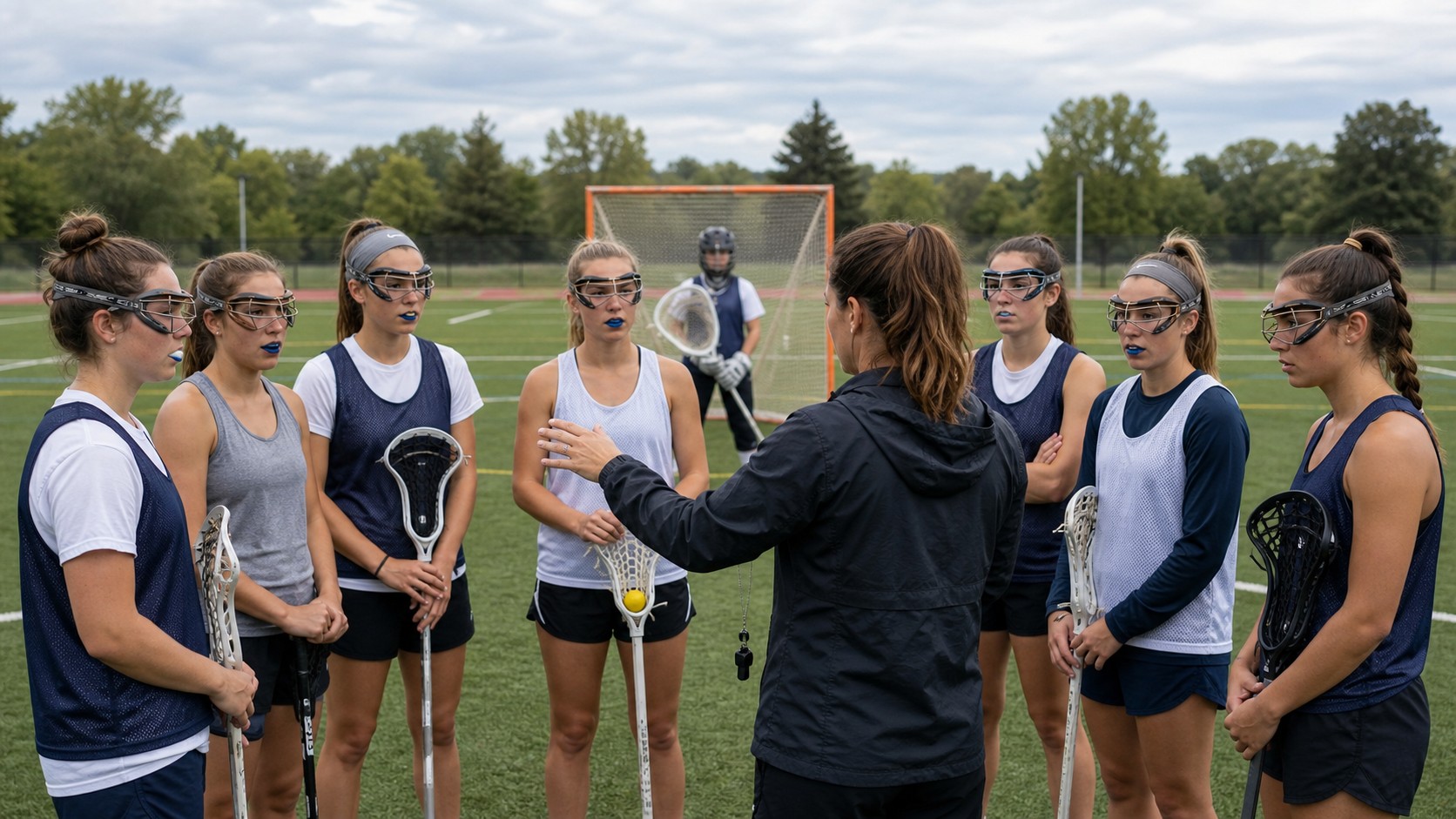
This layered approach protects confidence. Many beginners feel behind because teammates already throw harder or know more vocabulary. That does not mean the beginner is failing. It means the first few practices should be about repeatable habits: catch softly, pass accurately, scoop through the ball, listen after whistles, and keep moving with purpose.
Gear Should Fit Before It Impresses
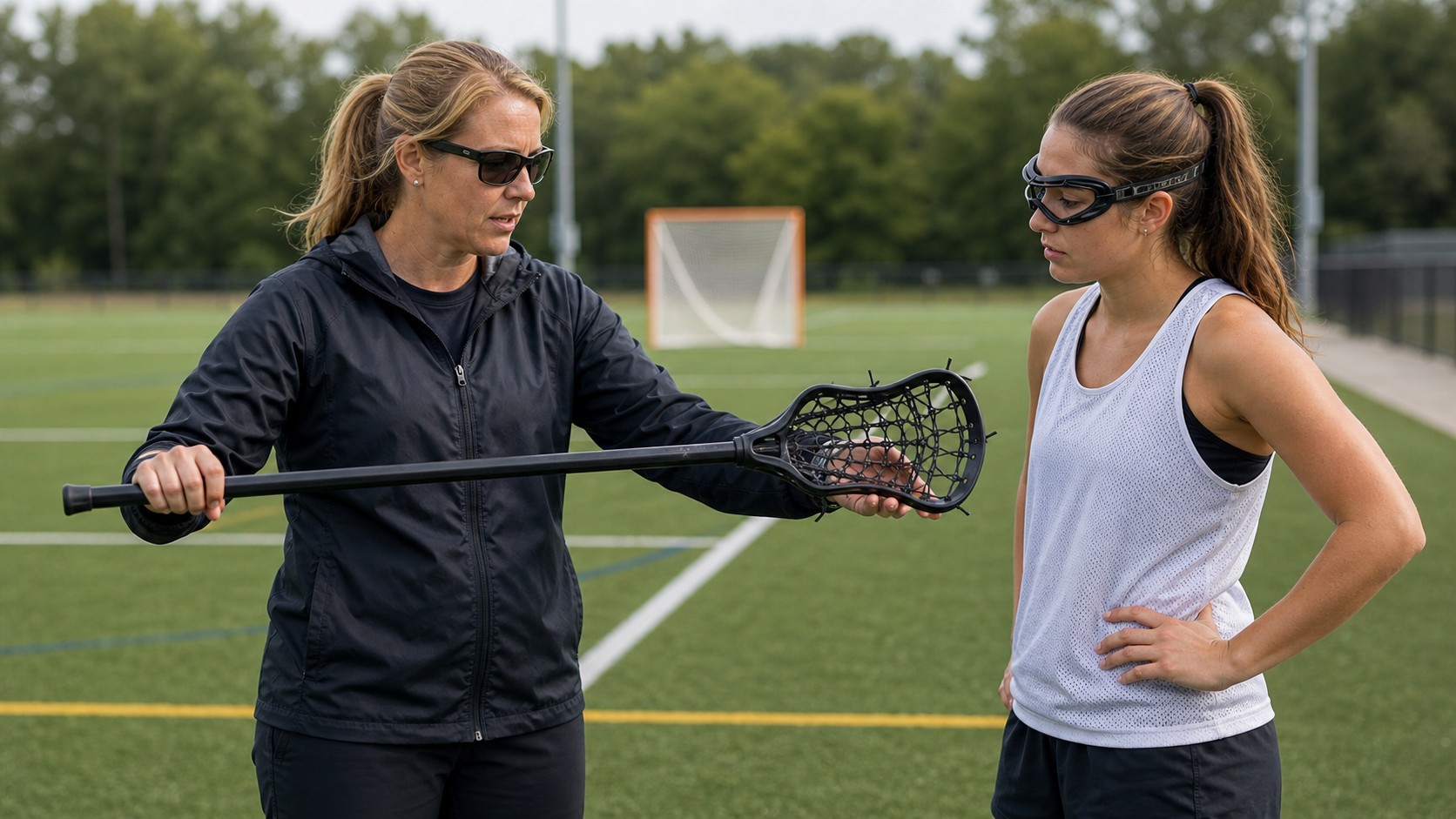
Women's lacrosse field players commonly need a legal stick, goggles, mouthguard, and appropriate footwear. Goalies need much more specialized protection. Requirements can change by league, age, and location, so families should confirm with the coach before buying gear. The right item is the one that fits the player and the rule set.
Fit matters because uncomfortable gear distracts from learning. Goggles should stay secure without blocking vision. A mouthguard should be wearable for the whole practice. Shoes should match the surface. A stick should be legal and manageable. Expensive equipment cannot replace comfort, safety, and repetition.
Players should also prepare simple support items. Water, hair ties, weather layers, and a bag that keeps gear organized can make practices calmer. Beginners have enough to think about without searching for a mouthguard five minutes before warmups.
Stick Confidence Comes From Repetition
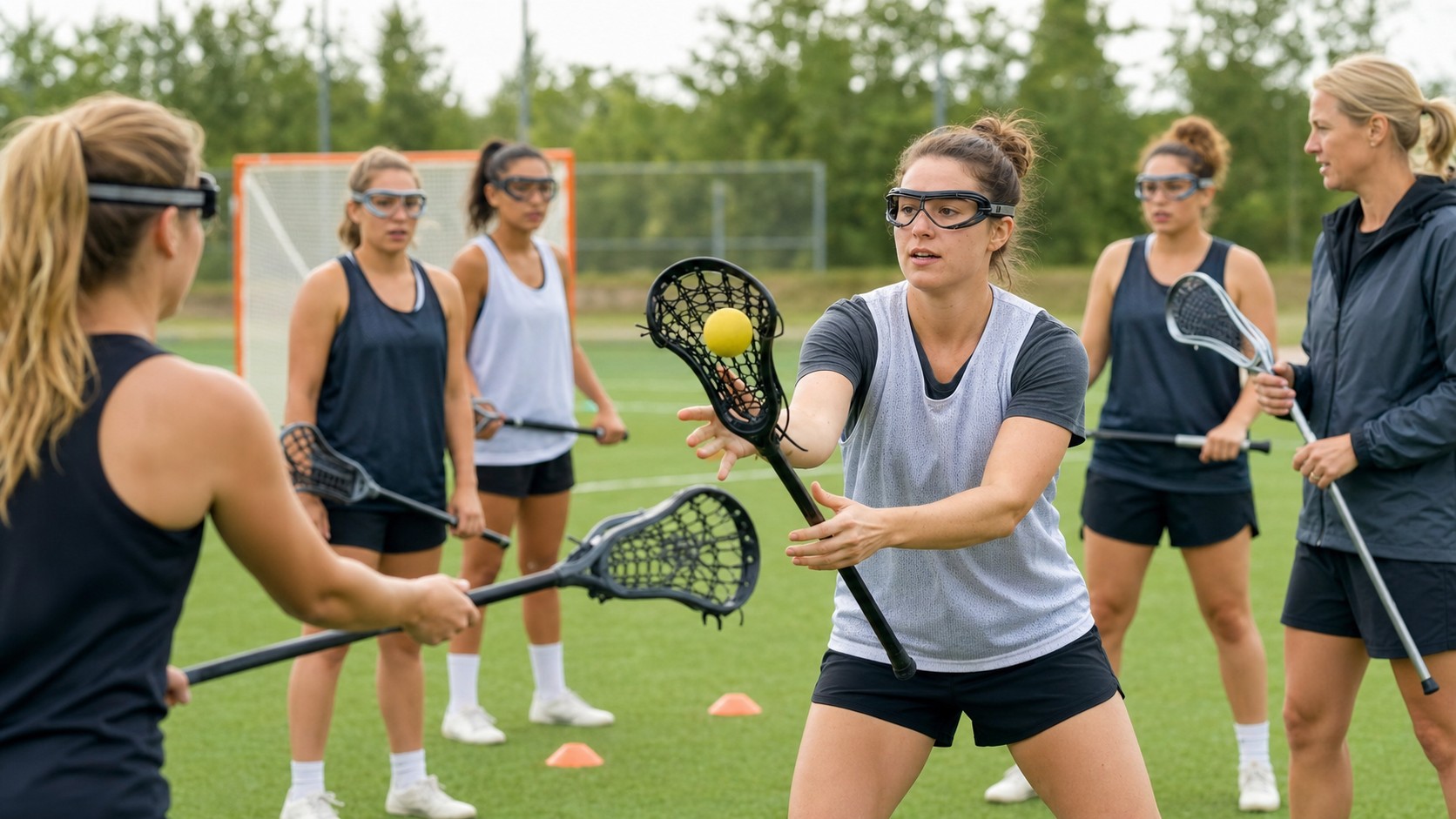
Catching and throwing are the first skills most beginners want to improve. The key is softness. A catch should receive the ball rather than fight it. A throw should start with balanced feet, clear target, and smooth follow-through. Power can come later. Clean mechanics come first.
Cradling Is Ball Protection And Awareness
Cradling keeps the ball controlled while a player runs, changes direction, and reads the field. New players often stare at the stick because they are afraid the ball will fall out. That is normal, but the long-term goal is to cradle while looking up. The player needs to see teammates, defenders, space, and the next pass.
Good cradling should not become hiding from the game. A beginner who can run with the ball but never looks up will miss simple passes. Practice should mix stationary cradles, moving cradles, change-of-direction work, and passing after a few steps. That teaches the player to carry with a purpose.
Ground Balls Build Real Value
Ground balls are one of the fastest ways for a beginner to help. A player does not need a perfect shot to win a loose ball. She needs courage, body position, two hands, and the habit of running through the pickup. Possession often begins with that simple action.
The common mistake is reaching from too far away. Scooping works better when the player moves her feet, lowers her body, and carries momentum through the ball. After the scoop, she should protect the stick and look for a safe outlet. Winning the ball is only the first part of the play.
Coaches notice players who compete for ground balls. That effort shows readiness even before advanced skills arrive. A beginner who hustles, listens, and keeps possessions alive can earn trust quickly.
Field Awareness Makes Skills Useful
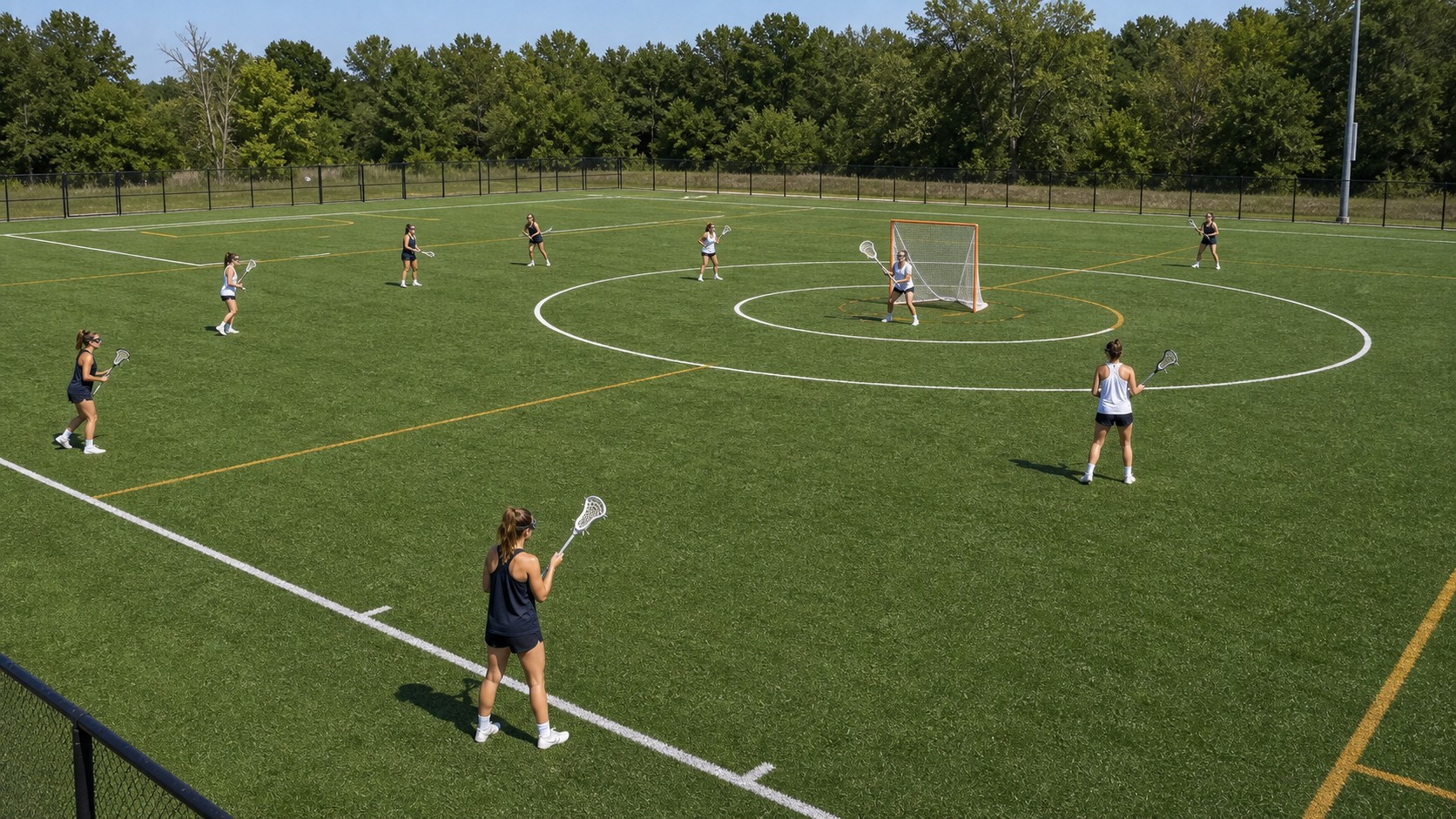
Stick skills matter most when they are connected to space. A player should learn where teammates are, where pressure is coming from, and where the safest next pass might be. Standing still makes the field smaller. Moving with purpose creates options.
Positions Are Starting Points
Women's lacrosse positions help organize responsibility, but beginners should not treat them as permanent labels too early. Attackers learn to cut, feed, finish, and ride. Midfielders connect both ends and need strong endurance. Defenders protect dangerous space with footwork and communication. Goalies lead, save, clear, and organize.
Many new players try different roles. A fast player may become a midfielder, but only if she learns decision-making and defense. A calm communicator may become valuable on defense. A player with quick hands may fit attack. Coaches usually look at habits as much as traits.
Rules Should Be Learned Through Situations
The women's rule book can feel detailed, especially around checking, shooting space, draws, crease play, and restarts. Beginners should learn rules through situations instead of trying to memorize every line. What caused that whistle? Where does the ball restart? Which space was dangerous? What should the defender have done differently?
This makes rules practical. A player who understands why a check was unsafe can adjust her hands. A player who understands shooting space can defend more intelligently. A player who understands restarts can be ready while others are still confused.
Questions help, but timing matters. During games, players should listen and reset. During practice or breaks, they can ask the coach for specifics. Calm questions turn penalties into learning instead of frustration.
A First-Month Practice Plan
A useful first month can be simple. Practice short passing and catching several times a week. Add ground balls from different angles. Cradle while walking, jogging, and changing direction. Learn the basic field areas. Watch one game or practice with a focus on spacing rather than only goals.
Confidence Comes From Useful Moments
Beginners often measure themselves by scoring, but women's lacrosse offers many ways to contribute. A safe outlet pass, a won ground ball, a good defensive angle, a clear communication call, or a smart reset can matter. Players who notice these moments build confidence faster because they see progress in more places.
Coaches can help by naming those useful moments. Instead of praising only goals, they can praise a strong cut, a smart look, or a brave ground ball. That feedback teaches beginners what good lacrosse actually looks like.
Parents Can Support The Learning Curve
Parents do not need to become rule experts immediately. They can help by keeping equipment ready, encouraging regular stick practice, asking coaches what to reinforce, and keeping postgame conversations calm. The ride home should not become a second coaching session full of corrections.
A better question is, what felt clearer today than last week? That invites the player to notice progress. Another useful question is, what did the coach ask you to work on next? That keeps support aligned with the program instead of guessing from the sideline.
Parents should also respect that confidence may rise unevenly. One practice can feel great and the next can feel messy. That is normal for a skill sport. Repetition, patience, and a good team environment matter more than instant mastery.
The Game Gets Clearer With Every Rep
Women's lacrosse rewards players who keep learning. The first practices may feel like a blur of passes, whistles, running, and new words. Over time, patterns emerge. The player starts to know where to stand, when to pass, how to protect the ball, and why the whistle sounded.
That is the real beginning. Once the basics feel less fragile, strategy becomes fun instead of overwhelming. A new player who builds safe habits, steady stick skills, field awareness, and curiosity can grow quickly. The complete guide is not a shortcut around practice. It is a map that helps practice make sense.
Sideline Learning Can Stay Simple
When a new player is not on the field, she can still learn by tracking one teammate who plays her likely role. Watching that player move, communicate, and react after passes gives the beginner a practical model without overwhelming her with every detail of the game.
How To Watch A First Game
A first game is easier to watch with a narrow focus. For one stretch, watch only the ball carrier and her closest support. For another stretch, watch the defenders around the crease. Then watch what happens after every whistle. This keeps the game from feeling like too much motion at once.
Players can use the same method from the sideline. Instead of trying to learn everything, they can notice one theme: where players stand on restarts, how teammates cut after a pass, or how defenders recover after pressure. Focused watching turns game day into a lesson without becoming homework.
Mistakes Are Part Of The First Season
Every beginner drops passes, misses ground balls, runs to the wrong space, or forgets a restart. Those mistakes are not signs that the player chose the wrong sport. They are normal evidence that a fast skill game is becoming familiar. The useful response is to identify the next small correction.
A missed catch may mean the player needs softer hands. A rushed throw may mean she did not look up early enough. A defensive whistle may mean her feet stopped moving. A crowded attack may mean she followed the ball instead of creating width. Each mistake points to a practice target.
This mindset keeps confidence intact. The goal of the first season is not flawless play. It is growing from confusion toward recognition, from hesitation toward useful action, and from isolated skills toward team understanding.
Building A Simple Weekly Routine
A beginner's weekly routine can stay manageable. Two or three short stick sessions, one focused conditioning or footwork session, and a few minutes reviewing team concepts can make a visible difference. The routine should be steady enough to build skill but light enough that the player still enjoys returning.
The best routine also includes rest. Tired beginners often make more stick mistakes and lose patience with themselves. A balanced week helps the player arrive at practice ready to learn, not already overwhelmed.
Knowing When To Ask For Help
Beginners should ask for help when the same problem appears several practices in a row. That might be catching high passes, scooping at speed, understanding draws, or knowing where to stand after a whistle. A specific question lets a coach give a specific correction. It also shows the coach that the player is paying attention to her own learning, which is often as valuable as raw athletic ability. Good questions turn confusion into a shared plan.
The Best Early Goal Is Belonging
A new player improves faster when she feels she belongs on the field. Belonging does not require being the best player. It comes from knowing the routine, recognizing teammates, understanding a few responsibilities, and trusting that mistakes can be corrected.
That emotional piece matters. Confidence gives players permission to try the next pass, chase the next ground ball, and ask the next question. Skill and belonging grow together during a good first season, and both make the next practice feel more inviting.