Men’s Lacrosse Field Layout Explained
The men's lacrosse field layout explains much of how the game works. Goals sit inside creases, teams move through midfield, players must stay balanced across the field, substitutions happen through a defined area, and lines shape where possessions begin, slow down, or restart. New players and fans do not need to memorize every measurement immediately. They need to understand how the main areas create spacing, safety, and strategy before the speed of the game takes over on live possessions. The map makes the motion readable.
A: It explains spacing, possession movement, offside rules, substitutions, and many whistles.
A: Goals sit near each end with playable space behind them in field lacrosse.
A: The crease protects goalie space and affects legal attacking movement near goal.
A: Midfield is where clears, rides, faceoffs, substitutions, and offside balance often become visible.
A: It controls where players legally enter and exit during live play.
A: Attackers use goal, crease, behind-the-net space, and wide areas to create angles.
A: Defenders protect the crease area, communicate slides, and recover across defined space.
A: Off-ball spacing often explains the next pass, cut, or defensive rotation.
A: Official layouts follow standards, but local age groups and facilities may have modifications.
A: Start with the goals, creases, midfield, sidelines, substitution area, and basic offside balance.
The Field Is A Map Of Responsibilities
A men's lacrosse field is not just open grass with goals. It is a map that tells players where responsibilities begin and change. The crease protects the goalie. Midfield divides the field into halves. Sidelines and end lines define possession. The substitution area controls personnel changes. Once those landmarks are familiar, the game becomes easier to read.
For players, layout knowledge prevents simple mistakes. A beginner who understands midfield balance is less likely to wander offside. A player who understands the crease is less likely to erase a scoring chance by stepping illegally. A substitute who understands the box area is less likely to create confusion during live play.
Goals And Creases Shape Scoring
The goal is the obvious target, but the crease around it is just as important. Goalies need protected space to play safely, and attackers must control their bodies near that space. A shot can be excellent and still fail if the player violates crease rules. That is why foot placement near goal matters so much.
Behind The Goal Is Playable Space
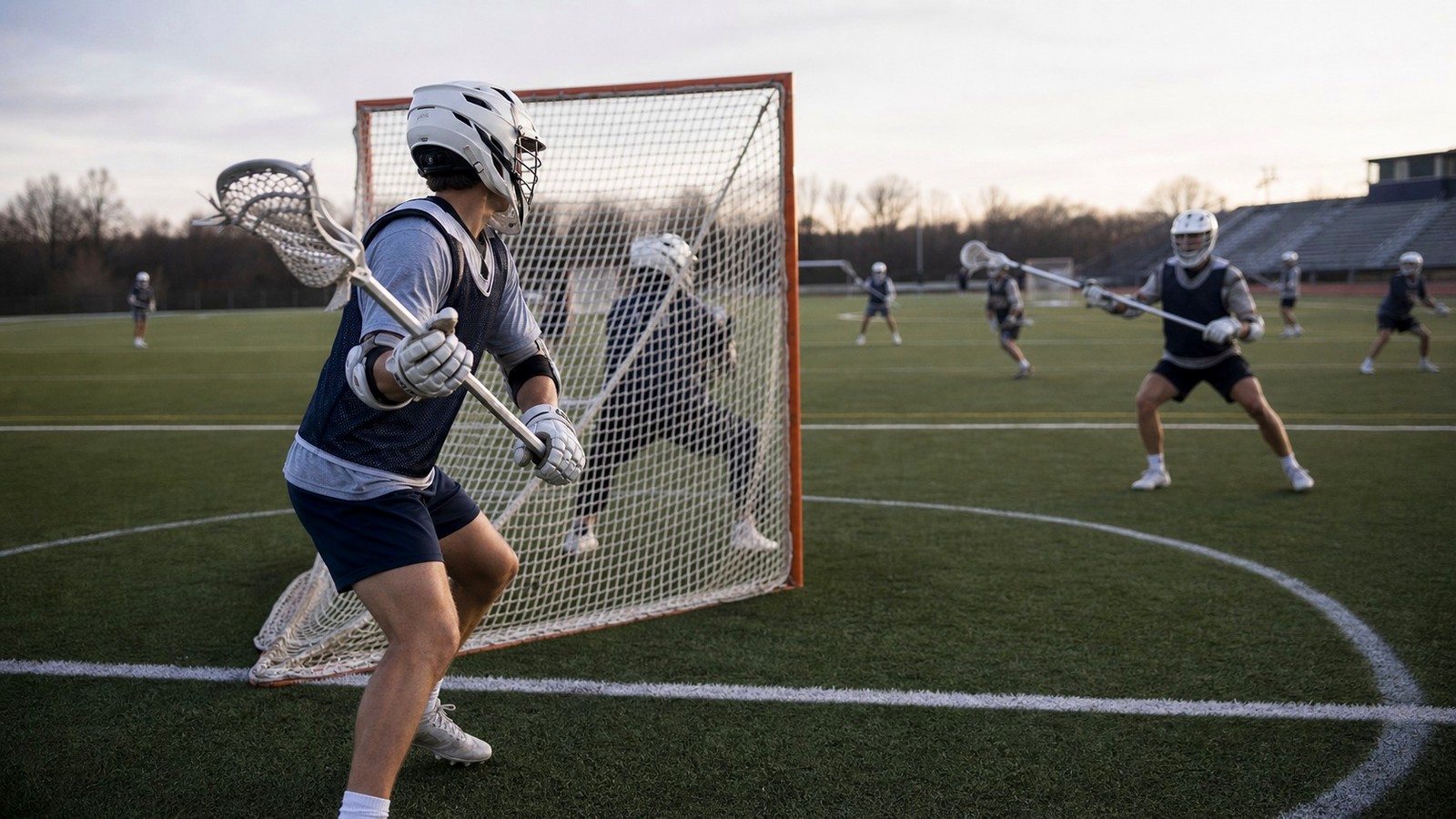
One distinctive part of field lacrosse is the space behind the goal. Offenses can carry or pass from behind the net, which changes defensive angles. A defender guarding from behind has to think about wraps, feeds, and picks. A goalie must track threats that can appear from both sides of the cage.
This space also helps beginners understand why attackers do not always stand in front of the net. Playing behind goal can create feeding lanes, force defenders to turn their heads, and let the offense restart a possession. The field layout gives the offense more than one way to approach the crease.
Fans should watch how defenders communicate when the ball moves behind the goal. The nearest defender, crease help, and goalie all share responsibility. A quiet breakdown behind the net can become a high-quality chance in front of it.
Midfield Connects The Game
Midfield is where field lacrosse often changes identity. A team may be clearing, riding, substituting, or starting transition. Midfielders are central because they connect defense and offense. They may defend a dodge, pick up a ground ball, carry through pressure, and then become part of the attack.
Offside rules make midfield more than a stripe. Teams must keep the correct number of players on each half, which means players need awareness before crossing. Many beginner mistakes happen when everyone follows the ball and forgets the field's balance.
Sidelines Control More Than Boundaries
Sidelines define out-of-bounds, but they also shape pressure and substitutions. A ball carrier near the sideline has fewer escape directions. A riding team may use the sideline as an extra defender. A clearing team may need an outlet before the carrier is trapped.
The Substitution Area Changes Matchups
Substitutions in men's lacrosse happen during live play, so the field layout has to support constant movement. Players enter and exit through the proper area, and the timing can change matchups quickly. A clean substitution can bring on a specialist, refresh a tired midfielder, or protect a defensive possession.
Poor substitutions create problems. A team can become disorganized, lose a matchup, or risk an offside issue. New fans often wonder why players run to the bench while play continues. The answer is that substitution is part of the strategy, not a break from it.
Players should learn substitution habits early. Know where to go, communicate with teammates, and avoid drifting onto the field without understanding the situation. The field layout gives substitutions structure, but players still have to execute the change.
Lines Help Officials Restart Play
Field markings also help officials manage restarts. After a whistle, the ball location and nearby lines often explain where play resumes. New players who learn the landmarks can reset faster and ask better questions after confusing calls.
This is especially useful near the crease, sideline, and midfield. A player may not know every signal immediately, but seeing where the official places the ball can reveal the nature of the call. The layout becomes a teaching tool.
How Fans Can Read The Field
Fans can use the field layout to avoid watching only the ball. Follow the ball through midfield, then look at the players setting spacing around the goal. Watch the crease when the ball goes behind the net. Notice whether midfielders are substituting or staying on. These cues explain the game without requiring advanced terminology.
Field Size Creates Tactical Tradeoffs
The large field gives teams room, but it also creates tradeoffs. Wide spacing can open dodging lanes, but too much distance can make passes slow. Aggressive defensive help can stop a dodge, but recovery may be long. A fast break can create danger, but a rushed chance can turn into transition the other way.
These tradeoffs are why layout matters. The same pass, dodge, or slide can be smart in one area and risky in another. Players learn the field by connecting choices to location.
Practice Should Use The Whole Map
Practices should not treat field layout as a diagram players memorize once. Use the actual field. Walk through the crease. Run clears through midfield. Practice substitutions through the correct area. Let players feel how far a recovery is and how quickly a sideline can become pressure.
When players learn the field physically, the rules become easier to remember. A line is no longer abstract; it is where a decision happens. That kind of learning helps beginners and experienced players alike.
The men's lacrosse field is large, but it is readable. Goals, creases, midfield, sidelines, substitution areas, and player balance create the shape of the sport. Once that map is familiar, the speed of the game feels more organized.
Using Layout To Understand Offense
Offense uses field layout to create choices for the defense. A dodge from the wing creates a different angle than a dodge from up top. A pass from behind the goal makes defenders turn their heads. A cutter near the crease needs timing because the goalie area and defensive help are close. Location changes the value of every action.
Spacing also depends on the map. Players who stand too close together can make a large field feel small. Players who drift too far apart can make passes slow and dangerous. Good offenses use the field's width and depth while staying connected enough to support the ball. That balance is easier to see once the landmarks are familiar.
Using Layout To Understand Defense
Defense reads the same map from the opposite viewpoint. The middle of the field is dangerous, so defenders try to steer dodgers away from central space. The crease is protected, so defenders communicate about cutters and rebounds. The sideline can help trap a ball carrier, but overcommitting may open a pass back to the middle.
Slides and recoveries also depend on distance. A short slide near the crease feels different from a long recovery across a wide formation. Field layout teaches defenders how much space they can give, how early they must talk, and which threats are most urgent.
Goalies are part of this map. From the crease, a goalie sees cutters, screens, dodges, and outlet options. A goalie who understands field layout can help defenders organize before a shot happens and start a clear after the save.
Why Field Awareness Improves With Reps
Field awareness rarely appears all at once. Players learn it by seeing the same spaces repeatedly. A beginner may first learn the crease and midfield. Later, the player recognizes substitution timing, riding lanes, backside cutters, and recovery angles. The map becomes more detailed over time.
Fans grow the same way. The first game may be about following the ball. The next game might be about watching midfield. Later, the viewer notices off-ball movement and bench changes. The field layout gives everyone a way to organize what they are seeing.
Layout Mistakes Beginners Make
One common mistake is drifting toward the ball and shrinking the field. A new attacker may stand too close to a teammate, making a dodge harder. A midfielder may run into an area that is already crowded. A defender may chase too far and leave the crease exposed. These are layout mistakes as much as skill mistakes.
Another mistake is forgetting the sideline and end line. A player under pressure may carry toward a boundary without realizing there is no escape. The riding team may use that boundary to trap. Learning where the field ends helps ball carriers make earlier outlet decisions.
Substitution mistakes are also common. Players may leave late, enter without awareness, or forget how their movement affects offside balance. The substitution area is part of the field map, and beginners need to practice it instead of treating it as a sideline detail.
How Coaches Can Teach The Map
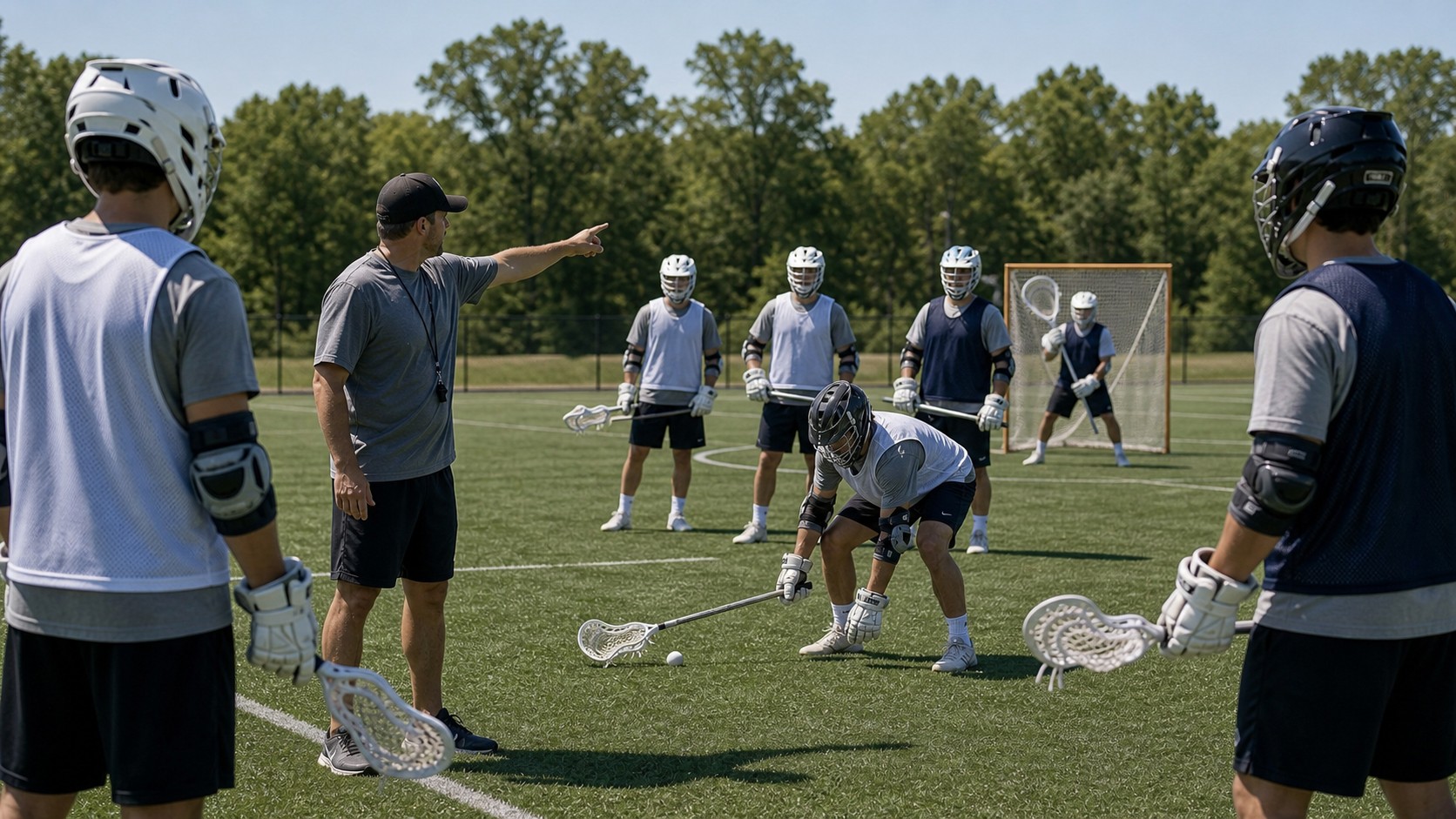
Coaches can teach layout by walking before running. Place players at the crease, midfield, sideline, and substitution area. Ask what each location changes. Then run a slow possession through those spots. This makes the field physical and memorable instead of abstract.
Small questions help. Where is the next outlet? Who must stay back? Where can the ball carrier get trapped? Which defender has the longest recovery? When players answer these questions on the actual field, layout becomes a decision-making tool.
The Field Starts To Slow Down
The field starts to slow down mentally when players know the landmarks before the ball arrives. A midfielder sees the substitution area and anticipates a change. A defender sees the dodge angle and prepares help. An attacker sees behind-the-goal space and understands the feed. The map gives the next action a location.
Fans experience the same shift. Instead of seeing players run everywhere, they begin to see phases: clear, ride, settle, dodge, recover, substitute, restart. The field layout separates those phases so the action becomes easier to follow.
Men's lacrosse is still fast, but it is not shapeless. The field gives the sport structure. Learning that structure is one of the easiest ways for players and fans to feel more fluent.
A Simple Field Study Habit
A useful habit is to study one area at a time. During one possession, watch the crease. During another, watch midfield substitutions. During another, watch the sideline when a clear is under pressure. This keeps the field from feeling too large and gives each viewing a purpose.
Players can use the same habit in practice. Learn where to stand first, then learn where to move after the ball changes sides. Field awareness becomes easier when each landmark is tied to a job.